Hey there! As a supplier of U Type Groove Pulleys, I often get asked about the surface hardness of these pulleys. So, I thought I'd take some time to break it down for you all.
First off, let's understand why surface hardness matters. The surface hardness of a U Type Groove Pulley plays a crucial role in its performance and durability. A pulley with the right surface hardness can withstand wear and tear, resist deformation, and ensure smooth operation over a long period.
The surface hardness of a U Type Groove Pulley is typically measured using the Rockwell or Brinell hardness scale. These scales give us a numerical value that indicates how hard the surface of the pulley is. The higher the value, the harder the surface.
There are several factors that can affect the surface hardness of a U Type Groove Pulley. One of the main factors is the material used to make the pulley. Common materials for U Type Groove Pulleys include steel, aluminum, and plastic. Each material has its own inherent hardness properties.
Steel is a popular choice for U Type Groove Pulleys because of its high strength and durability. Steel pulleys can have a relatively high surface hardness, which makes them suitable for heavy - duty applications. For example, in industrial settings where the pulleys need to handle large loads and high - speed operations, steel pulleys with appropriate surface hardness can perform excellently.
Aluminum, on the other hand, is lighter than steel. While it may not have the same level of surface hardness as steel, it is corrosion - resistant and has good machinability. Aluminum U Type Groove Pulleys are often used in applications where weight is a concern, such as in some automotive or aerospace components.
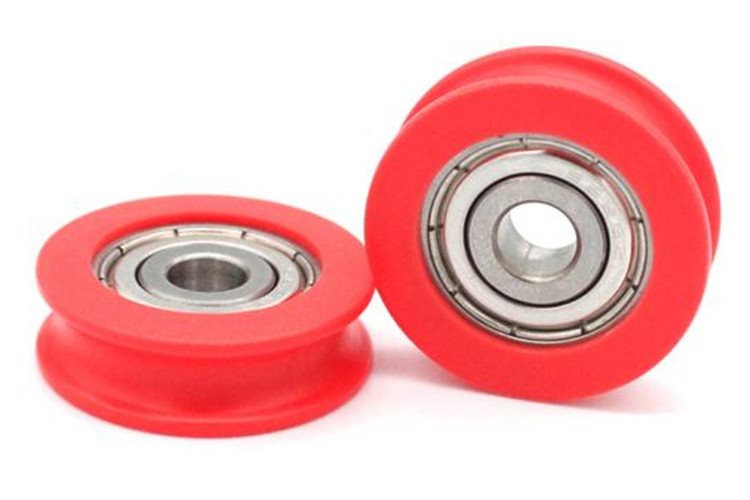
Plastic pulleys are another option. They are lightweight, inexpensive, and can have a decent surface hardness depending on the type of plastic used. However, they may not be as suitable for high - load or high - stress applications as steel or aluminum pulleys.
Another factor that affects surface hardness is the heat treatment process. Heat treatment can significantly increase the surface hardness of a pulley. By heating the pulley to a specific temperature and then cooling it at a controlled rate, the internal structure of the material changes, resulting in a harder surface. For example, quenching and tempering are common heat treatment methods for steel pulleys. Quenching rapidly cools the heated steel, which creates a hard and brittle structure. Tempering then follows to relieve the internal stresses and improve the toughness of the pulley while maintaining a high surface hardness.
Now, let's talk about how the surface hardness impacts the performance of U Type Groove Pulleys. A pulley with a higher surface hardness is more resistant to abrasion. In applications where the pulley comes into contact with ropes, belts, or other moving parts, abrasion can occur over time. If the surface hardness is too low, the pulley may wear out quickly, leading to a shorter lifespan and potential performance issues.
For instance, in a conveyor system, the U Type Groove Pulley needs to work with conveyor belts. If the pulley's surface is not hard enough, the belt may cause excessive wear on the pulley, which can result in belt slippage and reduced efficiency of the conveyor system.
Moreover, a pulley with proper surface hardness can also resist deformation under load. When a pulley is subjected to a heavy load, if its surface is too soft, it may deform, which can affect the alignment of the belt or rope running on it. This misalignment can cause additional stress on the system and may even lead to premature failure of the belt or other components.
In our experience as a U Type Groove Pulley supplier, we've seen the importance of getting the surface hardness right. We offer a wide range of U Type Groove Pulleys with different surface hardness levels to meet the diverse needs of our customers. Whether you need a pulley for a light - duty home application or a heavy - duty industrial use, we can provide you with the appropriate product.

If you're in the market for related products, we also have some great options. Check out our 6200zz Garage Door Rollers, Industrial Roller Bearings, and Door Bearing Wheels. These products are designed to work in harmony with our U Type Groove Pulleys and can enhance the overall performance of your systems.
When it comes to choosing the right U Type Groove Pulley with the appropriate surface hardness, it's important to consider your specific application requirements. Think about the load capacity, speed of operation, environmental conditions, and the type of belt or rope that will be used with the pulley. If you're not sure which surface hardness is best for your needs, our team of experts is always here to help.
We understand that every customer's situation is unique, and we're committed to providing the best solutions. Whether you're a small - scale DIY enthusiast or a large - scale industrial manufacturer, we can offer you high - quality U Type Groove Pulleys with the right surface hardness.
If you're interested in our U Type Groove Pulleys or any of our related products, don't hesitate to get in touch. We're ready to discuss your requirements and provide you with a customized solution. We can offer you detailed product information, pricing, and technical support to ensure that you make the right choice for your project.
In conclusion, the surface hardness of a U Type Groove Pulley is a critical factor that affects its performance, durability, and suitability for different applications. By understanding the factors that influence surface hardness and how it impacts the pulley's performance, you can make an informed decision when purchasing a U Type Groove Pulley. So, if you're in the market for a U Type Groove Pulley, give us a chance to serve you.
References:
- "Materials Science and Engineering: An Introduction" by William D. Callister Jr. and David G. Rethwisch
- "Mechanical Design of Machine Elements and Machines: A Failure - Prevention Perspective" by Jack A. Collins, Shigley Joseph Edward, and Charles R. Mischke