


STAINLESS BEARINGS
What is Stainless Bearings?
Stainless steel bearings can organize mass production, achieving high strength and high precision. It can be used in various products with general corrosion and is widely used.Compared with ordinary bearings, stainless steel bearings not only have obvious advantages in material, but also in terms of technology and precision control, they are much stricter than ordinary bearings.
Advantages of Flanged Bearing
Corrosion resistance
Stainless steel is highly resistant to corrosion and rust to a longer lifespan and reliability in challenging conditions.
Hygienic and food-grade
Stainless steel ball bearings are often used in food processing, pharmaceuticals, and medical devices because they meet strict hygiene and food-grade standards.
High strength
Bearings made from stainless steel can withstand heavy loads and high-speed rotations, making them suitable for various industrial applications.
Low maintenance
These bearings require minimal maintenance due to their corrosion resistance and durability. This translates to lower downtime and reduced maintenance costs.
-
![Stainless Steel Deep Groove Ball Bearings]()
Stainless Steel Deep Groove Ball Bearings
Office equipment, micro motors, soft drives, pressure rotors, dental drills, hard disk motors,Add to Inquiry -
![Stainless Steel Roller Bearings]()
Stainless Steel Roller Bearings
If you have a compressed air can or a compressor, it is advisable to blow out the old grease inAdd to Inquiry


Why Choose Us
Our factory
The company mainly produces ball bearings made of miniature gcr15 steel as raw materials and carbon steel. Bearings, plastic-coated bearings, etc. The bearings produced by the company are widely used in micro motors, mobile doors and windows, and mobile two-wheeled trams.
Production equipment
Grinding equipment, cleaning equipment, automatic riveting and pressing equipment, automatic inspection equipment-s0910 and bvt all-in-one machine.
Production market
The current market is mainly in the middle east, europe, america, southeast asia, etc. Our company's matching motorcycle accessories for the southeast asian market have received a good response.
Our service
Provide pre-sales technical consultation, drawing design and other services, from customer consultation, order placement, tracking production, shipment declaration and a series of related 7/24 hours services, follow-up service tracking to customer feedback on products used.
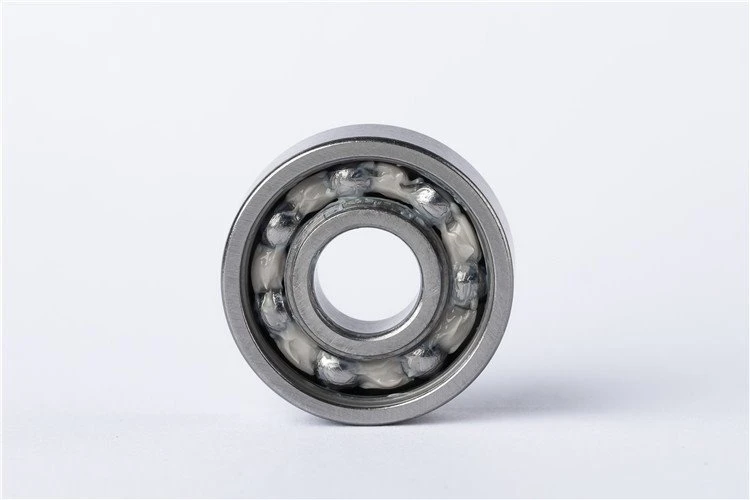
Stainless steel bearings can organize mass production, achieving high strength and high precision. It can be used in various products with general corrosion and is widely used.
Compared with ordinary bearings, stainless steel bearings not only have obvious advantages in material, but also in terms of technology and precision control, they are much stricter than ordinary bearings.
Compared with ordinary bearing steel, stainless steel bearings have stronger anti-rust and anti-corrosion properties. Choose suitable lubricants, dust caps, etc., and can be used in an environment of -60℃~+300℃. Stainless steel deep groove ball bearings can resist corrosion caused by moisture and several other media. This type of single-row deep groove ball bearing is the same as the standard deep groove ball bearing made of carbon chromium (rolling bearing) steel. It has a deep bearing raceway groove and a high degree of fit between the bearing raceway and the ball. Because of its high mechanical strength and large load capacity, stainless steel bearings are widely used in food processing, medical equipment, and pharmaceutical machinery.
Materials Used in Stainless Bearings
Sus420 (3cr13)
420 stainless steel is a martensitic stainless steel with certain wear resistance and corrosion resistance, and high hardness. It is suitable for all kinds of bearings, precision machinery, electrical, equipment, instruments, meters, transportation tools, household appliances, etc. It is mostly used to manufacture parts that are resistant to atmospheric, water vapor, water and oxidizing acid corrosion. It is widely used in the bearing field.
Sus440 (9cr18), sus440c (9cr18mo)
Martensitic stainless steel has higher carbon content than cr13 steel, so its strength and hardness are higher than cr13 steel, and other properties are similar to cr13, but its weldability is poor, corrosion resistance and toughness are strong, and the speed is higher in miniature bearings and bearings the field is particularly widely used.
Sus630 stainless steel
630 stainless steel is a martensitic precipitation hardening stainless steel. 630 stainless steel has good attenuation performance, strong resistance to corrosion fatigue and water droplets. The corrosion resistance is equivalent to 304 stainless steel, and the hardness is better than 304 stainless steel. It is suitable for food industry, offshore platform, paper industry, medical equipment, washing equipment, environmental cleaning machinery, chemical machinery, and it is widely used in industries with high requirements for anti-prevention.
Sus304 (06cr19ni10/0cr18ni9)
304 austenitic stainless steel has good corrosion resistance, heat resistance, low temperature strength and mechanical properties, good hot workability such as stamping and bending, and no thermal physical hardening. Non-magnetic 304 (weak magnetic after processing) stainless steel has good heat resistance, and is widely used in the production of corrosion-resistant and formability equipment and parts. At present, 304 stainless steel bearings are widely used in food processing machinery, chemical machinery, marine equipment, medical equipment, water washing equipment, environmental cleaning machinery, and are widely used in industries with high rust prevention.
Sus316 (0cr17ni12mo2)
316 austenitic stainless steel has plasticity, toughness, cold deformability, good welding process performance, and good appearance gloss of cold rolled products; due to the addition of mo (2-3%), the corrosion resistance and especially the pitting corrosion resistance are particularly excellent. Bearings that meet the requirements of strong acid and alkali environments.
Tainless steel bearings are a good choice for a number of reasons. They are non-magnetic and lubricated with grease or oil, making them a good choice for applications where abrasion or corrosion might prove fatal. They are available in an assortment of sizes and styles, making them suitable for a range of uses. However, not all stainless steel is created equal. Some may carry a premium of twenty to forty percent over standard offerings.
The most basic of these is a low-carbon steel material that is used to make metal shields and bearing cages. This particular bearing component is best suited to low-load, low-speed applications.
In addition to the usual suspects, there are also many other materials that can be used to create bearing components. One of the more popular alloys in the industry is the nickel-chromium-molybdenum (nicrmo) family. This particular stainless steel material is known to have a hefty payload, though if you're looking for a robust metal to rely on, you may want to opt for a higher grade. Its eponymous alloy is also used to make other high-performance bearing components, including a wide array of bearings, bushes, and shims.
The stainless steel industry is still developing newer and better varieties, and there are many more to come. Some examples include a new class of super-hardened, high-strength, heat-resistant alloys. Other materials that have shown some real-world merit include a molded acetal (pom) that is used in the creation of special bearing designs. Its most notable feature is the ability to be molded into virtually any shape or size while maintaining a high level of strength and toughness. Another interesting component is the boron. In some cases, this material is added to the metal to give it a tougher finish and a higher tensile strength. This is not to be confused with boron nitride, which is a different material and is harder to mold.
The most important thing to remember when shopping for a bearing component is to know your application. There are numerous types of bearings, each with its own specific requirements. You should also take into account the rated speed of your bearing. Some bearings may already be supplied with grease or oil, but if you are looking for an entirely different application, you will probably need to rely on the more expensive and rarer varieties.
Stainless Steel Bearings Are a Great Choice for Applications That Need High Corrosion Resistance and Durability
Stainless steel bearings are a great choice for applications that need high corrosion resistance and durability. Stainless steel bearings are durable and can withstand heat and humidity, making them a great choice for the medical and food processing industries. They are also used in the aerospace industry.
There are several different grades of stainless steel available. Each grade has specific strengths and uses. These grades are often optimized to improve their performance. Depending on the application, a particular grade can offer a higher level of corrosion resistance or chemical resistance.
Stainless steel bearings are usually a bit more expensive than standard metals. Stainless steel is resistant to moisture, salt, and other chemicals, making them an excellent choice for applications in the marine and food processing industries. However, this material is also susceptible to failure. This can be caused by overloading the bearing, improper installation, or even vibration.
Aside from their excellent corrosion and chemical resistance, stainless steel bearings are also more stable at higher temperatures. These components can operate at temperatures up to 300 degc. For these reasons, they are commonly used in the aerospace and medical industries.
Some of the most common stainless steels include 304 and 316. The 304 material is more affordable and has better mechanical properties. However, it is not heat treated, meaning that it does not carry the same hardness as other stainless steels. Alternatively, 316 can be heat stabilized at higher temperatures, allowing it to perform at higher speeds.
Another advantage of stainless steel is its durability and low maintenance. Stainless steel bearings can be cleaned without re-lubrication, making them suitable for applications with harsh chemicals or steam cleaning.
Compared to chrome steel, stainless steel offers much more resistance to corrosion. In addition, its familiar lustre makes it appealing for a variety of applications. It is also available in custom sizes and configurations.
Stainless steel can be used in the medical industry for surgical equipment and other applications that handle corrosive chemicals. It can also be used in the food and beverage processing industries, as it is naturally clean and non-corrosive. Stainless steel is also used in the nuclear industry for equipment that must work under vacuum.
Stainless steel bearings are typically more expensive than chrome steel and basic steels. But, the higher cost of these materials should be offset by their durability and resistance to corrosion. Stainless steel is the preferred metal for many special circumstances, including demanding environments such as the marine and food processing industries.
The Use of Stainless Steel Bearings Should Pay Attention to These Four Problems
Pollution
Contamination can lead to premature failure of stainless steel bearings; contamination mainly refers to the entry of sand, metal chips, etc. Into the inside of the bearing.
The main reasons include: Opening the package prematurely before use, unclean working environment during installation, unclean working environment of the bearing, contamination of the working medium, etc.
Suggestion: Do not unpack the stainless steel bearings before use; keep the installation environment clean during installation, clean the stainless steel bearings to be used; increase the bearing sealing device.
The lubrication is poor
Lubrication is one of the main causes of premature failure of stainless steel bearings.
The main reasons include: Not adding lubricant or lubricating oil in time; improper selection of lubricant or lubricating oil; incorrect lubrication method, etc.
Suggestion: Choose the correct lubricant or lubricating oil, and use the correct lubrication and filling method.
Improper installation
Using brute force to directly hit stainless steel bearings during installation will cause great damage, which is the main cause of deformation.
The installation is deviated or not installed in the bearing position, resulting in too small bearing clearance.
Suggestion: Choose the appropriate bearing installation tool, and use the instrument to test after installation.
Fatigue
Fatigue breakage is a common damage method for bearings. Common causes of fatigue ring damage may be: Long-term load operation of bearings; failure to maintain in time; improper maintenance; equipment aging and so on.
Suggestion: Select the appropriate stainless steel bearing type, and replace the fatigue bearing regularly and in time.
How to Maintain Stainless Steel Bearings
Standards for stainless steel bearing inspection and judgment
To judge whether the removed stainless steel bearing can be reused, it is necessary to focus on checking its dimensional accuracy, rotation accuracy, internal clearance, and mating surface, raceway surface, cage and sealing ring.
Judgment criteria vary according to mechanical properties and importance, inspection cycles, etc. If the parts are broken and defective or the rolling surface of the raceway surface is peeled off, the stainless steel bearing must not be reused and must be replaced.
Cleaning the stainless steel bearings that can continue to be used
When the stainless steel bearing is removed for inspection, the appearance of the stainless steel bearing shall be photographed and recorded, the amount of remaining lubricant shall be confirmed and the lubricant shall be sampled, and then the stainless steel bearing shall be cleaned.
The commonly used cleaning agent is neutral non-hydrous diesel or kerosene, and sometimes warm lye is also used as needed. Whatever cleaning agent is used, it should be filtered frequently to keep it clean.
Certifications

Video
FAQ
Q: What is a stainless steel bearing?
Q: When to use stainless bearings?
Q: What are the benefits of stainless steel bearings?
Q: Are stainless steel bearings better?
Q: Is stainless steel a good bearing material?
Q: Are bearings made of stainless steel?
Q: What grade is stainless steel bearings?
Q: What is the best stainless steel bearing?
Q: Are ceramic bearings better than stainless?
Q: Are stainless steel bearings magnetic?
Q: What is the hardness of stainless steel bearings?
Q: Do stainless steel ball bearings rust?
Q: How long do steel bearings last?
Q: Is stainless steel a good bearing material?
Q: Why use stainless steel bearings?
Q: When to use stainless bearings?
Q: What are the advantages of stainless steel bearings?
Q: Can 100% stainless steel rust?
Q: What is the best stainless steel bearing?
Q: Are stainless steel bearings magnetic?
As one of the most professional stainless bearings manufacturers and suppliers in China, we're featured by quality products and low price. Please rest assured to wholesale cheap stainless bearings made in China here and get pricelist from our factory. Contact us for customized service.
wooden roller bearings, skf stainless steel bearings, mini turntable bearing