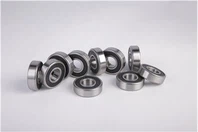
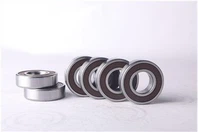
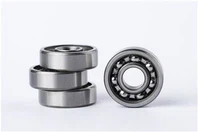
When it comes to the world of bearings, the Bearing 6305 stands out as a crucial component in numerous industrial applications. As a supplier of Bearing 6305, I am often asked about the surface finish of this particular bearing. In this blog post, I will delve into the details of what the surface finish of Bearing 6305 is, its importance, and how it impacts the performance of the bearing.
Understanding the Basics of Bearing 6305
Before we dive into the surface finish, let's first have a brief overview of Bearing 6305. Bearing 6305 is a deep groove ball bearing, which is one of the most common types of bearings used in various industries. It is designed to support both radial and axial loads and is known for its high speed and low friction characteristics. You can find more detailed information about Bearing 6305 on our website Bearing 6305.
What is Surface Finish?
Surface finish, also known as surface texture or surface roughness, refers to the microscopic irregularities on the surface of a material. In the case of Bearing 6305, the surface finish of the raceways (the inner and outer rings where the balls roll) and the balls themselves is of utmost importance. These irregularities can be caused by the manufacturing process, such as machining, grinding, or polishing.
The surface finish is typically measured in terms of roughness average (Ra), which is the arithmetic average of the absolute values of the surface height deviations from the mean line. Other parameters, such as root mean square roughness (Rq) and maximum peak - to - valley height (Rz), are also used to describe the surface finish more comprehensively.
Importance of Surface Finish in Bearing 6305
The surface finish of Bearing 6305 plays a vital role in its performance and longevity. Here are some of the key reasons why:
1. Reduced Friction
A smooth surface finish on the raceways and balls reduces the friction between the rolling elements and the raceways. When the friction is low, less energy is wasted in the form of heat, which in turn improves the efficiency of the bearing. This is especially important in high - speed applications where excessive heat can lead to premature wear and failure of the bearing.
2. Improved Load Distribution
A proper surface finish ensures that the load is evenly distributed across the contact area between the balls and the raceways. If the surface is too rough, the load may be concentrated on certain points, leading to increased stress and potential damage to the bearing. On the other hand, a smooth surface allows for a more uniform load distribution, which enhances the bearing's ability to withstand heavy loads.
3. Enhanced Lubrication
The surface finish affects the lubrication performance of the bearing. A smooth surface can hold the lubricant more effectively, forming a continuous lubricating film between the rolling elements and the raceways. This film acts as a barrier, preventing direct metal - to - metal contact and reducing wear and corrosion.
4. Longer Service Life
By reducing friction, improving load distribution, and enhancing lubrication, a good surface finish significantly extends the service life of Bearing 6305. This means fewer bearing replacements, less downtime, and lower maintenance costs for the end - users.
Surface Finish Requirements for Bearing 6305
The surface finish requirements for Bearing 6305 are specified by international standards, such as ISO 4287. Generally, the raceways of Bearing 6305 have a very smooth surface finish, with Ra values typically in the range of 0.02 - 0.1 micrometers. The balls also have a high - quality surface finish, with even lower Ra values to ensure optimal performance.
During the manufacturing process, strict quality control measures are implemented to ensure that the surface finish meets these requirements. Advanced machining and grinding techniques are used to achieve the desired surface smoothness, and regular inspections are carried out using precision measuring instruments, such as profilometers, to verify the surface finish.
Manufacturing Processes Affecting Surface Finish
The manufacturing process of Bearing 6305 has a direct impact on its surface finish. Here are some of the main processes:
1. Grinding
Grinding is one of the most important processes in bearing manufacturing. It is used to achieve the precise dimensions and the required surface finish of the raceways and balls. By using high - precision grinding wheels and advanced grinding machines, the surface roughness can be controlled within a very narrow range.
2. Polishing
After grinding, the raceways and balls may undergo a polishing process to further improve the surface finish. Polishing can remove any remaining micro - scratches and irregularities, resulting in an even smoother surface.
3. Heat Treatment
Heat treatment processes, such as quenching and tempering, can also affect the surface finish indirectly. These processes are used to improve the hardness and strength of the bearing material. However, if not properly controlled, heat treatment can cause surface distortion or the formation of scale, which may require additional machining or finishing operations to correct.
Quality Control of Surface Finish
As a supplier of Bearing 6305, we have a comprehensive quality control system in place to ensure the surface finish meets the highest standards. Our quality control process includes the following steps:
1. In - process Inspection
During the manufacturing process, regular inspections are carried out at different stages to monitor the surface finish. This allows us to detect any potential issues early and make adjustments to the manufacturing parameters if necessary.

2. Final Inspection
After the bearing is fully assembled, a final inspection is conducted using state - of - the - art measuring equipment. We check the surface finish of the raceways and balls to ensure that they meet the specified requirements. Only bearings that pass all the quality control tests are released for shipment.
Impact of Surface Finish on Different Applications
The optimal surface finish of Bearing 6305 may vary depending on the application. Here are some examples:
1. High - Speed Applications
In high - speed applications, such as electric motors or machine tool spindles, a very smooth surface finish is required to minimize friction and heat generation. Even a slight increase in surface roughness can lead to significant temperature rise and reduced bearing life.
2. Heavy - Load Applications
For heavy - load applications, like in construction equipment or mining machinery, the surface finish needs to be able to withstand high contact stresses. A smooth surface finish helps to distribute the load evenly and prevent localized wear.
3. Precision Applications
In precision applications, such as in aerospace or medical devices, the surface finish must be extremely precise to ensure accurate positioning and smooth operation. Any deviation from the specified surface finish can affect the performance of the entire system.
Contact Us for Your Bearing 6305 Needs
If you are in the market for high - quality Bearing 6305, look no further. As a reliable supplier, we are committed to providing bearings with the best surface finish and overall quality. Our Bearing 6305 products are manufactured using the latest technology and strict quality control measures to ensure optimal performance and longevity.
Whether you need a small quantity for a prototype or a large - scale order for your production line, we can meet your requirements. Contact us today to discuss your specific needs and get a competitive quote. We are here to assist you in finding the perfect solution for your bearing applications.
References
- ISO 4287: Geometrical product specifications (GPS) - Surface texture: Profile method - Terms, definitions and surface texture parameters.
- "Rolling Bearing Analysis" by Tedric A. Harris and Michael N. Kotzalas.
- "Bearing Technology Handbook" by Schaeffler Technologies AG & Co. KG.