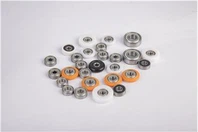
As a supplier of Pulley Bearings, I've encountered numerous inquiries regarding how to reduce the friction coefficient of pulley bearings. This is a crucial aspect as it directly impacts the efficiency, lifespan, and performance of the machinery where these bearings are installed. In this blog, I'll share some effective strategies and insights based on my experience in the industry.
Understanding the Basics of Friction in Pulley Bearings
Before delving into the methods of reducing friction, it's essential to understand what causes friction in pulley bearings. Friction in these components primarily results from the contact between the rolling elements (such as balls or rollers) and the raceways, as well as the interaction between the bearing and its housing. Additionally, factors like lubrication, surface finish, and the load applied to the bearing can significantly influence the friction coefficient.
Proper Lubrication
One of the most effective ways to reduce the friction coefficient of pulley bearings is through proper lubrication. Lubricants serve multiple purposes in a bearing system. They create a thin film between the moving parts, which separates the surfaces and reduces direct metal-to-metal contact. This film also helps to dissipate heat generated during operation, preventing overheating and premature wear.
There are various types of lubricants available, including greases and oils. Greases are commonly used in pulley bearings because they offer better sealing properties and can stay in place for longer periods. When selecting a grease, it's important to consider factors such as the operating temperature, speed, and load of the bearing. For high-speed applications, a grease with a low viscosity base oil may be more suitable, while for heavy-load applications, a grease with high load-carrying capacity is recommended.
Oils, on the other hand, are often used in applications where high-speed and low-friction operation is required. They provide better cooling and can be easily circulated through the bearing system. However, they require a more complex lubrication system to ensure proper distribution.
Surface Finish and Material Selection
The surface finish of the bearing components plays a crucial role in reducing friction. A smooth surface finish reduces the contact area between the moving parts, which in turn reduces friction. Manufacturers use advanced machining techniques to achieve a high-quality surface finish on the raceways and rolling elements. Additionally, the use of high-quality materials can also contribute to lower friction. For example, bearings made from high-strength steels or ceramics have better wear resistance and can operate with lower friction coefficients.
Optimizing Bearing Design
The design of the pulley bearing can also have a significant impact on the friction coefficient. For instance, the geometry of the rolling elements and raceways can be optimized to reduce contact stress and improve the distribution of the load. Some modern bearing designs incorporate features such as crowned rolling elements, which help to reduce edge stress and improve the overall performance of the bearing.
Another aspect of bearing design is the internal clearance. The internal clearance refers to the amount of free movement between the rolling elements and the raceways. An appropriate internal clearance is essential for reducing friction and ensuring smooth operation. If the clearance is too small, it can lead to increased friction and heat generation, while if it's too large, it can cause excessive vibration and noise.
Proper Installation and Maintenance
Proper installation and maintenance are also key factors in reducing the friction coefficient of pulley bearings. During installation, it's important to ensure that the bearing is correctly seated in its housing and that the shaft is properly aligned. Any misalignment can cause uneven loading on the bearing, which increases friction and wear.
Regular maintenance, including inspection, cleaning, and lubrication replacement, is also essential for keeping the bearing in good condition. By monitoring the performance of the bearing and addressing any issues promptly, you can prevent premature wear and reduce the friction coefficient over time.


Applications of Pulley Bearings
Pulley bearings are widely used in various industries, including automotive, aerospace, and industrial machinery. In the automotive industry, pulley bearings are used in engine accessories such as alternators, water pumps, and power steering pumps. In the aerospace industry, they are used in aircraft landing gear systems and flight control mechanisms. In industrial machinery, pulley bearings are used in conveyor systems, hoists, and other equipment.
If you're interested in our Paper Roller Bearing, Sliding Gate Roller Bearings, or 6200zz Garage Door Rollers, we offer a wide range of high-quality products that are designed to meet the specific needs of your applications.
Conclusion
Reducing the friction coefficient of pulley bearings is a complex but achievable goal. By understanding the factors that contribute to friction and implementing the strategies discussed in this blog, you can improve the efficiency, lifespan, and performance of your pulley bearings. Whether you're an engineer, a maintenance technician, or a purchasing manager, these tips can help you make informed decisions when it comes to selecting and maintaining pulley bearings.
If you have any questions or need further assistance with reducing the friction coefficient of your pulley bearings, please feel free to contact us. We're here to help you find the best solutions for your specific needs.
References
- Harris, T. A., & Kotzalas, M. N. (2007). Rolling Bearing Analysis. Wiley-Interscience.
- Zorzi, M., & Bosio, G. (2013). Rolling Bearings: Fatigue Life, Friction and Wear. Springer.
- Gupta, P. K. (2002). Ball and Roller Bearings: Design, Analysis, and Application. CRC Press.