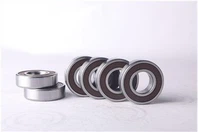
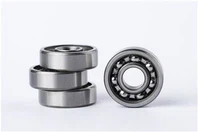
Seals play a crucial and multi - faceted role in conveyor bearings. As a supplier of conveyor bearings, I have witnessed firsthand the impact that seals have on the performance, durability, and overall efficiency of these vital industrial components.
Protection Against Contaminants
One of the primary functions of seals in conveyor bearings is to protect the internal components from contaminants. Conveyor systems operate in diverse environments, ranging from clean factory floors to harsh industrial settings filled with dust, dirt, moisture, and chemicals. Without proper seals, these contaminants can easily find their way into the bearing, leading to accelerated wear and tear, corrosion, and ultimately, bearing failure.
For example, in a mining operation, conveyor belts are constantly exposed to large amounts of dust and debris. If the bearings on these conveyors are not adequately sealed, the fine particles can infiltrate the bearing's internal structure. Once inside, the dust acts like an abrasive, grinding against the rolling elements and raceways, causing pitting and scoring. This not only reduces the bearing's lifespan but also increases the risk of sudden breakdowns, which can result in costly production downtime.
Seals act as a barrier, preventing these harmful contaminants from entering the bearing. There are different types of seals available, each designed to offer varying levels of protection depending on the application. Contact seals, for instance, are in direct contact with the bearing's inner or outer ring. They provide a high - level of protection but may also generate more friction, which can slightly reduce the bearing's efficiency. Non - contact seals, on the other hand, maintain a small gap between the seal and the bearing, offering less protection but also less friction.
Lubrication Retention
Another important role of seals in conveyor bearings is to retain the lubricant within the bearing. Lubrication is essential for the smooth operation of bearings as it reduces friction between the rolling elements and the raceways, dissipates heat, and protects against corrosion. Without proper lubrication, the bearing can overheat, leading to premature failure.
Seals help to keep the lubricant in place, preventing it from leaking out of the bearing. This is particularly important in high - speed conveyor applications where the centrifugal forces can cause the lubricant to be thrown out of the bearing if not properly contained. By retaining the lubricant, seals ensure that the bearing remains properly lubricated throughout its operation, which in turn extends its service life and reduces the need for frequent re - lubrication.
For instance, in a food processing plant, conveyor bearings need to be lubricated with food - grade lubricants. The seals in these bearings must prevent the lubricant from leaking onto the food products, while also keeping out any contaminants from the processing environment. This requires seals that are not only effective at retaining lubricant but also compliant with food safety regulations.
Performance Enhancement
Seals can also enhance the performance of conveyor bearings in several ways. Firstly, by reducing the amount of friction within the bearing, seals can improve the overall efficiency of the conveyor system. This means that less energy is required to operate the conveyor, resulting in cost savings over time.
Secondly, seals can help to reduce noise and vibration in the bearing. In a conveyor system, excessive noise and vibration can not only be a nuisance but also indicate potential problems with the bearings. By providing a tight seal and reducing the ingress of contaminants, seals can help to keep the bearing running smoothly, which in turn reduces noise and vibration levels.
For example, in a packaging facility, quiet operation of the conveyor system is essential to maintain a comfortable working environment. Seals that are designed to reduce noise and vibration can significantly improve the overall working conditions in the facility, while also ensuring the reliable operation of the conveyor system.
Types of Seals Used in Conveyor Bearings
There are several types of seals commonly used in conveyor bearings. Rubber seals are one of the most popular choices due to their flexibility, durability, and good sealing properties. They can be molded into different shapes and sizes to fit various bearing designs. Rubber seals can be either contact or non - contact, depending on the application requirements.


Metal seals are another option, especially in high - temperature or high - pressure applications. Metal seals are more rigid than rubber seals and can withstand extreme conditions. They are often used in industrial ovens, where the conveyor bearings are exposed to high temperatures for extended periods.
Plastic seals are also used in some conveyor bearing applications. They are lightweight, corrosion - resistant, and relatively inexpensive. Plastic seals are suitable for applications where the operating conditions are not too severe, such as in some light - duty conveyor systems.
Case Studies
Let's take a look at some real - world examples of how seals have made a difference in conveyor bearing applications. In a large - scale manufacturing plant, the conveyor system was experiencing frequent bearing failures due to dust ingress. The original bearings were equipped with standard seals that were not providing adequate protection. After replacing the seals with high - performance contact seals, the number of bearing failures decreased significantly. The new seals effectively prevented the dust from entering the bearing, resulting in a longer bearing lifespan and reduced maintenance costs.
In a logistics warehouse, the conveyor belts were making excessive noise, which was a sign of bearing problems. The bearings were found to have worn - out seals that were not retaining the lubricant properly. By installing new non - contact seals, the noise level was reduced, and the bearings started to operate more smoothly. The new seals also helped to retain the lubricant, which extended the bearing's service life.
Related Products
If you are interested in high - quality bearings for your conveyor systems, we recommend checking out some of our related products. The Trixes Frictionless Abec 9 Skateboard Roller Skate Bearings offer excellent performance and durability. These bearings are designed to minimize friction, which can be beneficial in conveyor applications where energy efficiency is a priority.
The Money Counter Bearings F688ZZ are another great option. They are suitable for applications where precision and reliability are essential. These bearings come with high - quality seals that provide effective protection against contaminants and ensure proper lubrication retention.
For conveyor systems that require heavy - duty support, the Roller Ball Bearing Casters are an ideal choice. These casters are designed to withstand high loads and provide smooth operation, thanks to their well - sealed bearings.
Conclusion
In conclusion, seals play a vital role in conveyor bearings. They protect the bearings from contaminants, retain lubrication, enhance performance, and contribute to the overall reliability and efficiency of the conveyor system. As a conveyor bearings supplier, we understand the importance of choosing the right seals for each application. We offer a wide range of bearings with different types of seals to meet the diverse needs of our customers.
If you are looking for high - quality conveyor bearings with reliable seals, we invite you to contact us for a procurement discussion. Our team of experts is ready to assist you in selecting the most suitable bearings for your specific requirements.
References
- Harris, T. A., & Kotzalas, M. N. (2007). Rolling Bearing Analysis. Wiley.
- Gupta, P. K. (2002). Ball and Roller Bearing Engineering. CRC Press.