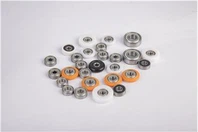
Surface roughness is a crucial parameter in the manufacturing and performance of mechanical components, and the U Type Groove Pulley is no exception. As a leading supplier of U Type Groove Pulleys, I understand the significance of surface roughness in the groove of these pulleys and its impact on various applications. In this blog, I will delve into what surface roughness is, why it matters for U Type Groove Pulleys, and how it can affect the overall performance of your machinery.
What is Surface Roughness?
Surface roughness refers to the irregularities on the surface of a material. These irregularities can be microscopic and are typically measured in terms of the height, width, and spacing of the peaks and valleys on the surface. The roughness of a surface is usually quantified using parameters such as Ra (arithmetical mean deviation of the assessed profile), Rz (average maximum height of the profile), and Rq (root mean square deviation of the assessed profile).
In the context of a U Type Groove Pulley's groove, surface roughness describes the texture of the inner surface of the groove. A smooth surface will have minimal peaks and valleys, while a rough surface will have more pronounced irregularities. The surface roughness of the groove is determined by the manufacturing process used to create the pulley, as well as any subsequent finishing operations.
Why Surface Roughness Matters for U Type Groove Pulleys
The surface roughness of a U Type Groove Pulley's groove plays a vital role in its performance and longevity. Here are some key reasons why it matters:
1. Friction and Wear
The surface roughness of the groove affects the friction between the pulley and the belt or rope that runs in it. A rough surface can increase friction, which may lead to excessive wear on both the pulley and the belt. This can result in reduced efficiency, increased energy consumption, and more frequent replacement of components. On the other hand, a smooth surface can minimize friction, reducing wear and extending the lifespan of the pulley and the belt.


2. Belt or Rope Traction
Proper traction between the pulley and the belt or rope is essential for the efficient transfer of power. The surface roughness of the groove can influence the traction force. A surface with the right amount of roughness can provide better grip, preventing slippage and ensuring reliable power transmission. However, if the surface is too rough, it can cause damage to the belt or rope, while a surface that is too smooth may not provide enough traction.
3. Noise and Vibration
A rough surface in the groove can cause increased noise and vibration during operation. The irregularities on the surface can create uneven forces as the belt or rope moves over the pulley, leading to vibrations that can be transmitted throughout the machinery. These vibrations can not only be annoying but also cause additional wear and tear on the components and potentially affect the overall performance of the system.
4. Contamination Resistance
The surface roughness of the groove can also impact its resistance to contamination. A rough surface can trap dirt, dust, and other contaminants, which can further increase wear and friction. A smooth surface, on the other hand, is less likely to trap contaminants, making it easier to clean and maintain.
Factors Affecting the Surface Roughness of U Type Groove Pulleys
Several factors can influence the surface roughness of a U Type Groove Pulley's groove. These include:
1. Manufacturing Process
The manufacturing process used to create the pulley has a significant impact on the surface roughness of the groove. Processes such as machining, casting, and forging can leave different surface textures. For example, machining operations like turning and milling can produce relatively smooth surfaces, while casting may result in a rougher surface that requires additional finishing.
2. Tooling and Cutting Parameters
In machining processes, the choice of tooling and cutting parameters can affect the surface roughness. The type of cutting tool, its geometry, and the cutting speed, feed rate, and depth of cut all play a role in determining the final surface finish. Using sharp tools and optimizing the cutting parameters can help achieve a smoother surface.
3. Material Properties
The material of the pulley can also influence the surface roughness. Different materials have different hardness, ductility, and machinability, which can affect how they respond to the manufacturing process. For example, a softer material may be more prone to deformation during machining, resulting in a rougher surface.
4. Finishing Operations
Finishing operations such as grinding, polishing, or honing can be used to improve the surface roughness of the groove. These operations can remove the surface irregularities left by the initial manufacturing process and create a smoother surface. The choice of finishing operation depends on the desired surface roughness and the material of the pulley.
Measuring Surface Roughness
To ensure that the surface roughness of a U Type Groove Pulley's groove meets the required specifications, it is important to measure it accurately. There are several methods available for measuring surface roughness, including:
1. Contact Profilometry
Contact profilometry involves using a stylus that is dragged across the surface of the groove. The stylus measures the vertical displacement of the surface as it moves, and the data is used to calculate the surface roughness parameters. This method provides high-resolution measurements but can be time-consuming and may damage the surface if not performed carefully.
2. Optical Profilometry
Optical profilometry uses light to measure the surface topography. It can be non-contact, which means it does not damage the surface. There are different types of optical profilometry techniques, such as white light interferometry and confocal microscopy. These methods are fast and can provide detailed 3D surface maps.
3. Portable Roughness Testers
Portable roughness testers are handheld devices that can quickly and easily measure the surface roughness of a pulley's groove. They typically use a stylus or an optical sensor to measure the surface profile and display the roughness parameters on a screen. These testers are convenient for on-site measurements and quality control checks.
Controlling Surface Roughness in U Type Groove Pulley Manufacturing
As a U Type Groove Pulley supplier, we take several steps to control the surface roughness of the grooves in our pulleys:
1. Selecting the Right Manufacturing Process
We carefully choose the manufacturing process based on the requirements of the pulley, including the desired surface roughness. For example, if a smooth surface is required, we may use precision machining techniques followed by finishing operations.
2. Optimizing Tooling and Cutting Parameters
We work closely with our machining teams to optimize the tooling and cutting parameters to achieve the desired surface finish. This includes selecting the right cutting tools, adjusting the cutting speed and feed rate, and ensuring proper coolant usage.
3. Quality Control and Inspection
We have a rigorous quality control process in place to ensure that the surface roughness of the grooves meets our standards. We use advanced measuring equipment to measure the surface roughness at various stages of the manufacturing process and perform final inspections before the pulleys are shipped to our customers.
Related Products
In addition to U Type Groove Pulleys, we also offer a range of other high-quality products, including Door Bearing Wheels, Paper Roller Bearing, and Industrial Roller Bearings. These products are designed to meet the diverse needs of our customers and provide reliable performance in various applications.
Conclusion
The surface roughness of a U Type Groove Pulley's groove is a critical factor that can significantly impact its performance, longevity, and efficiency. By understanding the importance of surface roughness, the factors that affect it, and the methods for measuring and controlling it, we can ensure that our pulleys meet the highest quality standards.
If you are in the market for U Type Groove Pulleys or any of our other products, we invite you to contact us for more information and to discuss your specific requirements. Our team of experts is ready to assist you in finding the right solutions for your machinery.
References
- ASME B46.1 - Surface Texture (Surface Roughness, Waviness, and Lay)
- ISO 4287 - Geometrical Product Specifications (GPS) - Surface texture: Profile method - Terms, definitions and surface texture parameters
- M. P. Groover, "Fundamentals of Modern Manufacturing: Materials, Processes, and Systems", Wiley, 2010