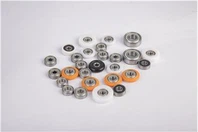
Hey there! As a supplier of One Way Rollers, I've had my fair share of customers asking about how these nifty little things stack up against regular rollers. So, I thought I'd take a deep dive into this topic and share my insights with you all.
Let's start with the basics. A regular roller, as you probably know, is a simple mechanical component that's designed to reduce friction between moving parts. It's like the unsung hero of the machinery world, quietly doing its job to keep things running smoothly. Regular rollers are used in all sorts of applications, from conveyor belts to automotive engines. They come in different shapes and sizes, but their main function is pretty straightforward: to roll and support loads.
On the other hand, a One Way Roller is a bit more specialized. It's a type of bearing that allows rotation in only one direction. Think of it as a kind of mechanical "check valve" for rotation. When the roller is rotating in the allowed direction, it behaves just like a regular roller. But when you try to rotate it in the opposite direction, it locks up and prevents movement. This one - way functionality opens up a whole new world of possibilities in mechanical design.
Design and Structure
Regular rollers are usually made up of a simple cylindrical or tapered shape. They're often part of a bearing assembly that includes an inner and outer race, and the rollers sit between these races. The design is pretty standard across different manufacturers, and they're relatively easy to produce.
One Way Rollers, however, have a more complex internal structure. They typically contain a set of wedging elements, like sprags or rollers that are arranged in a way that allows them to grip or release depending on the direction of rotation. This design requires more precision in manufacturing, which can make them a bit more expensive than regular rollers.
Performance in Different Applications
Conveyor Systems
In a regular conveyor system, regular rollers are used to move items along the belt. They provide a smooth surface for the belt to roll over, reducing friction and making the conveyor more energy - efficient. But what if you want to prevent the conveyor from moving backward? That's where One Way Rollers come in handy. You can install One Way Rollers at strategic points in the conveyor system to ensure that the belt only moves in one direction. This can be crucial in applications where you need to prevent material from flowing back or where you're using gravity - fed conveyors.

Automotive Engines
Regular rollers are used in many parts of an automotive engine, such as the camshaft bearings. They help reduce friction between the moving parts, which improves the engine's efficiency and longevity. One Way Rollers, on the other hand, are often used in the engine's starter system. When you turn the ignition key, the starter motor engages with the engine's flywheel using a One Way Roller. This allows the starter motor to turn the engine over, but once the engine starts running on its own, the One Way Roller prevents the engine from driving the starter motor, which could damage it.
Power Transmission
In power transmission systems, regular rollers are used in gearboxes and other components to transfer power smoothly. One Way Rollers can be used to create overrunning clutches, which are essential in applications where you need to transfer power in one direction only. For example, in a bicycle, the One Way Roller in the freewheel allows you to coast without pedaling. When you pedal forward, the One Way Roller engages, and power is transferred from the pedals to the wheels. But when you stop pedaling, the One Way Roller disengages, and the wheels can continue to rotate freely.
Advantages of One Way Rollers
One of the biggest advantages of One Way Rollers is their ability to control the direction of rotation. This can simplify mechanical designs by eliminating the need for additional components to prevent reverse rotation. For example, in a machine where you have a motor driving a shaft, you can use a One Way Roller to ensure that the shaft only rotates in the desired direction, without having to add a complex braking or locking mechanism.
Another advantage is their reliability. Since One Way Rollers are designed to engage and disengage smoothly, they can handle high - speed applications with minimal wear and tear. They also have a long service life, which means less maintenance and replacement costs over time.
Limitations of One Way Rollers
One of the main limitations of One Way Rollers is their cost. As I mentioned earlier, their complex design and precision manufacturing make them more expensive than regular rollers. This can be a deterrent for some applications where cost is a major factor.
Another limitation is that they're not suitable for all types of applications. For example, in applications where you need continuous bi - directional rotation, One Way Rollers won't work. You'll still need to rely on regular rollers in these cases.
Cost Comparison
When it comes to cost, regular rollers are generally more affordable. They're mass - produced, and the manufacturing process is relatively simple, which keeps the costs down. One Way Rollers, on the other hand, are more expensive due to their complex design and the need for precision manufacturing. However, it's important to consider the long - term costs. In some applications, the benefits of using One Way Rollers, such as reduced maintenance and improved efficiency, can outweigh the initial higher cost.
Compatibility and Installation
Regular rollers are widely available and are usually compatible with a variety of bearing housings and assemblies. Installation is also relatively straightforward, and most mechanics or technicians are familiar with how to install them.
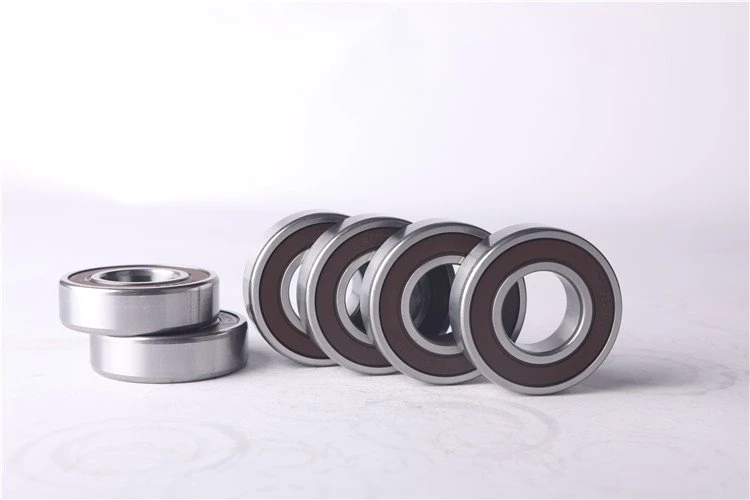
One Way Rollers may require more careful installation. Since they have a specific direction of operation, it's crucial to install them correctly to ensure proper functionality. You also need to make sure that the housing and other components are compatible with the One Way Roller's design. For example, the 6205 - ZZ bearing, which is a type of One Way Roller, has its own set of installation requirements that need to be followed.
Conclusion
So, how does a One Way Roller compare to a regular roller? Well, it really depends on your specific application. Regular rollers are great for general - purpose applications where you need simple rotation and reduced friction. They're affordable, easy to install, and widely available.
On the other hand, One Way Rollers offer unique functionality that can't be achieved with regular rollers. Their ability to control the direction of rotation makes them ideal for applications where you need to prevent reverse movement or create overrunning clutches. While they're more expensive and may require more careful installation, the benefits they offer can make them a worthwhile investment in the right application.
If you're considering using One Way Rollers in your project, I'd be more than happy to discuss your requirements. Whether you need help with choosing the right type of One Way Roller or have questions about installation and compatibility, I'm here to assist you. Feel free to reach out to start a procurement discussion and find the best solution for your mechanical needs.
References
- "Mechanical Design Handbook" - A comprehensive guide to mechanical components and their design.
- "Bearing Engineering Manual" - Provides in - depth information on different types of bearings, including regular and one - way rollers.