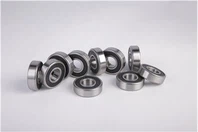
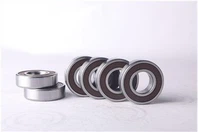
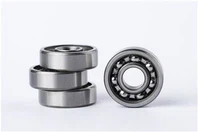
When it comes to industrial components, the 20mm roller bearing is a crucial element in a wide range of machinery and equipment. As a supplier of 20mm Roller Bearings, I often get inquiries about various aspects of these bearings, and one question that frequently pops up is: What is the noise level of a 20mm roller bearing?
Understanding the Basics of 20mm Roller Bearings
Before delving into the noise level, let's first understand what a 20mm roller bearing is. A 20mm roller bearing refers to a bearing with a specific dimension, where the inner diameter or other critical measurements are around 20mm. These bearings are designed to reduce friction between moving parts and support radial and axial loads. They are commonly used in small - scale machinery, such as electric motors, conveyors, and household appliances.
The 20mm Roller Bearing comes in different types, including cylindrical roller bearings, tapered roller bearings, and spherical roller bearings. Each type has its own unique characteristics and applications, which also influence the noise level during operation.
Factors Affecting the Noise Level of 20mm Roller Bearings
Manufacturing Precision
The manufacturing precision of a 20mm roller bearing plays a significant role in determining its noise level. High - precision bearings are manufactured with tight tolerances, which means that the components fit together more precisely. For example, the raceways of the bearing, where the rollers move, are ground and polished to a very smooth surface finish. Any irregularities in the raceways can cause the rollers to vibrate as they roll, resulting in increased noise. Bearings with high manufacturing precision tend to have lower noise levels because the motion of the rollers is more consistent and smooth.
Lubrication
Lubrication is another critical factor. Proper lubrication reduces friction between the rollers and the raceways, as well as between the rollers themselves. A well - lubricated bearing operates more quietly because the lubricant acts as a cushion, absorbing some of the vibrations that would otherwise generate noise. There are different types of lubricants available, such as grease and oil. Grease is commonly used in 20mm roller bearings due to its simplicity and ability to stay in place. However, the quality and quantity of the grease also matter. Too little grease may not provide sufficient lubrication, while too much grease can cause churning and generate heat and noise.
Load and Speed
The load and speed at which the 20mm roller bearing operates have a direct impact on the noise level. When a bearing is subjected to a heavy load, the rollers are pressed more firmly against the raceways. This can increase the contact stress and cause more vibrations, leading to higher noise. Similarly, high - speed operation can also generate more noise. At high speeds, the inertia of the rollers can cause them to bounce or skid on the raceways, creating additional noise. Therefore, it is important to select a 20mm roller bearing that is suitable for the specific load and speed requirements of the application.
Bearing Installation
Proper installation is essential for reducing the noise level of a 20mm roller bearing. If the bearing is not installed correctly, it can be misaligned, which means that the rollers are not moving in a straight path within the raceways. Misalignment can cause uneven wear on the rollers and raceways, as well as increased vibration and noise. Additionally, over - tightening or under - tightening the bearing during installation can also affect its performance and noise level.
Measuring the Noise Level of 20mm Roller Bearings
The noise level of a 20mm roller bearing is typically measured in decibels (dB). Specialized noise - measuring equipment is used to quantify the noise generated by the bearing during operation. The measurement is usually taken in a controlled environment to eliminate external noise sources. The test conditions, such as the load, speed, and lubrication, are standardized to ensure accurate and comparable results.
When measuring the noise level, it is important to consider the frequency spectrum of the noise. Different frequencies of noise can indicate different types of problems within the bearing. For example, high - frequency noise may be caused by surface roughness or small - scale irregularities, while low - frequency noise may be related to misalignment or larger - scale mechanical issues.
Noise Level Standards for 20mm Roller Bearings
There are industry standards and specifications for the noise level of 20mm roller bearings. These standards are established to ensure the quality and performance of the bearings. For example, some standards specify the maximum allowable noise level for a bearing operating under certain conditions. By adhering to these standards, manufacturers can produce bearings that meet the expectations of customers in terms of noise performance.
Comparison with Other Small - Sized Bearings
In the world of small - sized bearings, the 20mm roller bearing is not the only option. There are also Small Rollers with Bearings and other types of bearings like the Bearing 6203llu. Each type of bearing has its own noise characteristics.
Compared to some other small - sized bearings, 20mm roller bearings generally offer a good balance between load - carrying capacity and noise level. For example, ball bearings may be quieter at low loads and speeds, but they may not be able to handle as much radial or axial load as a 20mm roller bearing. On the other hand, some small - sized plain bearings may generate more noise due to the direct contact between the sliding surfaces.
Applications and the Importance of Low - Noise 20mm Roller Bearings
Household Appliances
In household appliances such as washing machines, refrigerators, and vacuum cleaners, low - noise 20mm roller bearings are highly desirable. Consumers expect these appliances to operate quietly without causing disturbance. For example, in a washing machine, the bearings in the drum support system need to be quiet during the spinning cycle. A noisy bearing can be a major annoyance for the user and may even indicate a potential problem with the appliance.
Medical Equipment
Medical equipment also requires low - noise 20mm roller bearings. Devices such as centrifuges, which are used to separate substances in a sample, need to operate quietly to avoid disturbing patients and medical staff. Additionally, the precision and reliability of the bearings are crucial in medical equipment to ensure accurate test results.
Electric Motors
Electric motors are widely used in various industrial and commercial applications. Low - noise 20mm roller bearings can improve the overall performance of the motor by reducing vibration and noise. This is especially important in applications where a quiet working environment is required, such as in offices or laboratories.
How Our Company Ensures Low - Noise 20mm Roller Bearings
As a supplier of 20mm Roller Bearings, we take several steps to ensure that our bearings have low noise levels. First, we use high - quality raw materials and advanced manufacturing processes to ensure the precision of our bearings. Our production facilities are equipped with state - of - the - art machinery that can manufacture bearings with tight tolerances and smooth surface finishes.


We also pay great attention to lubrication. We use high - quality grease that is specifically formulated for 20mm roller bearings. Our technicians carefully control the quantity of grease during the manufacturing process to ensure optimal lubrication.
In addition, we provide detailed installation instructions to our customers. Our technical support team is always available to assist customers with the proper installation of the bearings, which helps to reduce the risk of misalignment and noise.
Conclusion
The noise level of a 20mm roller bearing is influenced by multiple factors, including manufacturing precision, lubrication, load and speed, and installation. Understanding these factors is crucial for selecting the right bearing for a specific application and ensuring quiet and reliable operation.
If you are in need of high - quality, low - noise 20mm roller bearings, we are here to help. We have a wide range of 20mm roller bearings to meet your specific requirements. Whether you are in the household appliance, medical equipment, or electric motor industry, we can provide you with the perfect bearing solution. Contact us today to discuss your procurement needs and start a productive negotiation.
References
- Harris, T. A., & Kotzalas, M. N. (2007). Rolling Bearing Analysis. John Wiley & Sons.
- SKF. (2019). Rolling Bearing Handbook. SKF Group.
- Timken. (2020). Tapered Roller Bearing Handbook. Timken Company.