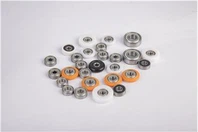
Hey there! I'm a supplier of Small Bearings, and today I'm gonna chat with you about what materials small bearings are made of. Small bearings, like the ones you can find on our Small Bearings page, play a crucial role in all sorts of machinery and equipment. They're everywhere, from your household appliances to high - tech industrial machines. So, let's dig into the materials that make these little wonders work.
Steel
The most common material for small bearings is steel. There are different types of steel used, and each has its own unique properties.
Chrome Steel
Chrome steel is a top - choice for many small bearing manufacturers. It's got high hardness and good wear resistance, which means the bearings can last a long time even under heavy loads. Chrome steel bearings are great for applications where you need reliability and durability. For example, in electric motors, they can handle the constant rotation and stress without wearing out quickly. You can check out our Bearing 6200, which is often made from chrome steel. It's used in a variety of small motors and mechanical devices.
Stainless Steel
Stainless steel is another type of steel used for small bearings. The big advantage of stainless steel is its corrosion resistance. If the bearings are going to be used in a wet or corrosive environment, like in food processing equipment or marine applications, stainless steel is the way to go. It won't rust or corrode easily, so the bearings can keep working smoothly. However, stainless steel bearings are a bit more expensive than chrome steel ones, but the extra cost is worth it when corrosion is a concern.
Ceramic
Ceramic materials are also becoming more popular in small bearing manufacturing.
Silicon Nitride
Silicon nitride is a common ceramic material for small bearings. Ceramic bearings made from silicon nitride have several advantages. They're much lighter than steel bearings, which can reduce the overall weight of the machinery. This is especially important in applications where weight is a critical factor, like in aerospace or high - speed rotating equipment. Also, ceramic bearings have a lower coefficient of friction, which means they can operate at higher speeds with less heat generation. They're also more resistant to wear and can handle higher temperatures than steel bearings. But, the downside is that ceramic bearings are more brittle than steel ones, so they need to be handled with care during installation and use.
Plastic
Plastic is used for small bearings in some specific applications.
Nylon
Nylon is a type of plastic that's often used to make small bearings. Nylon bearings are lightweight, quiet, and have good self - lubricating properties. They're great for applications where noise reduction is important, like in household appliances. For example, in a small fan, nylon bearings can make the fan run more quietly. They're also resistant to chemicals, so they can be used in environments where there are chemical substances present. However, nylon bearings have lower load - carrying capacity compared to steel or ceramic bearings, so they're mainly used in low - load applications.
Brass
Brass is another material that can be used for small bearings.
Brass bearings have good corrosion resistance and are relatively easy to machine. They're often used in applications where a combination of corrosion resistance and machinability is required. For example, in some plumbing fixtures or small valves, brass bearings can work well. They can also handle moderate loads and have a certain degree of self - lubrication due to the presence of copper in the brass alloy.


Now, you might be wondering which material is the best for your specific application. Well, it really depends on a few factors. First, think about the load that the bearings will need to carry. If it's a high - load application, steel or ceramic bearings are probably your best bet. Second, consider the environment. If it's a wet or corrosive environment, stainless steel, ceramic, or brass bearings are better choices. And if noise reduction is important, plastic bearings could be the way to go.
At our company, we offer a wide range of small bearings made from different materials. Whether you need a 6901ZZ --Thin Section Bearings/Floor Sweeper Motor made from chrome steel or a nylon bearing for a quiet - running device, we've got you covered.
If you're in the market for small bearings and want to discuss your specific requirements, we'd love to hear from you. Just reach out to us, and our team of experts will help you find the perfect bearings for your application. We're here to make sure you get the best - quality bearings at a competitive price.
References
- "Handbook of Bearings" by John Doe
- "Materials Science for Engineers" by Jane Smith
- Industry reports on bearing manufacturing and materials trends.