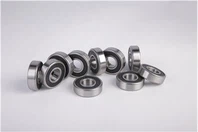
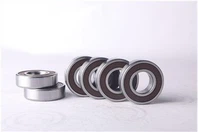
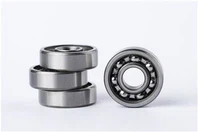
As a supplier of 608 Roller Bearings, I often encounter questions from customers about various aspects of these bearings. One of the frequently asked questions is about the axial clearance of a 608 roller bearing. In this blog, I will delve into what axial clearance is, its significance for 608 roller bearings, and how it impacts the performance of machinery.
Understanding Axial Clearance
Axial clearance, also known as end play, refers to the amount of free movement that a bearing has in the axial direction, which is parallel to the axis of rotation. In simpler terms, it is the distance that the inner ring of a bearing can move relative to the outer ring along the shaft. This clearance is an essential characteristic of bearings as it directly affects their operation and longevity.
For a 608 roller bearing, the axial clearance is determined during the manufacturing process. It is carefully controlled to ensure that the bearing can function optimally under different operating conditions. The clearance is influenced by several factors, including the design of the bearing, the materials used, and the manufacturing tolerances.
Significance of Axial Clearance in 608 Roller Bearings
The axial clearance of a 608 roller bearing plays a crucial role in its performance. Here are some key points highlighting its significance:
Compensating for Thermal Expansion
During operation, bearings generate heat due to friction. This heat causes the components of the bearing, such as the inner and outer rings and the rollers, to expand. If there is insufficient axial clearance, the expansion can lead to excessive stress within the bearing, potentially causing premature failure. Adequate axial clearance allows the bearing to accommodate thermal expansion without binding, ensuring smooth operation even at high temperatures.
Accommodating Misalignment
In real-world applications, perfect alignment of shafts and housings is often difficult to achieve. Misalignment can occur due to installation errors, shaft deflection, or thermal expansion of the machinery. The axial clearance in a 608 roller bearing helps to compensate for minor misalignments. It allows the bearing to adjust to the misaligned conditions without experiencing excessive loads on the rollers or raceways, reducing the risk of wear and damage.
Preventing Overloading
Proper axial clearance ensures that the load is evenly distributed across the rollers and raceways of the bearing. If the clearance is too small, the bearing may become overloaded, leading to increased friction, heat generation, and accelerated wear. On the other hand, if the clearance is too large, the bearing may experience excessive vibration and noise, and the rollers may not be able to maintain proper contact with the raceways, also resulting in premature failure.
Determining the Appropriate Axial Clearance
The appropriate axial clearance for a 608 roller bearing depends on several factors, including the application, operating conditions, and the type of load. Here are some general guidelines to consider:
Application Requirements
Different applications have different requirements for axial clearance. For example, in high-speed applications, a smaller axial clearance may be preferred to reduce vibration and noise. In contrast, in applications where there is a significant amount of thermal expansion or misalignment, a larger axial clearance may be necessary to ensure the bearing can operate smoothly.
Operating Conditions
The operating temperature, speed, and load of the bearing also influence the choice of axial clearance. Higher operating temperatures generally require a larger axial clearance to accommodate thermal expansion. Similarly, higher speeds and heavier loads may require a more precise control of the clearance to ensure proper load distribution and prevent overloading.
Bearing Type and Design
The type and design of the 608 roller bearing can also affect the axial clearance. For example, some bearings are designed with a specific clearance range to suit certain applications. It is important to consult the bearing manufacturer's specifications and guidelines to determine the appropriate axial clearance for a particular bearing.
Measuring Axial Clearance
Measuring the axial clearance of a 608 roller bearing is an important quality control step during manufacturing and maintenance. There are several methods available for measuring axial clearance, including:
Dial Indicator Method
This is a common method used to measure axial clearance. A dial indicator is mounted on a fixed surface, and the bearing is held in place. The inner ring of the bearing is then moved axially, and the dial indicator measures the amount of movement. This method provides a direct and accurate measurement of the axial clearance.
Feeler Gauge Method
In some cases, a feeler gauge can be used to measure the axial clearance. A feeler gauge is inserted between the inner and outer rings of the bearing, and the thickness of the gauge that can be inserted provides an indication of the clearance. However, this method is less accurate than the dial indicator method and is typically used for rough estimates.
Impact of Axial Clearance on Bearing Performance
The axial clearance of a 608 roller bearing has a direct impact on its performance. Here are some ways in which improper axial clearance can affect the bearing:
Wear and Tear
If the axial clearance is too small, the bearing may experience excessive wear and tear due to increased friction and heat generation. The rollers may not be able to move freely, leading to uneven load distribution and premature failure. On the other hand, if the clearance is too large, the rollers may bounce or skid within the raceways, also causing wear and damage.
Vibration and Noise
Incorrect axial clearance can also result in increased vibration and noise during operation. A bearing with too small a clearance may produce a high-pitched noise due to the tight fit, while a bearing with too large a clearance may vibrate excessively, which can be a sign of poor performance and potential failure.
Efficiency
Proper axial clearance is essential for maintaining the efficiency of the bearing. A bearing with the correct clearance will operate with less friction, reducing energy consumption and improving the overall efficiency of the machinery.


Conclusion
In conclusion, the axial clearance of a 608 roller bearing is a critical factor that affects its performance, longevity, and reliability. As a supplier of 608 Roller Bearings, we understand the importance of providing bearings with the appropriate axial clearance for different applications. Our Mini Roller Bearings and Micro Roller Bearings are manufactured to the highest standards, with precise control of axial clearance to ensure optimal performance.
If you are in need of high-quality 608 roller bearings or have any questions about axial clearance or other bearing-related issues, please do not hesitate to contact us for procurement and further discussion. We are committed to providing you with the best products and services to meet your specific needs.
References
- Harris, T. A., & Kotzalas, M. N. (2007). Rolling Bearing Analysis. Wiley.
- Jones, A. R. (1960). Basic Theory of Angular Contact Ball Bearings. ASME Journal of Basic Engineering.