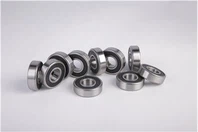
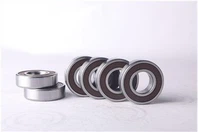
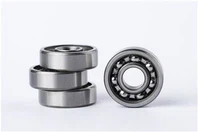
As a supplier of Mini Roller Bearings, I've witnessed firsthand the critical role these components play in various industries. Their reliability is paramount, as it directly impacts the performance and longevity of the equipment they are used in. In this blog, I'll delve into the factors that affect the reliability of Mini Roller Bearings and provide insights to help you make informed decisions when selecting and using these bearings.
Material Quality
The quality of materials used in Mini Roller Bearings is the foundation of their reliability. High - quality bearing steels, such as chrome steel (AISI 52100), are commonly used due to their excellent hardness, wear resistance, and fatigue strength. These steels can withstand high loads and repeated stress cycles without significant deformation or failure.
For example, when a Mini Roller Bearing is used in a high - speed electric motor, the material must be able to resist the heat generated by friction and the mechanical stress from rotation. If low - quality steel is used, the bearing may experience premature wear, leading to increased noise, vibration, and ultimately, failure. As a supplier, we ensure that all our Mini Roller Bearings are made from top - grade materials that meet or exceed industry standards.


Manufacturing Precision
Precision manufacturing is another key factor in the reliability of Mini Roller Bearings. The dimensional accuracy of the bearing components, including the inner and outer rings, rollers, and cages, is crucial. Even a small deviation in dimensions can lead to uneven loading, increased friction, and reduced bearing life.
During the manufacturing process, advanced machining techniques and strict quality control measures are employed. For instance, the grinding process of the bearing rings must be highly precise to ensure a smooth surface finish and accurate diameter. The rollers should also be perfectly round and have consistent dimensions. Our manufacturing facilities are equipped with state - of - the - art machinery and experienced technicians who can produce Mini Roller Bearings with extremely high precision, guaranteeing their reliable performance.
Lubrication
Proper lubrication is essential for the reliable operation of Mini Roller Bearings. Lubricants reduce friction between the moving parts, dissipate heat, and prevent corrosion. There are different types of lubricants available, such as grease and oil, and the choice depends on the application requirements.
In applications where the bearing operates at low speeds and under light loads, grease lubrication is often sufficient. Grease has the advantage of being easy to apply and can stay in place for a long time. However, in high - speed or high - temperature applications, oil lubrication may be more suitable as it can provide better heat dissipation and lower friction.
As a supplier, we can offer guidance on the appropriate lubricant for your specific application. We also recommend regular lubrication maintenance to ensure that the bearing always has an adequate supply of lubricant. Failure to lubricate the bearing properly can lead to rapid wear, overheating, and premature failure.
Load Conditions
The load conditions that a Mini Roller Bearing is subjected to have a significant impact on its reliability. There are two main types of loads: radial loads and axial loads. Radial loads act perpendicular to the axis of the bearing, while axial loads act parallel to the axis.
In some applications, such as in a conveyor system, the bearing may mainly experience radial loads. In other cases, like in a screw jack, axial loads are dominant. It's important to select a Mini Roller Bearing that is designed to handle the specific load conditions of the application.
Overloading a bearing can cause excessive stress on the components, leading to plastic deformation, cracking, and ultimately, failure. On the other hand, under - loading a bearing may also cause problems, such as skidding of the rollers, which can result in wear and reduced reliability. As a supplier, we can help you select the right bearing based on the load requirements of your application.
Operating Environment
The operating environment in which a Mini Roller Bearing is used can greatly affect its reliability. Factors such as temperature, humidity, dust, and chemicals can all have a negative impact on the bearing.
High temperatures can cause the lubricant to break down, reducing its effectiveness and increasing friction. In addition, high temperatures can also lead to thermal expansion of the bearing components, which can affect the clearance and fit of the bearing. Low temperatures, on the other hand, can make the lubricant more viscous, reducing its ability to flow and lubricate the bearing properly.
Humidity can cause corrosion of the bearing components, especially if the bearing is not properly protected. Dust and other contaminants can enter the bearing and cause abrasion, leading to wear and reduced performance. Chemicals in the environment can also react with the bearing materials and lubricants, causing damage.
To ensure the reliability of Mini Roller Bearings in harsh environments, special seals and coatings can be used. For example, rubber seals can prevent dust and moisture from entering the bearing, and corrosion - resistant coatings can protect the bearing components from chemical attack.
Installation and Alignment
Proper installation and alignment of Mini Roller Bearings are crucial for their reliable operation. Incorrect installation can cause damage to the bearing components, such as dents or scratches, which can lead to premature failure.
During installation, it's important to use the correct tools and follow the manufacturer's instructions. The bearing should be installed with the correct interference fit to ensure that it is securely held in place. Improper alignment of the bearing can also cause uneven loading, increased friction, and premature wear.
We provide detailed installation and alignment guidelines to our customers to ensure that the Mini Roller Bearings are installed correctly. Our technical support team is also available to assist with any installation - related questions or issues.
Maintenance and Monitoring
Regular maintenance and monitoring are essential for ensuring the long - term reliability of Mini Roller Bearings. Maintenance activities can include lubrication replacement, inspection for wear and damage, and cleaning.
Monitoring the bearing's performance can be done through various methods, such as vibration analysis, temperature monitoring, and noise detection. Vibration analysis can detect early signs of bearing damage, such as misalignment or wear. Temperature monitoring can indicate if the bearing is overheating, which may be a sign of lubrication problems or excessive load. Noise detection can also help identify potential issues, such as loose components or damaged rollers.
By regularly maintaining and monitoring the Mini Roller Bearings, any potential problems can be detected and addressed early, preventing costly breakdowns and downtime.
Conclusion
In conclusion, the reliability of Mini Roller Bearings is affected by multiple factors, including material quality, manufacturing precision, lubrication, load conditions, operating environment, installation and alignment, and maintenance and monitoring. As a supplier of Mini Roller Bearings, we are committed to providing high - quality products and comprehensive technical support to ensure that our customers can achieve reliable and efficient operation of their equipment.
If you are in the market for Mini Roller Bearings or need more information about our products and services, we invite you to contact us for a detailed discussion. We can help you select the right bearing for your specific application and provide solutions to ensure its long - term reliability. Whether you need 608 Roller Bearing for a small - scale project or Micro Roller Bearings for a high - precision application, we have the expertise and products to meet your needs.
References
- Harris, T. A., & Kotzalas, M. N. (2007). Rolling Bearing Analysis. Wiley.
- Zorzi, E., & Fregolent, F. (2012). Tribology of Rolling Bearings. Springer.
- ISO 281:2007, Rolling bearings - Dynamic load ratings and rating life.