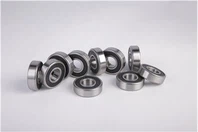
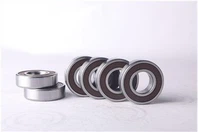
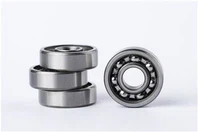
Manufacturing 20mm roller bearings presents a unique set of challenges that require meticulous attention to detail and a deep understanding of engineering principles. As a supplier of 20mm Roller Bearing, I have witnessed firsthand the complexities involved in producing these precision components. In this blog post, I will delve into the various challenges faced in manufacturing 20mm roller bearings and discuss how we overcome them to deliver high-quality products to our customers.
Material Selection
One of the primary challenges in manufacturing 20mm roller bearings is selecting the appropriate materials. The materials used in roller bearings must possess high strength, hardness, and wear resistance to withstand the extreme forces and stresses they are subjected to during operation. Additionally, they must have good corrosion resistance to ensure long-term durability in various environments.
For the outer and inner rings of 20mm roller bearings, high-quality bearing steels such as AISI 52100 are commonly used. These steels offer excellent hardness, toughness, and wear resistance, making them ideal for bearing applications. The rollers themselves are typically made from the same or similar materials to ensure compatibility and optimal performance.
However, selecting the right material is not just about its mechanical properties. It also involves considering factors such as cost, availability, and manufacturability. Balancing these factors can be a challenge, especially when dealing with small-scale production runs. As a supplier, we work closely with our material suppliers to source the highest quality materials at competitive prices while ensuring timely delivery.
Precision Machining
Another significant challenge in manufacturing 20mm roller bearings is achieving the required level of precision in machining. Roller bearings are precision components that require tight tolerances to ensure smooth operation and optimal performance. Even the slightest deviation from the specified dimensions can lead to premature wear, increased noise, and reduced efficiency.
To achieve the necessary precision, we use advanced machining techniques and state-of-the-art equipment. Computer Numerical Control (CNC) machining is widely employed to ensure accurate and repeatable manufacturing processes. CNC machines can precisely control the cutting tools, allowing for the production of complex geometries with high accuracy.
In addition to CNC machining, we also utilize grinding and lapping processes to achieve the required surface finish and dimensional accuracy. These processes are critical for ensuring the smoothness and roundness of the bearing surfaces, which are essential for reducing friction and wear.
However, precision machining is not without its challenges. The small size of 20mm roller bearings makes them particularly susceptible to thermal expansion and contraction during machining. This can lead to dimensional variations and affect the overall quality of the finished product. To mitigate these issues, we carefully control the machining environment, including temperature and humidity, and use advanced cooling and lubrication techniques to minimize thermal effects.
Heat Treatment
Heat treatment is a crucial step in the manufacturing process of 20mm roller bearings. It is used to enhance the mechanical properties of the materials, such as hardness, strength, and toughness, while also improving their wear resistance and fatigue life.
The heat treatment process typically involves heating the bearing components to a specific temperature and then quenching them in a suitable medium, such as oil or water, to rapidly cool them down. This process creates a hard and durable surface layer while maintaining a tough and ductile core.
However, heat treatment is a complex process that requires precise control of temperature, time, and cooling rate. Any deviation from the specified parameters can result in inconsistent hardness, distortion, or even cracking of the bearing components. To ensure the quality and reliability of our products, we use advanced heat treatment equipment and严格 follow established heat treatment procedures.
In addition to the primary heat treatment process, we also perform secondary heat treatment operations, such as tempering, to relieve internal stresses and improve the toughness of the bearing components. These additional steps are essential for ensuring the long-term performance and durability of 20mm roller bearings.
Assembly and Quality Control
Once the individual bearing components have been machined and heat-treated, they need to be assembled into a complete bearing unit. Assembly is a critical step in the manufacturing process, as it directly affects the performance and reliability of the final product.
During assembly, the inner and outer rings, rollers, and cage are carefully inspected to ensure they meet the specified quality standards. Any defective components are rejected, and only the highest quality parts are used in the assembly process. The components are then cleaned and lubricated before being assembled into the bearing unit.
To ensure proper alignment and preload, we use specialized assembly equipment and techniques. This helps to minimize friction and wear, improve the efficiency of the bearing, and extend its service life. After assembly, the bearings are subjected to a series of rigorous quality control tests to ensure they meet or exceed the required performance standards.
These tests include dimensional inspection, hardness testing, surface finish measurement, and performance testing under simulated operating conditions. Only bearings that pass all the quality control tests are approved for shipment to our customers.
Market Competition and Customer Requirements
In addition to the technical challenges involved in manufacturing 20mm roller bearings, we also face significant market competition and evolving customer requirements. The bearing industry is highly competitive, with numerous suppliers offering similar products at varying prices and quality levels.
To stay competitive, we continuously strive to improve our manufacturing processes, reduce costs, and enhance the quality of our products. We invest in research and development to develop new and innovative bearing solutions that meet the changing needs of our customers.
At the same time, we also pay close attention to customer feedback and requirements. Every customer has unique needs and specifications, and we work closely with them to understand their requirements and provide customized solutions. This may involve developing special bearing designs, materials, or coatings to meet specific application requirements.
Overcoming the Challenges
Despite the numerous challenges involved in manufacturing 20mm roller bearings, we are committed to delivering high-quality products that meet or exceed our customers' expectations. To overcome these challenges, we have implemented a comprehensive quality management system that covers every aspect of our manufacturing process, from material selection to final assembly and testing.
We also invest in continuous training and development for our employees to ensure they have the skills and knowledge necessary to produce high-quality bearings. Our team of experienced engineers and technicians work closely together to solve problems and optimize our manufacturing processes.


In addition, we maintain strong partnerships with our material suppliers, equipment manufacturers, and other industry partners. These partnerships allow us to access the latest technologies and materials, as well as share knowledge and expertise, which helps us to stay ahead of the competition.
Conclusion
Manufacturing 20mm roller bearings is a complex and challenging process that requires a combination of technical expertise, advanced manufacturing techniques, and strict quality control. As a supplier of 20mm Roller Bearing, we are well aware of the challenges involved and are committed to delivering high-quality products that meet the needs of our customers.
If you are in the market for high-quality 20mm roller bearings or other Small Rollers with Bearings, such as Bearing 6203llu, we invite you to contact us for a consultation. Our team of experts will be happy to discuss your specific requirements and provide you with a customized solution that meets your needs and budget.
References
- ASM Handbook Volume 4: Heat Treating. ASM International.
- Harris, T. A., & Kotzalas, M. N. (2007). Rolling Bearing Analysis. John Wiley & Sons.
- Schaeffler Group. (2018). Rolling Bearing Engineering.