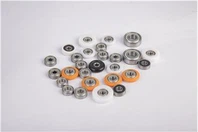
Hey there! As a supplier of 608 Roller Bearings, I've always been super curious about where the model number "608" actually came from. It's like a little mystery that's been bugging me for a while. So, I decided to do some digging and find out the origin of this widely - used bearing model number.
Let's start with a bit of background on bearings in general. Bearings are these amazing little components that reduce friction between moving parts in all sorts of machinery. They're like the unsung heroes of the mechanical world, making sure everything runs smoothly. There are different types of bearings, like ball bearings, roller bearings, and more. Roller bearings, in particular, are great for handling heavier loads compared to ball bearings.
Now, when it comes to the numbering system of bearings, it's not just a random set of digits. It's a well - organized way to classify and identify bearings based on their size, type, and other important characteristics. The numbering system for bearings is standardized, which makes it easier for manufacturers, suppliers, and users to communicate and find the right bearings for their needs.
The "608" in the 608 Roller Bearing follows a specific pattern. The first digit (in this case, 6) usually indicates the type of bearing. In the case of a 6 - series bearing, it typically represents a single - row deep - groove ball bearing. But here we're talking about a roller bearing, and sometimes there can be some variations in how the numbering is applied across different manufacturers and industries.
The next two digits (08) are related to the bore diameter of the bearing. In the bearing numbering system, the bore diameter can be calculated using a simple rule. For numbers from 04 and above, the bore diameter (in millimeters) is obtained by multiplying the last two digits by 5. So, for a 608 bearing, if we apply this rule, 08 multiplied by 5 gives us a bore diameter of 40 millimeters.
This numbering system has been around for a long time. It was developed to bring some order to the chaotic world of bearings. Before the standardization of bearing numbers, it was a real headache for people to find the right bearings. There were so many different ways that manufacturers labeled their bearings, and it was hard to tell what size and type a bearing was just by looking at its name.
The origin of this standardized numbering system can be traced back to the early days of the bearing industry. As the demand for bearings grew, especially with the rise of the automotive, industrial, and aerospace industries, there was a need for a common language to describe bearings. So, industry associations and standards organizations got together to come up with a system that everyone could follow.
Over time, as technology advanced and new types of bearings were developed, the numbering system also evolved. Manufacturers started to produce more specialized bearings, and sometimes they had to come up with additional codes and markings to describe these unique features. But the basic principle of the numbering system remained the same.
As a 608 Roller Bearing supplier, I deal with customers from all over the place. They're always looking for reliable and high - quality bearings for their applications. The 608 Roller Bearing is extremely popular because of its versatility. It can be used in a wide range of equipment, from small electric motors to skateboards.
Skateboards, for example, rely heavily on 608 bearings. The smooth rotation provided by these bearings is crucial for a good skating experience. And because of the standardized numbering, skateboard manufacturers and enthusiasts can easily find the right bearings for their boards.
In the industrial world, the 608 Roller Bearing is also used in conveyor systems, small machinery, and even some precision instruments. Its size and load - carrying capacity make it a great choice for many applications where space is limited but performance is still important.
If you're in the market for bearings, you might also be interested in Mini Roller Bearings and Micro Roller Bearings. These are even smaller bearings that are used in applications where space is at an absolute premium, like in some electronic devices or miniature robots.
Of course, if you specifically need a 608 Roller Bearing, we've got you covered. We source our bearings from top - notch manufacturers who adhere to the highest quality standards. We make sure that every bearing we supply meets or exceeds the expectations of our customers.
Whether you're a small business looking for bearings for your production line or an individual working on a DIY project, finding the right bearing is crucial. A good bearing can make a huge difference in the performance and lifespan of your equipment. That's why we're here to help. We can provide you with all the information you need about 608 Roller Bearings, including their specifications, performance data, and installation tips.
If you're interested in purchasing 608 Roller Bearings or have any questions about them, don't hesitate to reach out. We're always happy to have a chat and help you find the best bearings for your specific needs. Whether it's for a high - speed application or a heavy - load situation, we can guide you through the process of choosing the right bearing.
In conclusion, the origin of the 608 Roller Bearing model number is deeply rooted in the standardized bearing numbering system. This system has made the bearing industry more efficient and has made it easier for everyone involved to find and use the right bearings. As a supplier, we're proud to be part of this industry and to provide high - quality 608 Roller Bearings to our customers. So, if you're in the market for bearings, give us a chance to serve you.


References
- Bearing Handbook by SKF
- Bearing Industry Standards and Guidelines