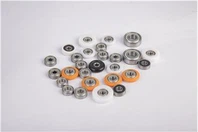
When it comes to selecting the right bearing for a specific application, one of the critical factors to consider is the operating environment. A common question I often encounter as a supplier of Bearing 6305 is whether this bearing can be used in corrosive environments. In this blog post, I will delve into the characteristics of Bearing 6305 and analyze its suitability for corrosive settings.
Understanding Bearing 6305
Bearing 6305 is a type of deep - groove ball bearing. It is widely used in various industrial applications due to its versatility and relatively high load - carrying capacity. These bearings are designed to handle both radial and axial loads, making them suitable for a range of machinery, including electric motors, pumps, and conveyor systems.
The standard Bearing 6305 is typically made of high - carbon chromium bearing steel, such as GCr15 in China or AISI 52100 in the United States. This steel offers excellent hardness, wear resistance, and fatigue life under normal operating conditions. However, its performance in corrosive environments is a different story.

Corrosive Environments and Their Impact on Bearings
Corrosive environments can be classified into different types, including chemical corrosion, atmospheric corrosion, and electrochemical corrosion. Chemical corrosion occurs when the bearing comes into contact with aggressive chemicals, such as acids, alkalis, or salts. Atmospheric corrosion is caused by exposure to humid air, especially in coastal areas where the air contains salt particles. Electrochemical corrosion happens when there is an electrolyte present, and a potential difference exists between different parts of the bearing.
When a bearing is exposed to a corrosive environment, several negative effects can occur. Firstly, corrosion can cause pitting on the bearing surface. These pits act as stress concentrators, which can lead to premature fatigue failure of the bearing. Secondly, corrosion products can increase the friction between the rolling elements and the raceways, resulting in higher operating temperatures and energy consumption. In severe cases, the corrosion can cause the bearing to seize, leading to complete machinery breakdown.
Suitability of Bearing 6305 in Corrosive Environments
The standard Bearing 6305 made of high - carbon chromium bearing steel is not well - suited for long - term use in highly corrosive environments. The steel is prone to rusting when exposed to moisture or chemicals. For example, in a chemical processing plant where the air may be filled with acid fumes, the surface of the bearing will start to corrode quickly, reducing its service life significantly.
However, there are some situations where Bearing 6305 can still be used in mildly corrosive environments with proper precautions.
Protective Coatings
One way to enhance the corrosion resistance of Bearing 6305 is to apply protective coatings. There are several types of coatings available, such as zinc plating, nickel plating, and epoxy coatings. Zinc plating provides a sacrificial layer that corrodes first, protecting the underlying steel. Nickel plating offers a more durable and corrosion - resistant surface. Epoxy coatings can create a barrier between the bearing and the corrosive environment.
For instance, in a food processing plant where the environment is relatively mild and mainly contains water and some food - grade chemicals, a Bearing 6305 with a zinc - plated coating can be used. The coating will prevent the bearing from direct contact with the moisture and chemicals, extending its service life.
Sealing
Proper sealing is another important factor in using Bearing 6305 in corrosive environments. Seals can prevent the ingress of corrosive substances into the bearing. There are different types of seals available, such as rubber seals and metal shields. Rubber seals provide better protection against dust and moisture, while metal shields are more suitable for applications where high - speed rotation is required.
In a water - treatment plant, where the bearing may be exposed to water and some chemicals, a Bearing 6305 with a double - rubber - sealed design can be used. The seals will keep the water and chemicals out of the bearing, reducing the risk of corrosion.
Lubrication
Lubrication also plays a crucial role in protecting the bearing from corrosion. A high - quality lubricant can form a protective film on the bearing surface, preventing the corrosive substances from reaching the metal. Additionally, the lubricant can reduce friction and wear, improving the overall performance of the bearing.
In a marine environment, where the bearing is exposed to saltwater, a special corrosion - resistant lubricant should be used. This lubricant can not only protect the bearing from saltwater corrosion but also ensure smooth operation under high - humidity conditions.
Case Studies
Let's take a look at some real - world case studies to illustrate the performance of Bearing 6305 in corrosive environments.
Case 1: A Textile Factory
In a textile factory, the environment is relatively humid due to the use of water in the production process. The standard Bearing 6305 without any protection had a short service life, often failing within a few months due to corrosion. After switching to a Bearing 6305 with a zinc - plated coating and proper sealing, the service life of the bearing increased to more than a year.
Case 2: A Mining Operation
In a mining operation, the bearings were exposed to dust and some acidic substances in the air. The standard bearings suffered from severe pitting and premature failure. By using Bearing 6305 with a nickel - plated coating and a high - quality lubricant, the corrosion resistance of the bearings was significantly improved, and the maintenance cost was reduced.
Conclusion
In conclusion, while the standard Bearing 6305 is not ideal for highly corrosive environments, it can be used in mildly corrosive settings with appropriate protective measures, such as coatings, sealing, and lubrication. As a supplier of Bearing 6305, I can provide customized solutions to meet the specific requirements of different applications.
If you are facing challenges in selecting the right bearing for your corrosive environment or need more information about the protective options for Bearing 6305, I encourage you to reach out for a detailed discussion. Our team of experts is ready to assist you in making the best choice for your machinery.
References
- Harris, T. A., & Kotzalas, M. N. (2007). Rolling Bearing Analysis. Wiley.
- Schubert, O. (2001). Rolling Bearings: Design, Analysis, and Application. Marcel Dekker.
- ASM Handbook Committee. (1995). ASM Handbook Volume 13B: Corrosion: Materials. ASM International.