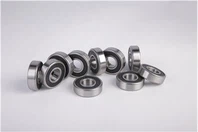
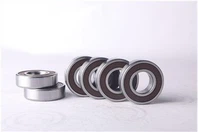
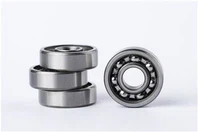
Hey there! If you're in the market for a 20mm roller bearing, you've come to the right place. I'm a supplier of 20mm roller bearings, and I'm here to share some tips on how to select the perfect one for your needs.
First off, let's talk about what a 20mm roller bearing is. Simply put, it's a type of bearing with a 20mm inner diameter. These bearings are used in a wide range of applications, from small machinery to automotive parts. They're designed to reduce friction and support radial and axial loads, making them essential for smooth operation.
Load Capacity
One of the most important factors to consider when selecting a 20mm roller bearing is its load capacity. You need to know how much weight the bearing will need to support. There are two main types of loads: radial and axial. Radial loads act perpendicular to the shaft, while axial loads act parallel to it.
For instance, if you're using the bearing in a conveyor system, it will mainly face radial loads. But in a screw jack, it might encounter both radial and axial loads. Make sure to calculate the maximum load your application will generate and choose a bearing with a load capacity that exceeds this value. This ensures the bearing won't fail prematurely due to overloading.
Speed Rating
Another crucial aspect is the speed rating. Every bearing has a maximum speed at which it can operate safely. If you run a bearing at a speed higher than its rating, it can lead to excessive heat generation, wear, and even failure.
When choosing a 20mm roller bearing, consider the rotational speed of your equipment. For high - speed applications like electric motors, you'll need a bearing with a high speed rating. On the other hand, for slower - moving machinery, a lower speed rating might be sufficient.
Lubrication
Lubrication is key to the longevity of a 20mm roller bearing. It reduces friction between the rolling elements and the raceways, which in turn reduces wear and heat. There are different types of lubricants, such as grease and oil.
Grease is a popular choice for many applications because it's easy to apply and retains in the bearing well. It's suitable for low - to medium - speed applications. Oil, on the other hand, provides better cooling and is ideal for high - speed and high - temperature applications.
Make sure to choose the right lubricant for your bearing and follow the manufacturer's recommendations for lubrication intervals.
Clearance
Bearing clearance refers to the amount of internal play between the rolling elements and the raceways. There are different clearance classes, and the choice depends on your application.
For example, in applications where the bearing operates at high temperatures, you might need a larger clearance to accommodate thermal expansion. In precision applications, a smaller clearance is usually required to ensure accurate positioning.
Sealing
Seals are important for protecting the bearing from contaminants like dust, dirt, and moisture. There are different types of seals, such as rubber seals and metal shields.
Rubber seals provide better protection against contaminants but can increase friction. Metal shields offer less protection but have lower friction. Consider the environment in which the bearing will operate. If it's a dirty or wet environment, a sealed bearing with rubber seals is a better choice.
Material
The material of the bearing also matters. Most 20mm roller bearings are made of steel, but there are different grades. High - quality steel bearings offer better durability and performance.
Some bearings are also made of ceramic materials. Ceramic bearings are lightweight, have a high hardness, and are resistant to corrosion. However, they can be more expensive.


Now, let me introduce some of our products. We offer a wide range of 20mm Roller Bearing that meet different requirements. For example, our Bearing 6203llu is a popular choice for many applications. It has a good load capacity, a decent speed rating, and comes with effective sealing.
If you're looking for smaller components, we also have Small Rollers with Bearings that can fit into your specific needs.
In conclusion, selecting the right 20mm roller bearing involves considering factors like load capacity, speed rating, lubrication, clearance, sealing, and material. By taking these factors into account, you can ensure that your bearing performs well and lasts a long time.
If you're interested in purchasing 20mm roller bearings or have any questions about our products, don't hesitate to reach out. We're here to help you make the best choice for your application. Let's have a chat about your requirements and see how we can assist you in getting the perfect bearing.
References
- "Rolling Bearing Analysis" by Tedric A. Harris
- "Bearing Installation and Maintenance Handbook" by SKF