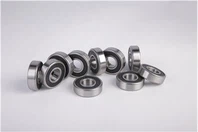
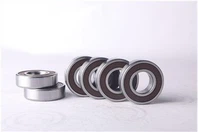
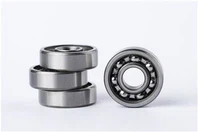
As a supplier of Bearing 6311, I've witnessed firsthand the critical role that dynamic stiffness plays in the performance of this particular bearing. In this blog post, I'll delve into how the dynamic stiffness of Bearing 6311 affects its performance, exploring the underlying principles, practical implications, and real - world applications.
Understanding Dynamic Stiffness
Dynamic stiffness is a measure of a bearing's ability to resist deformation under dynamic loading conditions. Unlike static stiffness, which only considers the bearing's response to a constant load, dynamic stiffness takes into account the effects of varying loads, frequencies, and vibration. For Bearing 6311, dynamic stiffness is influenced by several factors, including the material properties of the bearing components, the design of the bearing, and the operating conditions.
The material of the bearing rings and rolling elements is a primary determinant of dynamic stiffness. High - quality steel with excellent mechanical properties, such as high hardness and strength, can enhance the bearing's ability to withstand dynamic loads without significant deformation. For example, bearings made from premium chrome steel are known for their superior stiffness and durability, which is crucial for applications where dynamic loads are prevalent.
The design of Bearing 6311 also plays a vital role in its dynamic stiffness. The internal geometry of the bearing, including the curvature of the raceways and the size and shape of the rolling elements, affects how the load is distributed within the bearing. A well - designed bearing with an optimal internal geometry can distribute the load more evenly, reducing stress concentrations and improving the bearing's dynamic stiffness.
Impact on Vibration and Noise
One of the most significant ways in which the dynamic stiffness of Bearing 6311 affects its performance is in relation to vibration and noise. In many industrial applications, excessive vibration and noise can lead to premature wear, reduced efficiency, and even safety hazards. A bearing with high dynamic stiffness can effectively dampen vibrations and reduce noise levels.
When a bearing has low dynamic stiffness, it is more likely to deform under dynamic loads, causing the rolling elements to move irregularly within the raceways. This irregular movement can generate vibrations, which are then transmitted through the machinery. These vibrations not only cause noise but can also lead to fatigue failure of the bearing components over time.
On the other hand, a Bearing 6311 with high dynamic stiffness can maintain its shape and integrity under dynamic loads, ensuring smooth and stable operation. The rolling elements move more predictably within the raceways, minimizing vibrations and noise. This is particularly important in applications such as electric motors, where quiet operation is essential for user comfort and equipment longevity. For instance, in a high - speed electric motor, a Bearing 6311 with high dynamic stiffness can help reduce the vibration and noise generated during operation, improving the overall performance and reliability of the motor.
Influence on Load - Carrying Capacity
The dynamic stiffness of Bearing 6311 also has a direct impact on its load - carrying capacity. In dynamic applications, the bearing is subjected to fluctuating loads, and its ability to withstand these loads without failure is crucial. A bearing with high dynamic stiffness can better distribute the dynamic loads across its components, increasing its load - carrying capacity.
Under dynamic loading, the bearing experiences cyclic stress, which can lead to fatigue damage if the stress levels are too high. A bearing with low dynamic stiffness may deform more easily under load, resulting in higher stress concentrations at certain points within the bearing. These high - stress areas are more prone to fatigue failure, reducing the bearing's load - carrying capacity.
In contrast, a Bearing 6311 with high dynamic stiffness can resist deformation and distribute the load more evenly, reducing the maximum stress levels within the bearing. This allows the bearing to handle higher dynamic loads without experiencing premature fatigue failure. For example, in heavy - duty machinery such as construction equipment, a Bearing 6311 with high dynamic stiffness can support the large and fluctuating loads encountered during operation, ensuring reliable performance and long service life.
Effects on Rotational Accuracy
Rotational accuracy is another important performance aspect affected by the dynamic stiffness of Bearing 6311. In precision applications, such as machine tools and robotics, even small deviations in rotational accuracy can lead to significant errors in the final product. A bearing with high dynamic stiffness can maintain its rotational accuracy under dynamic loads.

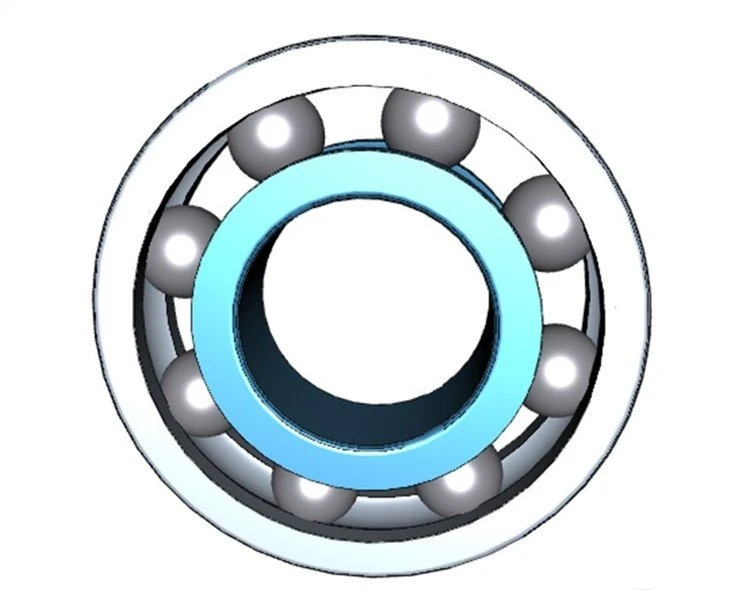
When a bearing has low dynamic stiffness, the deformation caused by dynamic loads can result in changes in the bearing's internal clearance and the alignment of the rolling elements. These changes can lead to variations in the rotational speed and position of the shaft, reducing the rotational accuracy of the system.
A Bearing 6311 with high dynamic stiffness, however, can resist the effects of dynamic loads on its internal geometry, maintaining a consistent internal clearance and alignment of the rolling elements. This ensures that the shaft rotates with high precision, even under dynamic operating conditions. For example, in a CNC machine tool, a Bearing 6311 with high dynamic stiffness can help maintain the accuracy of the spindle rotation, resulting in high - quality machining of parts.
Real - World Applications
The performance characteristics influenced by the dynamic stiffness of Bearing 6311 make it suitable for a wide range of real - world applications. In the automotive industry, Bearing 6311 is used in various components such as alternators and water pumps. The high dynamic stiffness of the bearing helps to reduce vibration and noise, ensuring smooth and reliable operation of these components.
In the aerospace industry, where reliability and performance are of utmost importance, Bearing 6311 is used in aircraft engines and landing gear systems. The bearing's ability to withstand high dynamic loads and maintain rotational accuracy under extreme conditions is crucial for the safety and efficiency of these applications.
In the industrial machinery sector, Bearing 6311 is commonly used in conveyors, compressors, and fans. The high dynamic stiffness of the bearing enables it to handle the dynamic loads and vibrations associated with these applications, reducing maintenance requirements and improving the overall productivity of the machinery.
Conclusion
In conclusion, the dynamic stiffness of Bearing 6311 has a profound impact on its performance in terms of vibration and noise reduction, load - carrying capacity, rotational accuracy, and suitability for various applications. As a supplier of Bearing 6311, I understand the importance of providing bearings with high dynamic stiffness to meet the diverse needs of our customers.
If you are in the market for high - quality Bearing 6311, look no further. Our bearings are designed and manufactured to have excellent dynamic stiffness, ensuring optimal performance in your applications. To learn more about our Bearing 6311 products, please visit Bearing 6311. We welcome you to contact us for procurement discussions and explore how our bearings can enhance the performance of your equipment.
References
- Harris, T. A., & Kotzalas, M. N. (2007). Rolling Bearing Analysis. John Wiley & Sons.
- Gupta, P. K. (2002). Ball and Roller Bearing Engineering. CRC Press.
- Zorzi, C., & Rosado, A. F. (2015). Influence of bearing dynamic stiffness on the vibration response of a rotor - bearing system. Mechanical Systems and Signal Processing, 62 - 63, 261 - 274.