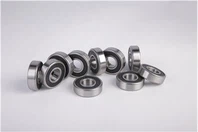
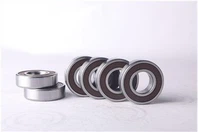
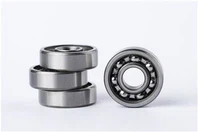
Hey there! As a supplier of roller bearings, I've seen firsthand how crucial preload is when it comes to the performance of these nifty little components. In this blog, I'm gonna break down how preload affects the performance of roller bearings and why it's something you should really pay attention to.
Let's start with the basics. What exactly is preload? Well, preload is the process of applying a specific amount of force to a bearing before it's put to work. This force is used to eliminate internal clearance within the bearing, which can have a significant impact on how the bearing functions.
One of the most obvious ways preload affects roller bearings is by improving their stiffness. When you preload a bearing, you're essentially making it more rigid. This is super important in applications where precision is key. For example, in a high - speed machine tool, a stiffer bearing can reduce deflection and vibration. Vibration can cause all sorts of problems, like premature wear and tear on the bearing and the components it's connected to. With proper preload, the bearing can handle the loads more effectively, keeping everything running smoothly.
Another big benefit of preload is increased rotational accuracy. Without preload, there's some play or clearance inside the bearing. This play can lead to inaccuracies in rotation, especially when the bearing is under load. By applying preload, we can minimize this clearance and ensure that the shaft rotates with greater precision. This is vital in applications such as robotics, where even the slightest deviation can throw off the entire operation.
Preload also has a positive impact on the bearing's load - carrying capacity. When a bearing is preloaded, the contact between the rolling elements and the raceways is optimized. This means that the load is distributed more evenly across the bearing, allowing it to handle higher loads without failing. For instance, in heavy - duty industrial machinery, a preloaded bearing can withstand the immense forces generated during operation, extending its service life and reducing the risk of unexpected breakdowns.
However, it's not all sunshine and rainbows. Applying too much preload can be a real problem. Excessive preload can cause increased friction within the bearing. This friction generates heat, which can lead to thermal expansion and, ultimately, damage to the bearing. It can also increase the power consumption of the machine, as more energy is needed to overcome the extra friction. So, finding the right balance is crucial.

Now, let's talk about different types of preload methods. There are two main ways to preload a roller bearing: constant - position preloading and constant - force preloading.
Constant - position preloading involves setting a specific axial position for the bearing. This is often done using shims or spacers. It's a relatively simple method, but it can be a bit tricky to get the exact preload you need. If the shims are too thick or too thin, you might end up with either too much or too little preload.
Constant - force preloading, on the other hand, uses a spring or other elastic element to apply a constant force to the bearing. This method is more forgiving because it can compensate for thermal expansion and other changes in the operating conditions. It ensures that the preload remains relatively constant, regardless of what's going on around the bearing.
As a roller bearing supplier, I've helped many customers choose the right preload for their applications. It's always a bit of a balancing act, but with the right knowledge and experience, we can find the perfect solution.
For example, if you're looking for a reliable bearing for a general - purpose application, you might consider the [Deep Groove Ball Bearing 6001ZZ](/roller - bearings/deep - groove - ball - bearing - 6001zz.html). These bearings are known for their versatility and can be preloaded to suit a variety of needs. Whether you're dealing with light or moderate loads, this bearing can be a great choice.
When it comes to determining the right preload for your bearing, there are a few factors you need to consider. The type of application is the most important one. Is it a high - speed application? A heavy - load application? Or something in between? The operating conditions, such as temperature and humidity, also play a role. High temperatures can cause the bearing materials to expand, which can affect the preload.
The design of the bearing itself is another factor. Different bearing types have different preload requirements. For example, angular contact ball bearings are often preloaded to improve their performance in applications where they need to handle both radial and axial loads.
In conclusion, preload is a critical factor in the performance of roller bearings. It can improve stiffness, rotational accuracy, and load - carrying capacity, but it needs to be carefully controlled to avoid problems. As a roller bearing supplier, I'm here to help you make the right decisions when it comes to preloading your bearings.
If you're in the market for roller bearings and want to discuss the best preload options for your specific application, don't hesitate to reach out. We've got a team of experts who can guide you through the process and ensure that you get the most out of your bearings.
References
- Harris, T. A., & Kotzalas, M. N. (2007). Rolling Bearing Analysis. Wiley.
- Stachowiak, G. W., & Batchelor, A. W. (2005). Engineering Tribology. Elsevier.