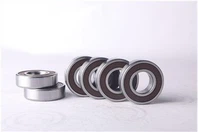
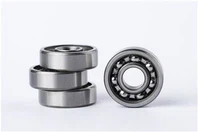
As a supplier of Bearing 6001ZZ, I often encounter inquiries from customers about various technical specifications of this bearing, and one of the most frequently asked questions is about its static load rating. In this blog post, I'll delve into what the static load rating of Bearing 6001ZZ means, its significance, and how it compares to other similar bearings.
Understanding Static Load Rating
Before we specifically talk about Bearing 6001ZZ, let's first understand what static load rating is. The static load rating of a bearing is the maximum load that a bearing can withstand when it is stationary or rotating at extremely low speeds without causing permanent deformation exceeding a specified value. This deformation typically occurs on the contact surfaces between the rolling elements (balls or rollers) and the raceways.
When a bearing is subjected to a load, the material at the contact points between the rolling elements and the raceways experiences stress. If the load is too high, the material will start to deform plastically, which can lead to noise, vibration, and reduced bearing life during subsequent operation. The static load rating is determined through extensive testing and calculations by bearing manufacturers to ensure that the bearing can operate safely under a certain level of static load.
Static Load Rating of Bearing 6001ZZ
Bearing 6001ZZ is a type of Small Bearings that belongs to the deep groove ball bearing family. It has a specific static load rating that is determined by its internal design, material, and manufacturing process.
The static load rating of Bearing 6001ZZ is typically provided by the manufacturer in the bearing's technical documentation. For example, for a standard Bearing 6001ZZ, the static radial load rating might be around 2.25 kN (kilonewtons). This means that when the bearing is stationary, it can safely withstand a radial load of up to 2.25 kN without experiencing excessive permanent deformation.
It's important to note that the static load rating is a theoretical value based on ideal conditions. In real - world applications, factors such as the accuracy of the mounting, the quality of the lubrication, and the presence of external contaminants can all affect the actual performance of the bearing under static load.
Significance of Static Load Rating
The static load rating is a crucial parameter for engineers and designers when selecting bearings for various applications. Here are some of the key reasons why it is important:
1. Safety Margin
By knowing the static load rating of a bearing, designers can ensure that the bearing is not overloaded during installation or when the machine is at rest. This provides a safety margin to prevent premature failure of the bearing due to excessive static load.
2. Application Suitability
Different applications have different static load requirements. For example, in a machine where the bearing is subjected to a large static load during startup or shutdown, a bearing with a higher static load rating should be selected. Understanding the static load rating of Bearing 6001ZZ helps determine whether it is suitable for a particular application.
3. Long - Term Performance
Exceeding the static load rating can lead to permanent deformation of the bearing, which can cause uneven wear and increased friction during operation. This, in turn, can reduce the bearing's service life and increase the maintenance costs of the equipment.
Comparison with Other Bearings
Let's compare the static load rating of Bearing 6001ZZ with another popular small - size bearing, Bearing 6200.
Bearing 6200 also belongs to the deep groove ball bearing family, but it has a different size and internal design compared to Bearing 6001ZZ. Generally, Bearing 6200 has a larger outer diameter and width, which allows it to have a higher static load rating. The static radial load rating of Bearing 6200 is typically around 2.75 kN, which is higher than that of Bearing 6001ZZ.
This difference in static load rating is due to the larger contact area between the rolling elements and the raceways in Bearing 6200. However, the choice between Bearing 6001ZZ and Bearing 6200 is not solely based on the static load rating. Other factors such as the available space, rotational speed requirements, and cost also need to be considered.


Factors Affecting Static Load Rating
As mentioned earlier, the static load rating is a theoretical value, and several factors can affect the actual performance of the bearing under static load:
1. Material Quality
The quality of the bearing steel used in the manufacturing of Bearing 6001ZZ has a significant impact on its static load - carrying capacity. High - quality steel with better hardness and toughness can withstand higher loads without deforming.
2. Manufacturing Precision
Precision manufacturing processes ensure that the dimensions of the bearing components are accurate and the surface finish is smooth. Any deviation in the manufacturing process can lead to uneven stress distribution on the contact surfaces, reducing the effective static load rating.
3. Lubrication
Proper lubrication can reduce the friction and wear between the rolling elements and the raceways. In the case of static load, a good lubricant film can also help distribute the load more evenly, improving the bearing's ability to withstand static loads.
Selecting the Right Bearing Based on Static Load Rating
When selecting a bearing based on the static load rating, the following steps can be followed:
1. Determine the Static Load
First, accurately calculate or estimate the static load that the bearing will be subjected to in the application. This includes considering the weight of the components supported by the bearing, any external forces acting on the bearing during startup or shutdown, and the inertia forces.
2. Consider the Safety Factor
It is recommended to apply a safety factor to the calculated static load. A safety factor of 1.2 - 2.0 is commonly used, depending on the application's requirements and the level of uncertainty in the load calculation.
3. Compare with Bearing Ratings
Once the required static load with the safety factor is determined, compare it with the static load ratings of different bearings, including Bearing 6001ZZ. Select a bearing whose static load rating is higher than the calculated required load.
Conclusion
In conclusion, the static load rating of Bearing 6001ZZ is an important parameter that determines its ability to withstand static loads without excessive deformation. It is a crucial factor in bearing selection for ensuring the safety, reliability, and long - term performance of the equipment. As a supplier of Bearing 6001ZZ, I understand the importance of providing accurate technical information to our customers. If you are looking for a reliable bearing solution for your application and need more information about the static load rating or other specifications of Bearing 6001ZZ, please feel free to contact us for procurement and further technical discussions. We are committed to helping you find the most suitable bearing for your needs.
References
- SKF. "Bearing Handbook".
- Timken. "Engineering Manual for Bearings".
- FAG. "Technical Information on Rolling Bearings".