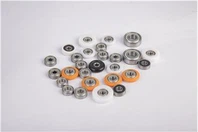
Hey there! As a supplier of One Way Rollers, I often get asked about the precision level of these nifty little components. So, let's dive right into it and break down what the precision level of a One Way Roller really means.

First off, what's a One Way Roller? Well, a One Way Roller is a type of bearing that allows rotation in one direction while locking in the opposite direction. It's used in a whole bunch of applications, from automotive engines to industrial machinery. Think of it like a ratchet - you can turn it one way smoothly, but it won't budge the other way.
Now, when we talk about the precision level of a One Way Roller, we're looking at a few key aspects. One of the most important is dimensional accuracy. The size of the roller, its diameter, width, and the overall shape need to be spot - on. Even a tiny deviation in these dimensions can cause big problems. For example, if the roller is a bit too large, it might not fit properly into the bearing housing, leading to jams and premature wear. On the other hand, if it's too small, it won't be able to transmit the load effectively, which can result in the bearing failing under stress.
Another factor that affects precision is the surface finish. The surface of the One Way Roller needs to be smooth and free of any defects. A rough surface can increase friction, which not only wastes energy but also generates heat. Excessive heat can cause the material of the roller to expand and lose its shape, further reducing its performance. High - precision One Way Rollers are usually manufactured with advanced machining techniques to ensure a super - smooth surface finish.
The roundness of the roller is also crucial. A perfectly round roller rotates more smoothly and evenly distributes the load. Any out - of - roundness can lead to uneven wear, vibration, and noise. To achieve high roundness, manufacturers use precision grinding and polishing processes. These processes are carefully controlled to make sure that the roller's shape is as close to a perfect circle as possible.
The hardness of the One Way Roller is yet another aspect related to precision. The roller needs to be hard enough to withstand the forces it will encounter during operation. But it also can't be too hard, or it might become brittle and prone to cracking. The right balance of hardness is achieved through heat treatment processes, which are carefully calibrated based on the specific material and application requirements.
Let's take a look at an example. Say you're using a One Way Roller in a high - speed application, like a machine tool spindle. In this case, the precision requirements are extremely high. The slightest error in dimensional accuracy, surface finish, roundness, or hardness can lead to significant problems. The spindle might start to vibrate, which can affect the quality of the machining process. It could also cause the bearing to overheat and fail, resulting in costly downtime.
On the other hand, for a less demanding application, like a simple conveyor system, the precision requirements might be a bit more relaxed. However, that doesn't mean that precision isn't important. Even in a conveyor system, a poorly - made One Way Roller can cause the conveyor to stop working properly, leading to production delays.
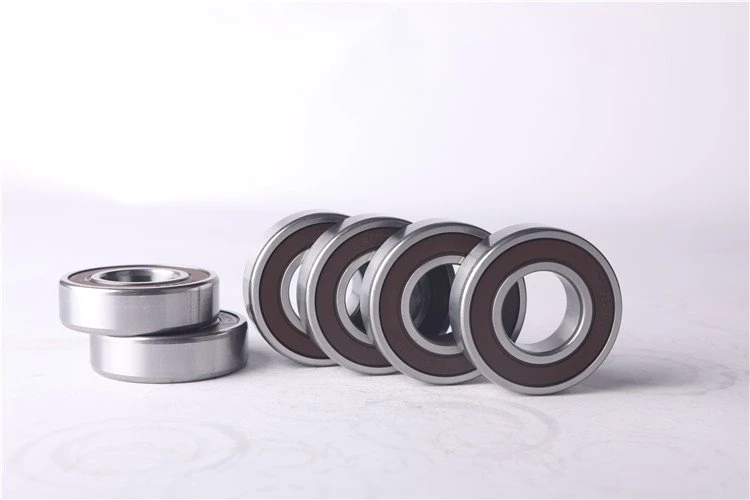
Now, I want to mention a specific product, the 6205 - ZZ. This is a type of One Way Roller bearing that's widely used in various applications. It's known for its high precision and reliability. The 6205 - ZZ is manufactured with strict quality control measures to ensure that it meets the highest standards of dimensional accuracy, surface finish, roundness, and hardness.
When it comes to measuring the precision level of a One Way Roller, manufacturers use a variety of tools and techniques. For dimensional accuracy, they might use micrometers, calipers, and coordinate measuring machines (CMMs). These tools can measure the size of the roller with extremely high precision, down to a few micrometers. To check the surface finish, they use surface profilometers, which can detect even the tiniest irregularities on the surface. Roundness is measured using roundness testers, which can accurately determine how close the roller is to a perfect circle.
In addition to these manufacturing - related precision aspects, there's also the issue of how the One Way Roller performs in real - world applications. This is where factors like installation, lubrication, and maintenance come into play. Even the most precise One Way Roller can fail if it's not installed correctly. For example, if the bearing is not properly aligned during installation, it can cause uneven loading on the roller, leading to premature wear.
Lubrication is also essential for maintaining the precision and performance of the One Way Roller. The right lubricant can reduce friction, dissipate heat, and prevent corrosion. It's important to use the correct type of lubricant and to apply it in the right amount. Too little lubrication can cause increased friction and wear, while too much can lead to leakage and contamination.
Regular maintenance is the key to ensuring that the One Way Roller continues to perform at its best. This includes inspecting the bearing for signs of wear, checking the lubricant level, and replacing any worn - out components. By taking good care of the One Way Roller, you can extend its service life and maintain its precision over time.
So, as you can see, the precision level of a One Way Roller is a complex and multi - faceted concept. It involves a combination of manufacturing precision, real - world performance, and proper maintenance. At our company, we take pride in producing high - precision One Way Rollers that meet the diverse needs of our customers. Whether you're in the automotive, industrial, or any other industry, we have the right One Way Roller for you.
If you're interested in learning more about our One Way Rollers or if you have a specific application in mind, don't hesitate to reach out. We're always happy to have a chat and help you find the perfect solution for your needs. Whether it's discussing the precision requirements of your project or getting a quote, we're here to assist you every step of the way. Let's work together to ensure that your machinery runs smoothly and efficiently with our high - quality One Way Rollers.
References
- Machinery's Handbook
- Bearing Design and Application Manual