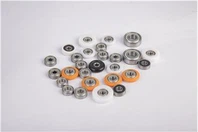
Hey there! As a supplier of Track Bearing Rollers, I often get asked about the noise level of these rollers during operation. It's a crucial aspect, especially for industries where quiet machinery is a must. In this blog, I'll break down what affects the noise level of track bearing rollers and how we can manage it.
First off, let's understand what a Track Bearing Roller is. If you're not familiar, you can check out more details here: Track Bearing Roller. These rollers are designed to support heavy loads and provide smooth linear motion in various applications, from construction equipment to conveyor systems.
So, what causes the noise in track bearing rollers? Well, there are a few key factors. One of the main culprits is the quality of the manufacturing process. If the rollers aren't machined precisely, it can lead to uneven surfaces. When these uneven surfaces come into contact during operation, they create vibrations, which in turn generate noise. For example, if the raceways have tiny bumps or the rollers themselves aren't perfectly round, it can cause a rattling or grinding sound.
Another factor is the lubrication. Proper lubrication is like a magic potion for reducing noise. It acts as a buffer between the moving parts, reducing friction and wear. When a track bearing roller is well - lubricated, the contact between the rollers and the raceways is smoother, resulting in less noise. On the flip side, if the lubricant is old, contaminated, or the wrong type, it won't do its job effectively. This can lead to increased friction and a noisier operation.
The load on the track bearing roller also plays a significant role. When a roller is overloaded, it has to work harder. The extra stress can cause the rollers to deform slightly, and this deformation can lead to abnormal contact patterns and increased noise. It's like asking a person to carry a weight that's way too heavy for them - they'll start to groan and struggle!
The speed of operation is yet another factor. As the speed of the track bearing roller increases, the noise level tends to go up as well. At higher speeds, the rollers experience more rapid changes in direction and contact forces. This can cause more intense vibrations and, consequently, more noise.
Now, let's talk about how we can measure the noise level of track bearing rollers. There are specialized tools for this, like sound level meters. These devices can accurately measure the decibel level of the noise produced by the rollers. In most industrial settings, the acceptable noise level for track bearing rollers is around 60 - 80 decibels. However, this can vary depending on the specific application. For example, in a quiet laboratory environment, even a noise level of 60 decibels might be considered too high, while in a busy construction site, 80 decibels might be more acceptable.
As a supplier, we take several steps to ensure that our track bearing rollers have a low noise level. First of all, we use high - precision manufacturing techniques. Our state - of - the - art machinery ensures that the rollers and raceways are machined to extremely tight tolerances. This reduces the chances of uneven surfaces and the associated noise.
We also pay close attention to the lubrication aspect. We offer a range of high - quality lubricants that are specifically formulated for track bearing rollers. Our technical team can provide guidance on the right type of lubricant to use based on the application, load, and speed requirements.
In addition, we conduct thorough quality control checks. Each track bearing roller goes through a series of tests, including noise level testing. We use advanced equipment to simulate real - world operating conditions and measure the noise level. Only the rollers that meet our strict noise level standards are released for sale.
If you're experiencing high noise levels with your current track bearing rollers, there are a few things you can do. First, check the lubrication. Make sure it's clean and the right type. You might need to change the lubricant if it's old or contaminated. Second, review the load and speed requirements. If you're overloading the rollers or running them at a speed that's too high, try to adjust the operating conditions.
If the problem persists, it might be time to replace the rollers. And that's where we come in! As a trusted supplier of Track Bearing Rollers, we have a wide range of products to suit different applications. Our rollers are known for their low noise level, high durability, and excellent performance.
Whether you're in the manufacturing, construction, or any other industry that uses track bearing rollers, we can provide you with the right solution. We understand that every application is unique, and we're more than happy to work with you to find the perfect roller for your needs.
So, if you're interested in learning more about our track bearing rollers or want to discuss your specific requirements, don't hesitate to reach out. We're here to help you reduce the noise level in your machinery and improve its overall performance. Contact us today, and let's start a conversation about how we can work together to make your operations smoother and quieter.
In conclusion, the noise level of track bearing rollers is affected by multiple factors, including manufacturing quality, lubrication, load, and speed. By taking the right steps, such as using high - quality rollers, proper lubrication, and correct operating conditions, you can keep the noise level under control. And as your reliable supplier, we're committed to providing you with top - notch track bearing rollers that meet your noise level and performance requirements.


References
- Bearing Handbook: A comprehensive guide on bearing design, operation, and maintenance.
- Industrial Machinery Noise Standards: Published by industry regulatory bodies.