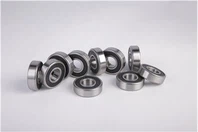
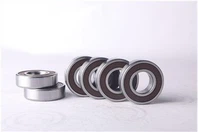
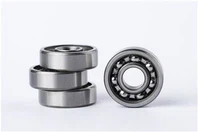
Hey there! As a supplier of Bearing 6200, I often get asked about the maximum temperature this little guy can withstand. So, let's dive right into it and figure out what's the deal with Bearing 6200's heat tolerance.
First off, let's talk a bit about Bearing 6200 itself. If you're interested in more details about it, you can check out this link Bearing 6200. This bearing is widely used in various applications, from small motors to some light - duty machinery. It's a popular choice because of its reliability and relatively low cost.


Now, to understand the maximum temperature, we need to look at the materials it's made of. Typically, Bearing 6200 is made of steel, which has its own temperature limitations. The steel used in these bearings is usually a high - quality chrome steel. Chrome steel is known for its good hardness and wear resistance, but like all metals, it has a point where it starts to lose its mechanical properties due to heat.
Under normal operating conditions, Bearing 6200 can handle temperatures up to around 120°C (248°F). At this temperature range, the bearing will function as expected, with the lubricant inside also performing well. The lubricant is crucial because it reduces friction between the rolling elements and the raceways. If the temperature gets too high, the lubricant can break down, which will increase friction and wear on the bearing.
However, if you need the bearing to work in a more extreme environment, things get a bit more complicated. There are high - temperature versions of Bearing 6200 available. These are specially treated to withstand higher temperatures. With some special heat - treatment processes and the use of high - temperature lubricants, these bearings can go up to about 200°C (392°F). But it's important to note that even at these higher temperatures, the lifespan of the bearing may be reduced.
Let's talk about what happens when the temperature exceeds the limits. When the temperature goes above the maximum rating, the steel can start to soften. This softening leads to a decrease in hardness, which means the bearing can deform more easily. Deformation can cause the bearing to run out of round, which will lead to vibration, noise, and eventually, failure. Also, as I mentioned before, the lubricant breakdown is a big issue. Once the lubricant loses its viscosity and protective properties, the wear rate of the bearing skyrockets.
Another factor to consider is the application. If the bearing is used in a sealed environment where heat dissipation is poor, the temperature can build up quickly. For example, in a small, enclosed motor, the heat generated by the motor itself and the friction in the bearing can accumulate. On the other hand, if the bearing is in an open - air application with good ventilation, it can handle a bit more heat because the heat can dissipate more easily.
Now, let's compare Bearing 6200 with some other small - size bearings. Take 6901ZZ --Thin Section Bearings/Floor Sweeper Motor for instance. This bearing is often used in floor sweepers and other similar small - scale applications. Its temperature tolerance is similar to Bearing 6200 in the standard version. But because of its thin - section design, it may have slightly different heat - transfer characteristics.
Bearing 6001ZZ is another popular small - size bearing. It's also made of similar steel materials, so its temperature limits are in the same ballpark as Bearing 6200. However, the size and the specific application can make a difference in how it responds to heat.
So, if you're in an application where high temperatures are a concern, here are some tips. First, make sure to choose the right type of Bearing 6200. If you know you'll be operating at higher temperatures, go for the high - temperature version. Second, improve the heat - dissipation of your system. You can add cooling fins, fans, or use a better - ventilated housing. Third, regularly monitor the temperature of the bearing. You can use temperature sensors to keep an eye on it and take action if the temperature starts to get too high.
In conclusion, the maximum temperature that Bearing 6200 can withstand is around 120°C under normal conditions, and up to 200°C with special treatment. But it's always important to consider your specific application and take appropriate measures to ensure the bearing's long - term performance.
If you're in the market for Bearing 6200 or have any questions about its temperature tolerance or other aspects, don't hesitate to reach out. We're here to help you find the best solution for your needs. Whether you need standard bearings or high - temperature versions, we've got you covered. Let's have a chat and see how we can work together to make your project a success.
References
- "Handbook of Bearings: Design, Selection, and Application"
- Manufacturer's technical documentation for Bearing 6200