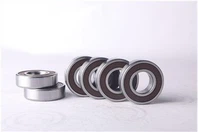
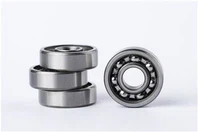
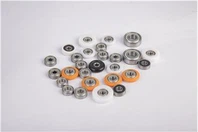
As a supplier of 20mm roller bearings, I often encounter questions from customers regarding the technical specifications of our products. One of the most frequently asked questions is about the friction coefficient of a 20mm roller bearing. In this blog post, I will delve into the concept of the friction coefficient, its significance in the performance of 20mm roller bearings, and the factors that influence it.
Understanding the Friction Coefficient
The friction coefficient is a dimensionless quantity that represents the ratio of the frictional force between two surfaces in contact to the normal force pressing the two surfaces together. In the context of a 20mm roller bearing, the friction coefficient is a crucial parameter that affects its efficiency, durability, and overall performance. A lower friction coefficient means less energy is lost as heat during the operation of the bearing, resulting in higher efficiency and reduced wear and tear.
Significance of the Friction Coefficient in 20mm Roller Bearings
The friction coefficient plays a vital role in the performance of 20mm roller bearings. Here are some key aspects where the friction coefficient has a significant impact:
- Energy Efficiency: A lower friction coefficient reduces the amount of energy required to rotate the bearing, leading to improved energy efficiency. This is particularly important in applications where energy consumption is a concern, such as in electric motors and automotive engines.
- Heat Generation: Friction generates heat, and excessive heat can damage the bearing and reduce its lifespan. A lower friction coefficient helps to minimize heat generation, ensuring the bearing operates within its optimal temperature range.
- Wear and Tear: High friction can cause excessive wear and tear on the bearing surfaces, leading to premature failure. By reducing the friction coefficient, the wear rate of the bearing is minimized, extending its service life.
- Noise and Vibration: Friction can also contribute to noise and vibration in the bearing. A lower friction coefficient helps to reduce noise and vibration levels, resulting in a smoother and quieter operation.
Factors Affecting the Friction Coefficient of 20mm Roller Bearings
The friction coefficient of a 20mm roller bearing is influenced by several factors, including:
- Material Properties: The materials used in the construction of the bearing, such as the bearing steel and the lubricant, have a significant impact on the friction coefficient. High-quality materials with low friction coefficients can help to reduce the overall friction in the bearing.
- Surface Finish: The surface finish of the bearing components, including the raceways and the rolling elements, affects the friction coefficient. A smoother surface finish reduces the contact area between the surfaces, resulting in lower friction.
- Lubrication: Proper lubrication is essential for reducing friction in a 20mm roller bearing. The type and quality of the lubricant, as well as the lubrication method, can all affect the friction coefficient. A well-lubricated bearing has a lower friction coefficient compared to a dry or poorly lubricated bearing.
- Load and Speed: The load and speed at which the bearing operates also influence the friction coefficient. Higher loads and speeds generally result in higher friction coefficients. Therefore, it is important to select a bearing that is suitable for the specific load and speed requirements of the application.
- Operating Conditions: The operating conditions, such as temperature, humidity, and contamination, can also affect the friction coefficient of a 20mm roller bearing. Extreme temperatures, high humidity, and the presence of contaminants can increase the friction and wear in the bearing.
Measuring the Friction Coefficient of 20mm Roller Bearings
Measuring the friction coefficient of a 20mm roller bearing can be a complex process that requires specialized equipment and techniques. One common method is to use a friction tester, which measures the frictional force between the bearing components under controlled conditions. Another method is to use a torque sensor to measure the torque required to rotate the bearing, which can then be used to calculate the friction coefficient.
It is important to note that the friction coefficient of a 20mm roller bearing can vary depending on the measurement method and the specific operating conditions. Therefore, it is recommended to consult the bearing manufacturer or a qualified engineer for accurate and reliable friction coefficient data.


Our 20mm Roller Bearings and Friction Coefficient
At our company, we are committed to providing high-quality 20mm roller bearings with low friction coefficients. We use advanced manufacturing processes and high-quality materials to ensure our bearings have excellent performance and durability. Our bearings are also designed to operate under a wide range of load and speed conditions, making them suitable for various applications.
In addition to our standard 20mm roller bearings, we also offer customized solutions to meet the specific requirements of our customers. Our engineering team can work closely with you to design and develop bearings with optimized friction coefficients for your application.
Conclusion
The friction coefficient is a critical parameter that affects the performance and efficiency of 20mm roller bearings. By understanding the concept of the friction coefficient and the factors that influence it, you can make informed decisions when selecting and using 20mm roller bearings. At our company, we are dedicated to providing high-quality bearings with low friction coefficients to help you achieve optimal performance in your applications.
If you are interested in learning more about our 20mm Roller Bearing or other products, such as Small Rollers with Bearings and Bearing 6203llu, please feel free to contact us. Our sales team will be happy to assist you with your inquiries and provide you with the necessary technical support. We look forward to the opportunity to work with you and help you find the perfect bearing solutions for your needs.
References
- Harris, T. A., & Kotzalas, M. N. (2007). Rolling Bearing Analysis. Wiley-Interscience.
- Lundberg, G., & Palmgren, A. (1947). Dynamic Capacity of Roller Bearings. Acta Polytechnica Scandinavica, 1.
- Zaretsky, E. V. (2001). Ball and Roller Bearing Engineering. CRC Press.