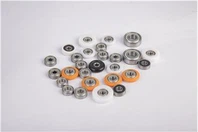
Selecting the appropriate pre - load for Bearing 6008 is a crucial task that can significantly impact the performance, lifespan, and efficiency of various mechanical systems. As a trusted supplier of Bearing 6008, I understand the importance of this process and am here to share some insights on how to make the right choice.
Understanding Bearing 6008
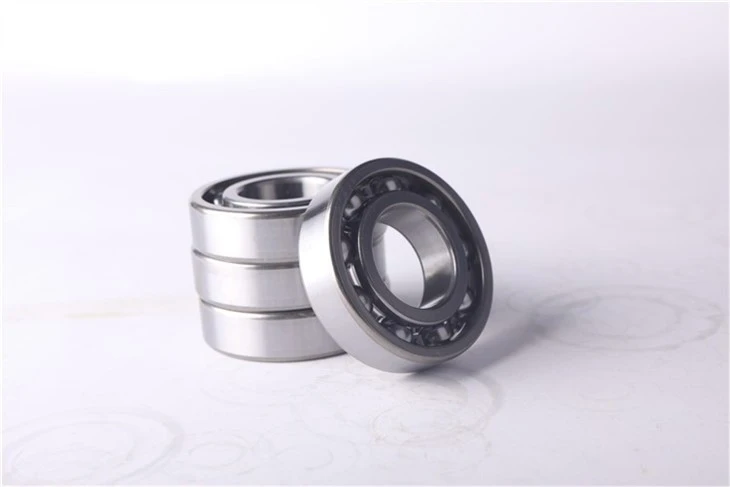
Bearing 6008 is a widely used middle - size ball bearing. It is suitable for a variety of applications, including Bearing For Household Appliances, Internal Combustion Engines, Transportation Vehicles, Agricultural Machinery, Construction Machinery, Construction Machinery. With its standard design and reliable performance, it has become a popular choice in the industry. You can find more detailed information about Bearing 6008 on our website.
What is Pre - load?
Pre - load refers to the axial or radial force applied to a bearing before it is put into operation. This force eliminates the internal clearance within the bearing and ensures that the rolling elements (balls in the case of Bearing 6008) are in constant contact with the raceways. There are several reasons for applying pre - load:
- Improved Rigidity: Pre - load increases the stiffness of the bearing, which is essential for applications that require high precision and minimal deflection. For example, in machine tool spindles, a proper pre - load can improve the accuracy of machining operations.
- Reduced Vibration and Noise: By eliminating the internal clearance, pre - load helps to reduce vibration and noise during operation. This is particularly important in applications where quiet operation is desired, such as in household appliances.
- Enhanced Bearing Life: A well - applied pre - load can distribute the load more evenly across the rolling elements, reducing the stress on individual components and extending the bearing's lifespan.
Factors Affecting Pre - load Selection
1. Application Requirements
The nature of the application plays a significant role in determining the appropriate pre - load. For high - speed applications, a lighter pre - load may be preferred to reduce friction and heat generation. On the other hand, applications that involve heavy loads or high - precision requirements may require a higher pre - load. For instance, in a motorcycle engine, where high - speed rotation and significant loads are involved, the pre - load of Motorcycle Parts Bearing 6301 - 2RS needs to be carefully selected to ensure optimal performance.
2. Bearing Type and Size
Bearing 6008 has its own characteristics in terms of size and internal structure. Larger bearings generally require higher pre - loads to achieve the same level of stiffness as smaller bearings. Additionally, the type of bearing (e.g., deep - groove ball bearing, angular - contact ball bearing) can also affect the pre - load requirements.
3. Operating Conditions
The temperature, humidity, and lubrication conditions during operation can influence the pre - load. High temperatures can cause the bearing materials to expand, which may change the pre - load. Therefore, it is necessary to consider the expected operating temperature range when selecting the pre - load. Proper lubrication is also crucial, as it can reduce friction and wear, and affect the effective pre - load.
Methods for Selecting the Appropriate Pre - load
1. Analytical Calculation
One way to determine the pre - load is through analytical calculations. This involves using mathematical formulas based on the bearing's geometry, load conditions, and material properties. For example, the Hertzian contact theory can be used to calculate the contact stress between the rolling elements and the raceways under different pre - loads. However, these calculations can be complex and require a good understanding of mechanical engineering principles.
2. Experience - based Selection
Based on years of experience in the industry, we have developed some guidelines for pre - load selection for Bearing 6008 in different applications. For common household appliances, a relatively light pre - load is usually sufficient to ensure quiet operation and long service life. In contrast, for industrial machinery with heavy loads, a higher pre - load may be necessary.
3. Testing and Optimization
In some cases, it may be necessary to conduct tests to determine the optimal pre - load. This can involve installing the bearing with different pre - loads and measuring its performance parameters, such as vibration, temperature, and noise. By analyzing the test results, the most suitable pre - load can be identified.

Steps to Implement the Pre - load
1. Preparation
Before applying the pre - load, it is important to ensure that the bearing and the associated components are clean and free of debris. The mounting surfaces should be flat and smooth to ensure proper alignment.
2. Pre - load Application
There are several methods for applying pre - load, including using springs, washers, or adjusting nuts. The choice of method depends on the specific application and the design of the bearing housing. For example, in some applications, a spring can be used to apply a constant pre - load, while in others, an adjusting nut can be used to fine - tune the pre - load.
3. Verification
After applying the pre - load, it is necessary to verify that the pre - load is within the desired range. This can be done using specialized measuring tools, such as load cells or displacement sensors. If the pre - load is not correct, adjustments should be made accordingly.
Conclusion
Selecting the appropriate pre - load for Bearing 6008 is a complex but essential process. By considering the application requirements, bearing characteristics, and operating conditions, and using appropriate selection methods, we can ensure that the bearing operates at its best performance. As a Bearing 6008 supplier, we are committed to providing our customers with high - quality bearings and professional technical support. If you have any questions about pre - load selection or need to purchase Bearing 6008, please feel free to contact us for further discussion and procurement negotiation.
References
- Harris, T. A., & Kotzalas, M. N. (2007). Rolling Bearing Analysis. John Wiley & Sons.
- SKF. (2019). SKF Rolling Bearing Handbook. SKF Group.