Hey there, folks! As a supplier of One Way Roller, I've had my fair share of questions about these nifty little components. One of the most common queries I get is about the dynamic response time of a One Way Roller. So, I thought I'd take a deep dive into this topic and share what I've learned over the years.

First off, let's get a basic understanding of what a One Way Roller is. A One Way Roller, also known as a one - way clutch or overrunning clutch, is a mechanical device that allows rotation in one direction while preventing it in the opposite direction. You can find out more about it on our website One Way Roller. These rollers are used in a wide range of applications, from automotive engines to industrial machinery.
Now, let's talk about dynamic response time. The dynamic response time of a One Way Roller is the time it takes for the roller to engage or disengage when there's a change in the direction of rotation or torque. In simpler terms, it's how quickly the roller can switch from allowing rotation to locking up and vice - versa.
There are several factors that can affect the dynamic response time of a One Way Roller. One of the key factors is the design of the roller itself. The shape, size, and material of the roller play a crucial role. For example, a well - designed roller with a smooth surface and the right geometry can engage and disengage more quickly. Some high - performance rollers are made from special alloys that offer better friction characteristics and lower inertia, which can significantly reduce the response time.
The lubrication of the One Way Roller also has a big impact. Proper lubrication reduces friction between the roller and its mating surfaces. When there's less friction, the roller can move more freely, allowing for faster engagement and disengagement. However, too much lubrication can also be a problem. It might cause the roller to slip or delay the engagement, so finding the right balance is essential.
Another factor is the load on the roller. When there's a high load, the roller has to overcome more resistance to engage or disengage. This means that in applications with heavy loads, the dynamic response time might be longer. On the other hand, in low - load situations, the roller can react more quickly.
Now, you might be wondering, why does the dynamic response time matter? Well, in many applications, the speed at which the One Way Roller can engage and disengage is critical for the overall performance of the system. Take an automotive engine, for example. In a car's transmission system, the One Way Roller needs to engage and disengage rapidly to ensure smooth gear changes. If the response time is too long, it can lead to jerky gear shifts, reduced fuel efficiency, and even damage to the transmission components.
In industrial machinery, a slow dynamic response time can also cause problems. In conveyor systems, for instance, the One Way Roller is used to control the movement of the conveyor belt. If the roller doesn't engage or disengage quickly enough, it can result in inaccurate positioning of the products on the belt, leading to production errors and inefficiencies.
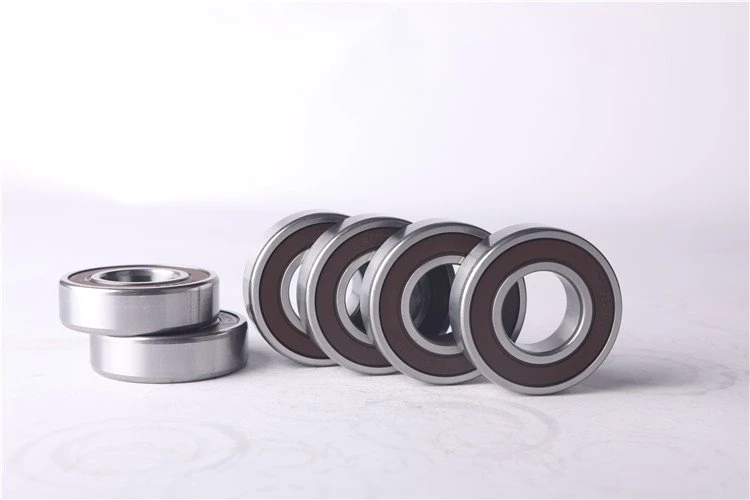
Let's take a look at a specific example. We have a product, the 6205 - ZZ. This One Way Roller is designed for high - speed applications. It has a unique design that allows for a very short dynamic response time. The rollers are made from a high - strength alloy that provides excellent friction properties, and the internal structure is optimized for quick engagement and disengagement. In tests, we've found that the 6205 - ZZ can engage and disengage in a fraction of a second, even under high - load conditions.
To measure the dynamic response time of a One Way Roller, we use specialized testing equipment. We set up a test rig where we can simulate different operating conditions, such as varying speeds, loads, and directions of rotation. We then measure the time it takes for the roller to engage and disengage using high - speed sensors. These tests help us to ensure that our rollers meet the high - performance standards that our customers expect.
If you're in the market for One Way Rollers, it's important to consider the dynamic response time based on your specific application. If you're dealing with a high - speed, high - precision system, you'll need a roller with a very short response time. On the other hand, if your application has lower speed and load requirements, you might have more flexibility.
At our company, we understand the importance of providing the right One Way Rollers for your needs. We've spent years researching and developing our products to ensure they deliver top - notch performance. Whether you're an automotive manufacturer, an industrial machinery builder, or a small - scale DIY enthusiast, we have the products and the expertise to help you.
If you're interested in learning more about our One Way Rollers and how they can meet your requirements, don't hesitate to reach out. We'd be more than happy to have a chat and discuss your specific needs. You can start a conversation with us to get a better understanding of which product is the best fit for you.
In conclusion, the dynamic response time of a One Way Roller is a critical aspect of its performance. It's influenced by factors like design, lubrication, and load, and it can have a significant impact on the overall performance of the system it's used in. Our high - quality One Way Rollers, like the 6205 - ZZ, are designed to offer fast and reliable dynamic response times. So, if you're looking for a top - of - the - line One Way Roller, we're here to help.
References
- "Mechanical Design Handbook": A comprehensive guide on mechanical components, including One Way Rollers.
- Industry research papers on the performance of One Way Rollers in different applications.
- Internal company research and testing data on the dynamic response times of our One Way Roller products.