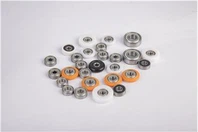
As a supplier of 608 roller bearings, I often get asked about the wear rate of these crucial components. Understanding the wear rate of a 608 roller bearing is essential for both manufacturers and end - users, as it directly impacts the performance, reliability, and lifespan of the machinery in which these bearings are installed.
What is a 608 Roller Bearing?
Before delving into the wear rate, let's briefly introduce the 608 roller bearing. The 608 roller bearing is a type of miniature bearing that falls under the category of Mini Roller Bearings. It has a bore diameter of 8mm, an outer diameter of 22mm, and a width of 7mm. These bearings are widely used in various applications, including skateboards, electric motors, and small industrial equipment, due to their compact size and high - precision performance.
Factors Affecting the Wear Rate of 608 Roller Bearings
1. Load
One of the most significant factors influencing the wear rate of a 608 roller bearing is the load it experiences. When a bearing is subjected to a high load, the contact stress between the rolling elements (rollers) and the raceways increases. This increased stress can lead to accelerated wear, especially if the load exceeds the bearing's rated capacity. For example, in a skateboard application, if the rider is heavy or performs high - impact tricks, the 608 bearings in the wheels will experience greater loads, which may result in faster wear.
2. Speed
The rotational speed of the bearing also plays a crucial role in determining its wear rate. At high speeds, the rolling elements and raceways are subjected to more frequent impacts and friction. This can cause the lubricant to break down more quickly, leading to increased metal - to - metal contact and wear. Additionally, high - speed operation can generate more heat, which can further degrade the lubricant and the bearing material. For instance, in an electric motor running at a very high RPM, the 608 roller bearings need to be carefully selected to withstand the speed - related stresses.
3. Lubrication
Proper lubrication is vital for reducing the wear rate of 608 roller bearings. Lubricants form a thin film between the rolling elements and the raceways, which reduces friction and prevents direct metal - to - metal contact. There are different types of lubricants available, such as grease and oil, each with its own advantages and disadvantages. Grease is commonly used in applications where the bearing operates at relatively low speeds and has a sealed design. Oil, on the other hand, is preferred for high - speed applications as it can provide better cooling and more efficient lubrication. If the lubricant is not of the right quality or is not applied correctly, the wear rate of the bearing will increase significantly.
4. Contamination
Contamination is another factor that can accelerate the wear of 608 roller bearings. Dust, dirt, water, and other foreign particles can enter the bearing and cause abrasion between the rolling elements and the raceways. In industrial environments, where there is a lot of dust and debris, the bearings are particularly vulnerable to contamination. For example, in a manufacturing plant, if the bearings are not properly sealed or protected, the ingress of contaminants can lead to premature wear and failure.
5. Material Quality
The quality of the material used in the manufacturing of the 608 roller bearing also affects its wear rate. High - quality bearing steels with proper heat treatment can provide better hardness, toughness, and resistance to wear. Bearings made from inferior materials may have a higher wear rate and are more likely to fail prematurely. As a supplier, we ensure that our 608 Roller Bearings are made from high - grade materials and undergo strict quality control processes to minimize wear.
Measuring the Wear Rate of 608 Roller Bearings
Measuring the wear rate of a 608 roller bearing can be a complex task. There are several methods that can be used, including:
1. Dimensional Measurement
By regularly measuring the dimensions of the bearing, such as the inner and outer diameters and the width, it is possible to detect any changes due to wear. A significant change in these dimensions may indicate excessive wear. However, this method requires precise measuring equipment and may not be able to detect early stages of wear.
2. Vibration Analysis
Vibration analysis is a non - destructive testing method that can be used to monitor the condition of a bearing. As a bearing wears, the vibration patterns it produces change. By analyzing these changes, it is possible to detect the onset of wear and predict when the bearing may fail. Specialized vibration sensors and analysis software are used for this purpose.
3. Temperature Monitoring
Monitoring the temperature of the bearing can also provide insights into its wear rate. As the wear increases, the friction in the bearing generates more heat, causing the temperature to rise. By using temperature sensors, it is possible to detect abnormal temperature increases, which may indicate excessive wear or other problems.
Reducing the Wear Rate of 608 Roller Bearings
1. Proper Selection
When selecting a 608 roller bearing for a specific application, it is crucial to consider the load, speed, and environmental conditions. Choosing a bearing with the appropriate load capacity, speed rating, and sealing design can significantly reduce the wear rate. For example, if the application involves high - speed operation, a bearing with a high - speed rating and a suitable lubrication system should be selected.
2. Regular Maintenance
Regular maintenance is essential for ensuring the long - term performance of 608 roller bearings. This includes checking the lubrication level, cleaning the bearings, and inspecting for signs of wear and contamination. By performing regular maintenance, any potential problems can be detected early and addressed before they cause significant damage.
3. Sealing and Protection
Using proper seals and protective covers can prevent contaminants from entering the bearing, thereby reducing the wear rate. Sealed bearings are designed to keep out dust, dirt, and water, which can extend the bearing's lifespan. In addition, in harsh environments, additional protective measures such as shields or guards can be used.
Importance of Understanding the Wear Rate for Our Customers
As a supplier of 608 roller bearings, understanding the wear rate is not only important for us but also for our customers. By providing our customers with information about the factors that affect wear and how to reduce it, we can help them make informed decisions when selecting and using our bearings. This can lead to improved performance and reliability of their machinery, reduced downtime, and lower maintenance costs.


For example, if a customer is using our 608 roller bearings in a skateboard manufacturing process, we can advise them on the appropriate bearings based on the expected rider weight and usage patterns. We can also provide guidance on proper lubrication and maintenance to ensure that the bearings last as long as possible.
In conclusion, the wear rate of 608 roller bearings is influenced by multiple factors, including load, speed, lubrication, contamination, and material quality. By understanding these factors and taking appropriate measures to reduce wear, such as proper selection, regular maintenance, and sealing, the lifespan of the bearings can be significantly extended.
If you are interested in purchasing high - quality 608 Roller Bearings or have any questions about their wear rate and performance, please feel free to contact us. We are always ready to provide you with the best solutions and support for your bearing needs.
References
- Harris, T. A., & Kotzalas, M. N. (2007). Rolling Bearing Analysis. Wiley.
- SKF Bearing Handbook. (2010). SKF Group.
- FAG Bearing Application Engineering. (2012). Schaeffler Group.