In the realm of mechanical components, rollers play a crucial role in a wide range of applications, from industrial machinery to automotive systems. Among the various types of rollers available, one-way rollers stand out as a specialized and highly useful variant. As a supplier of one-way rollers, I often encounter questions about the differences between one-way rollers and regular rollers. In this blog post, I will delve into the intricacies of these two types of rollers, exploring their unique features, functions, and applications.
Understanding Regular Rollers
Regular rollers, also known as standard rollers, are the most common type of rollers used in mechanical systems. They are designed to provide smooth and efficient movement in both directions, allowing for rotational or linear motion. Regular rollers typically consist of a cylindrical body with a smooth surface, which reduces friction and enables easy rolling.
One of the key characteristics of regular rollers is their bidirectional functionality. They can rotate freely in both clockwise and counterclockwise directions, making them suitable for applications where continuous or reversible motion is required. For example, in conveyor systems, regular rollers are used to transport goods along a track, allowing for smooth and efficient movement in both forward and reverse directions.
Regular rollers are also available in a variety of sizes, materials, and configurations to suit different applications. They can be made from materials such as steel, plastic, or rubber, depending on the specific requirements of the application. Additionally, regular rollers can be designed with different surface finishes, such as smooth, grooved, or crowned, to optimize their performance in different operating conditions.
Introducing One Way Rollers
One way rollers, as the name suggests, are designed to allow rotation in only one direction while preventing rotation in the opposite direction. They are also known as overrunning clutches or freewheeling clutches, and they play a critical role in many mechanical systems where unidirectional motion is required.
The basic principle behind a one way roller is the use of a locking mechanism that engages when the roller is rotated in one direction and disengages when it is rotated in the opposite direction. This locking mechanism can be implemented in various ways, depending on the specific design of the one way roller. One common type of locking mechanism is the use of sprags or wedges, which are small, spring-loaded components that engage with the inner and outer races of the roller to prevent reverse rotation.
One of the main advantages of one way rollers is their ability to provide unidirectional motion, which can simplify the design and operation of mechanical systems. For example, in a bicycle, a one way roller is used in the freewheel mechanism, which allows the rider to coast without pedaling. When the rider pedals forward, the one way roller engages, transferring power from the pedals to the rear wheel. When the rider stops pedaling, the one way roller disengages, allowing the rear wheel to rotate freely without driving the pedals.
One way rollers are also used in a variety of industrial applications, such as conveyor systems, packaging machinery, and automotive transmissions. In these applications, one way rollers are used to prevent reverse rotation, protect equipment from damage, and improve the efficiency of the system.
Key Differences between One Way Rollers and Regular Rollers
Now that we have a basic understanding of regular rollers and one way rollers, let's take a closer look at the key differences between these two types of rollers.
Directionality
The most obvious difference between one way rollers and regular rollers is their directionality. Regular rollers can rotate freely in both directions, while one way rollers allow rotation in only one direction. This fundamental difference in directionality makes one way rollers suitable for applications where unidirectional motion is required, while regular rollers are better suited for applications where bidirectional motion is needed.
Locking Mechanism
Another significant difference between one way rollers and regular rollers is the presence of a locking mechanism in one way rollers. Regular rollers do not have a locking mechanism and can rotate freely in both directions. In contrast, one way rollers are equipped with a locking mechanism that engages when the roller is rotated in one direction and disengages when it is rotated in the opposite direction. This locking mechanism allows one way rollers to prevent reverse rotation and provide unidirectional motion.
Application
The differences in directionality and locking mechanism also result in different applications for one way rollers and regular rollers. Regular rollers are commonly used in applications where continuous or reversible motion is required, such as conveyor systems, machine tools, and automotive engines. One way rollers, on the other hand, are used in applications where unidirectional motion is required, such as freewheel mechanisms, overrunning clutches, and backstopping devices.
Design and Construction
One way rollers and regular rollers also differ in their design and construction. Regular rollers are typically simpler in design and construction, consisting of a cylindrical body with a smooth surface. One way rollers, on the other hand, are more complex in design and construction, as they require a locking mechanism to provide unidirectional motion. The locking mechanism in one way rollers can be implemented in various ways, depending on the specific design of the roller, which can make one way rollers more expensive and difficult to manufacture than regular rollers.
Applications of One Way Rollers
One way rollers have a wide range of applications in various industries, including automotive, industrial, and consumer products. Here are some common applications of one way rollers:

Automotive Industry
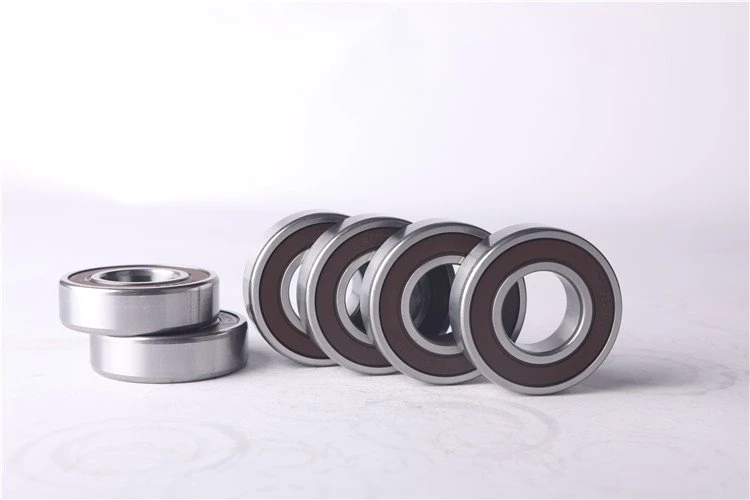
In the automotive industry, one way rollers are used in a variety of applications, such as starters, alternators, and transmissions. In a starter motor, a one way roller is used to engage the starter gear with the engine flywheel when the ignition key is turned. Once the engine starts, the one way roller disengages, preventing the starter motor from being driven by the engine. In an alternator, a one way roller is used to allow the alternator to rotate freely when the engine is running, while preventing the alternator from being driven by the engine when the engine is stopped. In a transmission, one way rollers are used to provide smooth and efficient shifting between gears.
Industrial Machinery
In industrial machinery, one way rollers are used in conveyor systems, packaging machinery, and machine tools. In a conveyor system, one way rollers are used to prevent reverse rotation of the conveyor belt, ensuring that the goods are transported in the desired direction. In packaging machinery, one way rollers are used to control the movement of the packaging materials, preventing them from moving in the wrong direction. In machine tools, one way rollers are used to provide unidirectional motion to the cutting tools, improving the accuracy and efficiency of the machining process.
Consumer Products
One way rollers are also used in a variety of consumer products, such as bicycles, power tools, and household appliances. In a bicycle, a one way roller is used in the freewheel mechanism, allowing the rider to coast without pedaling. In power tools, one way rollers are used to prevent the tool from rotating in the wrong direction, improving the safety and reliability of the tool. In household appliances, one way rollers are used to control the movement of the components, such as the drum in a washing machine or the blade in a blender.
Conclusion
In conclusion, one way rollers and regular rollers are two different types of rollers with distinct features, functions, and applications. Regular rollers are designed to provide smooth and efficient movement in both directions, while one way rollers are designed to allow rotation in only one direction while preventing rotation in the opposite direction. The differences in directionality, locking mechanism, application, and design make one way rollers suitable for applications where unidirectional motion is required, while regular rollers are better suited for applications where bidirectional motion is needed.
As a supplier of One Way Roller, I understand the importance of providing high-quality products that meet the specific requirements of our customers. We offer a wide range of one way rollers in different sizes, materials, and configurations to suit various applications. Our one way rollers are designed and manufactured using the latest technology and highest quality standards, ensuring reliable performance and long service life.
If you are in the market for one way rollers or have any questions about our products, please feel free to contact us. Our team of experts is always ready to assist you in finding the right solution for your application. We look forward to the opportunity to work with you and provide you with the best one way rollers on the market.
References
- "Roller Bearings: Design, Application, and Selection." Machinery's Handbook, 31st Edition, Industrial Press Inc., 2016.
- "One-Way Clutches: Principles, Design, and Applications." Clutch and Brake Handbook, 3rd Edition, Marcel Dekker Inc., 2002.
- "Automotive Clutches and Transmissions." Automotive Encyclopedia, 2nd Edition, McGraw-Hill Education, 2010.