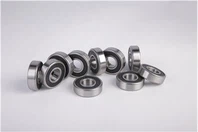
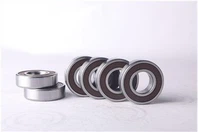
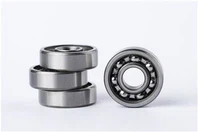
Hey there! I'm a supplier of Bearing 6305, and today I wanna talk about the coefficient of thermal expansion of Bearing 6305.
First off, let's understand what the coefficient of thermal expansion means. In simple terms, it's a measure of how much a material expands or contracts when its temperature changes. Every material has its own unique coefficient of thermal expansion, and for bearings like the Bearing 6305, it's a crucial property.
The Bearing 6305 is a widely - used middle - size roller bearing. You can find more details about it on this page: Bearing 6305. It's used in a variety of applications, from industrial machinery to automotive parts. And in all these applications, temperature changes are inevitable.
So, why does the coefficient of thermal expansion matter for the Bearing 6305? Well, when the temperature rises, the bearing material will expand. If the expansion isn't accounted for properly, it can lead to a bunch of problems. For example, it might cause the bearing to fit too tightly in its housing, increasing friction and wear. On the other hand, if the bearing contracts too much in cold temperatures, it could lead to a loose fit, which can also result in vibration and premature failure.
Now, the coefficient of thermal expansion of the Bearing 6305 depends on the materials it's made of. Typically, the outer ring, inner ring, and rolling elements of the Bearing 6305 are made of high - quality bearing steel. The coefficient of thermal expansion of bearing steel is usually around 11.7×10⁻⁶ /°C. This means that for every one - degree Celsius increase in temperature, the length of the steel component will increase by 11.7 millionths of its original length.
Let's look at a real - world example to understand this better. Suppose you have a Bearing 6305 installed in a machine that operates in a high - temperature environment. Let's say the initial temperature is 20°C, and during operation, the temperature rises to 80°C. If the inner ring of the bearing has an initial diameter of 25 mm, we can calculate how much it will expand.
The change in temperature (ΔT) is 80 - 20 = 60°C. Using the coefficient of thermal expansion (α = 11.7×10⁻⁶ /°C), we can use the formula for linear expansion: ΔL = α×L₀×ΔT, where L₀ is the original length.
For the inner ring with L₀ = 25 mm, ΔL=(11.7×10⁻⁶ /°C)×25 mm×60°C = 0.01755 mm. So, the diameter of the inner ring will increase by approximately 0.01755 mm. This might seem like a small change, but in the precision - engineered world of bearings, it can have a significant impact on performance.
Another factor to consider is that different parts of the bearing might experience different temperature changes. For example, the rolling elements might heat up more quickly than the outer ring due to the friction generated during rotation. This differential expansion can create internal stresses within the bearing, which can affect its load - carrying capacity and lifespan.
As a Bearing 6305 supplier, I know how important it is to account for the coefficient of thermal expansion in the design and application of these bearings. We work closely with our customers to understand their operating conditions, including temperature ranges. If a customer is using the Bearing 6305 in a high - temperature environment, we might recommend using a bearing with a special heat - resistant coating or a different grade of steel with a more suitable coefficient of thermal expansion.
We also provide technical support to our customers. If they're experiencing issues related to thermal expansion, such as increased noise or reduced performance, we can help them analyze the problem and come up with a solution. Maybe it's as simple as adjusting the clearance between the bearing and its housing to accommodate the expansion.
In addition to the material of the bearing itself, the lubricant used in the Bearing 6305 also has a coefficient of thermal expansion. Lubricants can expand or contract with temperature changes, which can affect their viscosity and ability to lubricate the bearing properly. We often recommend lubricants that are specifically formulated to maintain their properties over a wide range of temperatures.
If you're in the market for Bearing 6305 or have any questions about the coefficient of thermal expansion and its impact on bearing performance, don't hesitate to reach out. We're here to help you make the best choice for your application. Whether you're a small - scale manufacturer or a large industrial company, we can provide you with high - quality bearings and the technical expertise you need.
In conclusion, the coefficient of thermal expansion of Bearing 6305 is a critical property that can significantly affect its performance and lifespan. By understanding this property and taking appropriate measures, such as proper design and lubrication, you can ensure that your bearings operate smoothly and efficiently in any temperature environment. So, if you're looking for reliable Bearing 6305 products and expert advice, contact us for a purchase negotiation.
References:

- "Handbook of Bearings", Industry - standard bearing reference book
- "Materials Science and Engineering for Bearings", Academic research publication on bearing materials