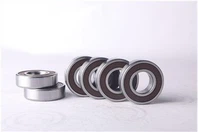
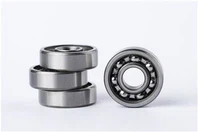
Hey there! As a supplier of pulley bearings, I've been in the game for quite a while, and I've seen firsthand how important it is to understand the static characteristics of these nifty little components. So, let's dive right in and explore what makes pulley bearings tick when they're not in motion.
Load - Carrying Capacity
One of the most crucial static characteristics of pulley bearings is their load - carrying capacity. This is basically how much weight or force a bearing can handle without getting damaged or failing. When you're choosing a pulley bearing for an application, you've got to make sure it can support the static load that'll be placed on it.
For instance, in industrial settings, Industrial Roller Bearings are often used in heavy - duty machinery. These bearings need to be able to handle huge static loads from the weight of the equipment itself, as well as any additional forces that might be applied during operation. If you choose a bearing with a load - carrying capacity that's too low, it can lead to premature wear and tear, and in the worst - case scenario, a complete bearing failure.
The load - carrying capacity of a pulley bearing depends on several factors. The size of the bearing is a big one. Generally, larger bearings can handle more load than smaller ones. The material the bearing is made of also plays a huge role. Bearings made from high - quality steel or other strong alloys tend to have a higher load - carrying capacity. And the design of the bearing, like the number and size of the rolling elements (balls or rollers), can affect how much load it can take.
Static Rigidity
Static rigidity is another key characteristic. It refers to how much a bearing resists deformation under a static load. A bearing with high static rigidity will maintain its shape and dimensions better when a load is applied.
Think about Sliding Gate Roller Bearings. These bearings are used in sliding gates, and they need to be rigid enough to support the weight of the gate without sagging or deforming. If the bearings aren't rigid enough, the gate might not slide smoothly, and it could even get stuck.

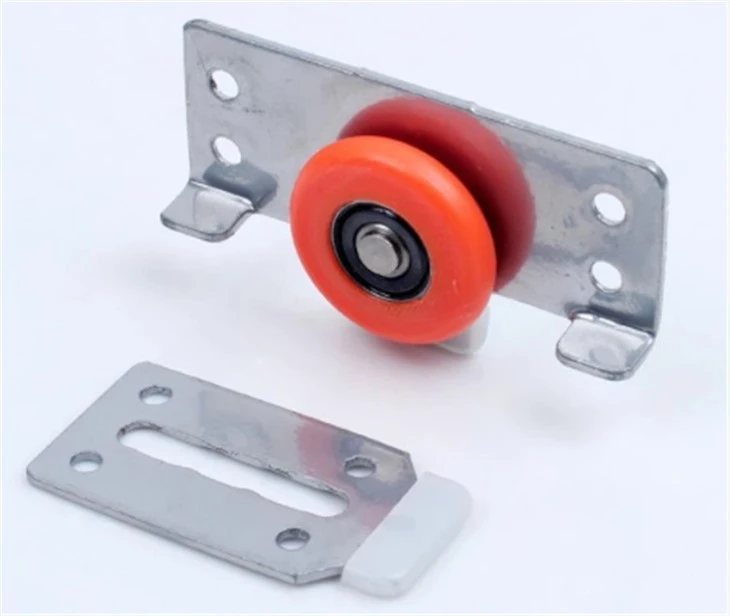
The internal structure of the bearing has a major impact on its static rigidity. Bearings with a more compact and well - designed internal structure tend to be more rigid. For example, bearings with a large number of small - diameter rolling elements can distribute the load more evenly, which helps to increase the static rigidity. Also, the pre - loading of the bearing can affect its rigidity. Pre - loading is when a bearing is installed with a certain amount of initial load, which can make it stiffer and more resistant to deformation.
Friction Torque
Friction torque is the amount of torque required to start rotating a bearing when it's at rest. It's an important static characteristic because it can affect how easily a pulley bearing can be set in motion.
In applications like Door Bearing Wheels, low friction torque is crucial. You want the door to open and close smoothly with minimal effort. If the friction torque of the bearings is too high, it'll be difficult to move the door, and it can also cause unnecessary wear on the bearings and the door mechanism.
The friction torque of a pulley bearing is influenced by several factors. The type of lubrication used is a big one. A good lubricant can reduce the friction between the rolling elements and the raceways, which lowers the friction torque. The surface finish of the bearing components also matters. Smoother surfaces generally result in lower friction torque. And the design of the bearing, such as the contact angle between the rolling elements and the raceways, can affect the amount of friction.
Clearance
Clearance is the amount of free movement between the rolling elements and the raceways of a bearing when it's not under load. It's an important static characteristic because it can affect the performance and lifespan of the bearing.
There are two main types of clearance: radial clearance and axial clearance. Radial clearance is the amount of free movement in the radial direction (perpendicular to the axis of rotation), while axial clearance is the free movement in the axial direction (parallel to the axis of rotation).
The right amount of clearance is crucial. If the clearance is too large, the bearing can be noisy and vibrate, which can lead to premature wear. On the other hand, if the clearance is too small, the bearing can overheat and seize up. In different applications, the optimal clearance can vary. For example, in high - speed applications, a smaller clearance might be preferred to reduce vibration and noise. In applications where there's a lot of thermal expansion, a larger clearance might be needed to prevent the bearing from seizing due to the expansion.
Material Properties
The material used to make the pulley bearing has a significant impact on its static characteristics. The most common material for bearings is steel, but there are different grades and types of steel, each with its own properties.
High - carbon chromium steel is a popular choice for many pulley bearings. It has good hardness, wear resistance, and fatigue strength. These properties are important for withstanding the static and dynamic loads that bearings are subjected to. The hardness of the steel helps to prevent the bearing from deforming under load, while the wear resistance ensures that the bearing lasts a long time.
Some bearings are also made from stainless steel. Stainless steel bearings are resistant to corrosion, which makes them suitable for applications in wet or corrosive environments. However, stainless steel bearings might have slightly different static characteristics compared to carbon steel bearings, such as lower hardness and load - carrying capacity in some cases.
Sealing and Shielding
Sealing and shielding are important aspects of pulley bearings that can affect their static performance. Seals and shields are used to keep contaminants out of the bearing and to retain the lubricant inside.
In dirty or dusty environments, bearings with good seals or shields are essential. For example, in industrial settings where there's a lot of dust and debris, sealed bearings can prevent these contaminants from entering the bearing and causing damage. This helps to maintain the static characteristics of the bearing, such as load - carrying capacity and friction torque.
There are different types of seals and shields. Contact seals provide a tight seal but can increase the friction torque slightly. Non - contact seals, on the other hand, offer less friction but might not be as effective at keeping out very fine contaminants. Shields are usually made of metal and provide a basic level of protection against larger particles.
Conclusion
Understanding the static characteristics of pulley bearings is essential for choosing the right bearing for your application. Whether you're dealing with heavy - duty industrial machinery, sliding gates, or door mechanisms, each application has its own requirements in terms of load - carrying capacity, static rigidity, friction torque, clearance, material properties, and sealing.
As a supplier of pulley bearings, I'm here to help you make the best choice for your needs. If you're in the market for high - quality pulley bearings and want to discuss your specific requirements, feel free to reach out. We can have a detailed chat about which bearings will work best for your application, and we can also provide you with all the technical information you need.
Don't hesitate to get in touch if you have any questions or if you're ready to start a procurement process. I'm looking forward to working with you to find the perfect pulley bearings for your projects.
References
- Harris, T. A., & Kotzalas, M. N. (2007). Rolling Bearing Analysis. Wiley.
- Schaeffler Group. (2019). Rolling Bearings: Basics and Applications.