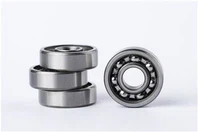
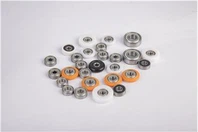
In the industrial realm, track bearing rollers play a pivotal role in various applications, from heavy - machinery to precision equipment. As a track bearing roller supplier, I've witnessed firsthand how the precision grade of these components can significantly impact their performance. In this blog, we'll delve into the intricate relationship between precision grade and performance, exploring how different grades are defined, and why they matter in real - world applications.
Understanding Precision Grades of Track Bearing Rollers
Precision grades of track bearing rollers are standardized measurements that define the allowable tolerances in various geometric and operational characteristics. These grades are typically denoted by a number or a code, with lower numbers representing higher precision. For instance, in the widely recognized ISO and ABEC (Annular Bearing Engineering Committee) standards, a grade ABEC - 7 track bearing roller is more precise than an ABEC - 3 one.
The key parameters that are considered when determining the precision grade include dimensional accuracy, roundness, surface finish, and the consistency of internal clearances. Dimensional accuracy refers to how closely the actual size of the roller matches the specified design size. Even the slightest deviation can lead to problems in the assembly and operation of the equipment. Roundness is crucial because an out - of - round roller can cause uneven loading, vibration, and premature wear. A high - quality surface finish reduces friction and improves the roller's ability to roll smoothly, while consistent internal clearances ensure stable operation under different loads and speeds.
Impact on Rotational Accuracy
One of the most significant ways the precision grade affects performance is in rotational accuracy. In applications where precise motion control is required, such as in CNC (Computer Numerical Control) machines or robotic arms, high - precision track bearing rollers are essential. These rollers can maintain a more accurate path during rotation, minimizing errors in positioning and reducing the risk of product defects.
For example, in a CNC milling machine, the spindle uses track bearing rollers to support the rotating shaft. A higher - precision roller will have less run - out, which is the deviation of the roller's actual rotation from its ideal centerline. This means that the cutting tool attached to the spindle can move with greater accuracy, resulting in smoother surfaces and more precise dimensions on the machined parts. On the other hand, a lower - precision roller may cause the spindle to wobble, leading to rough finishes and inaccurate cuts.
Influence on Load - Carrying Capacity
The precision grade also has a direct impact on the load - carrying capacity of track bearing rollers. High - precision rollers are manufactured with more consistent dimensions and better surface finishes, which allow for a more even distribution of the load across the roller and the raceway. This reduces stress concentrations and helps prevent premature fatigue failure.


In heavy - duty applications, such as in mining equipment or large - scale construction machinery, the ability to carry heavy loads is crucial. A high - precision track bearing roller can withstand higher loads without deforming or wearing out quickly. For instance, in a conveyor system used in a mining operation, the rollers need to support the weight of tons of ore. A roller with a higher precision grade will be better able to handle these heavy loads, ensuring the smooth and reliable operation of the conveyor.
Effects on Speed and Vibration
Speed and vibration are two closely related performance factors that are affected by the precision grade of track bearing rollers. High - precision rollers can operate at higher speeds with less vibration. This is because they have better roundness and more consistent internal clearances, which reduce the dynamic forces acting on the roller during rotation.
In high - speed applications, such as in electric motors or turbine generators, minimizing vibration is essential. Excessive vibration can not only cause noise but also lead to mechanical failures and reduced efficiency. A high - precision track bearing roller can help maintain a stable rotation at high speeds, reducing vibration and improving the overall performance of the equipment.
Noise Reduction
Noise is another important consideration in many applications. Low - precision track bearing rollers may produce more noise during operation due to uneven loading, misalignment, and surface irregularities. In contrast, high - precision rollers are designed to operate more quietly.
For example, in office equipment like printers or photocopiers, noise reduction is a key selling point. High - precision track bearing rollers can ensure smooth and quiet operation, enhancing the user experience. In addition, in industrial settings where noise pollution is a concern, using high - precision rollers can help meet environmental regulations and create a more comfortable working environment.
Cost - Benefit Analysis
While high - precision track bearing rollers offer superior performance, they also come at a higher cost. As a supplier, I often work with customers to conduct a cost - benefit analysis to determine the most suitable precision grade for their specific applications.
In some cases, where the requirements for precision, load - carrying capacity, speed, and noise reduction are not extremely high, a lower - precision roller may be a more cost - effective choice. For example, in a simple conveyor system in a small - scale factory, a lower - precision roller can still provide satisfactory performance at a lower cost. However, in applications where the consequences of failure are severe or where high - performance is essential, investing in high - precision rollers is often worth the extra expense.
Real - World Applications and Case Studies
Let's take a look at some real - world applications to illustrate the importance of precision grade. In the aerospace industry, where reliability and performance are of utmost importance, high - precision track bearing rollers are used in critical components such as landing gear systems and flight control actuators. These rollers need to withstand extreme loads, operate at high speeds, and maintain high levels of precision to ensure the safety of the aircraft.
In the automotive industry, track bearing rollers are used in various parts, including wheel hubs and transmissions. High - precision rollers can improve fuel efficiency, reduce noise, and enhance the overall driving experience. For example, in a high - performance sports car, the use of high - precision track bearing rollers in the transmission can allow for smoother gear shifts and better power transfer.
Conclusion and Call to Action
As we've seen, the precision grade of track bearing rollers has a profound impact on their performance in terms of rotational accuracy, load - carrying capacity, speed, vibration, and noise reduction. Whether you're in the aerospace, automotive, manufacturing, or any other industry, choosing the right precision grade is crucial for the success of your application.
As a Track Bearing Roller supplier, I'm committed to providing high - quality products that meet the diverse needs of our customers. If you're looking for track bearing rollers for your next project, or if you need advice on choosing the right precision grade, I encourage you to reach out to us. We have a team of experts who can help you make an informed decision and ensure that you get the best - performing track bearing rollers for your specific requirements.
References
- ISO 492:2014, Rolling bearings – Radial bearings – Tolerances
- Annular Bearing Engineering Committee (ABEC) standards
- Technical literature from leading bearing manufacturers