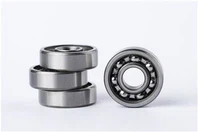
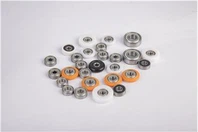
As a reputable supplier of pulley bearings, I understand the critical importance of ensuring the quality of our products. Pulley bearings play a pivotal role in numerous applications, from industrial machinery to household equipment. Their performance can significantly impact the efficiency, reliability, and lifespan of the systems they are a part of. In this blog, I will share some effective methods on how to test the quality of pulley bearings.
Visual Inspection
The first step in assessing the quality of pulley bearings is a thorough visual inspection. This can reveal a lot about the bearing's condition and manufacturing quality.
- Surface Finish: Examine the outer and inner surfaces of the bearing. A high - quality pulley bearing should have a smooth surface finish without any visible scratches, pits, or rough areas. Scratches can lead to increased friction, which in turn can cause premature wear and reduced performance.
- Corrosion: Check for signs of corrosion, such as rust or discoloration. Corrosion can weaken the bearing material and compromise its structural integrity. This is especially important for bearings used in environments with high humidity or exposure to corrosive substances.
- Seal Integrity: If the bearing has seals, inspect them carefully. The seals should be intact and properly seated. Damaged or poorly installed seals can allow contaminants to enter the bearing, leading to accelerated wear and failure.
Dimensional Checks
Accurate dimensions are crucial for the proper functioning of pulley bearings. Deviations from the specified dimensions can cause problems such as misalignment, excessive play, or interference.
- Outer and Inner Diameters: Use precision measuring tools, such as calipers or micrometers, to measure the outer and inner diameters of the bearing. Compare the measured values with the manufacturer's specifications. Any significant deviation may indicate a manufacturing defect.
- Width: Measure the width of the bearing as well. Incorrect width can affect the bearing's fit within the housing and the pulley system.
- Roundness and Cylindricity: These parameters ensure that the bearing has a proper circular shape. Specialized measuring instruments can be used to check roundness and cylindricity. Irregular shapes can lead to uneven loading and premature failure.
Rotational Smoothness
The smooth rotation of a pulley bearing is a key indicator of its quality. A bearing that rotates smoothly with minimal resistance is likely to perform well.
- Hand Rotation Test: Gently rotate the bearing by hand. It should rotate freely without any jerking, binding, or excessive noise. If you feel any roughness or hear abnormal sounds, it could be a sign of internal damage, such as worn - out balls or raceways.
- Torque Measurement: For more accurate assessment, a torque meter can be used to measure the rotational torque of the bearing. Consistent and low torque values indicate good quality. High or fluctuating torque may suggest problems with lubrication, misalignment, or internal damage.
Noise and Vibration Analysis
Monitoring the noise and vibration levels of a pulley bearing during operation can provide valuable insights into its condition.
- Noise Inspection: Run the bearing under normal operating conditions and listen for any unusual noises. Squealing, grinding, or rattling sounds can indicate various issues, such as lack of lubrication, worn components, or the presence of contaminants.
- Vibration Analysis: Use vibration sensors to measure the vibration levels of the bearing. Excessive vibration can be a sign of imbalance, misalignment, or internal damage. Analyzing the vibration frequency spectrum can help identify the root cause of the problem.
Load - Testing
Pulley bearings are designed to withstand specific loads. Load - testing can determine if a bearing can perform under the expected operating conditions.
- Static Load Test: Apply a static load to the bearing and observe its behavior. The bearing should be able to support the load without any visible deformation or damage. This test helps ensure the bearing's structural integrity.
- Dynamic Load Test: Subject the bearing to a dynamic load while it is rotating. Monitor the bearing's performance, including temperature rise, vibration, and noise levels. A high - quality bearing should be able to handle the dynamic load without significant degradation in performance.
Lubrication Assessment
Proper lubrication is essential for the smooth operation and longevity of pulley bearings.
- Lubricant Quantity: Check the amount of lubricant in the bearing. Insufficient lubrication can lead to increased friction and wear, while excessive lubrication can cause overheating and leakage.
- Lubricant Quality: Examine the lubricant for signs of contamination, such as dirt, debris, or water. Contaminated lubricant can accelerate wear and damage the bearing.
Compatibility with Application
The quality of a pulley bearing also depends on its compatibility with the specific application.


- Speed Rating: Ensure that the bearing's speed rating is suitable for the operating speed of the pulley system. Using a bearing with a lower speed rating than required can lead to overheating and premature failure.
- Load Capacity: Match the bearing's load capacity with the expected loads in the application. Overloading a bearing can cause excessive wear and reduce its lifespan.
Application - Specific Tests
Depending on the application, additional tests may be required.
- For U Type Groove Pulley: Test the bearing's ability to fit properly in the U - type groove and its performance under the specific loads and movements associated with this type of pulley.
- For Sliding Gate Roller Bearings: Evaluate the bearing's resistance to dirt and debris, as sliding gate roller bearings are often exposed to outdoor environments. Also, test its ability to provide smooth and stable movement for the gate.
- For 6200zz Garage Door Rollers: Check the bearing's performance under the repeated opening and closing cycles of the garage door. This includes testing its durability, noise level, and ability to handle the weight of the door.
Conclusion
Testing the quality of pulley bearings is a comprehensive process that involves multiple aspects. By conducting visual inspections, dimensional checks, rotational smoothness tests, noise and vibration analysis, load - testing, lubrication assessment, and considering application compatibility, we can ensure that the bearings we supply meet the highest standards of quality.
If you are in the market for high - quality pulley bearings and want to discuss your specific requirements, I invite you to reach out to us. We are committed to providing you with the best products and solutions for your applications.
References
- "Bearing Handbook" by SKF
- "Mechanical Design and Analysis" textbooks
- Industry standards and guidelines for pulley bearings