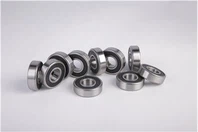
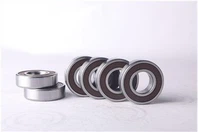
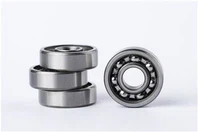
Hey there! As a supplier of pulley bearings, I've been getting a lot of questions lately about how to predict the fatigue life of these little mechanical marvels. It's a crucial topic, especially if you're in an industry that relies heavily on pulley systems. So, let's dive right in and explore this together.
First off, what exactly is fatigue life when it comes to pulley bearings? Well, in simple terms, it's the amount of time or number of cycles a bearing can handle before it starts to show signs of wear and tear due to repeated stress. When a pulley bearing is in use, it experiences different types of forces – radial loads, axial loads, and sometimes a combination of both. Over time, these forces can cause microscopic cracks to form in the bearing material, which can eventually lead to failure.
Now, predicting the fatigue life of pulley bearings isn't an exact science, but there are several methods and factors we can consider to get a pretty good estimate.
1. Understanding the Basics of Bearing Loads
The first step in predicting fatigue life is to understand the loads that the pulley bearing will be subjected to. There are two main types of loads: static and dynamic. Static loads are the forces that act on the bearing when it's not moving, like the weight of the equipment it's supporting. Dynamic loads, on the other hand, occur when the bearing is in motion, such as the forces generated by the rotation of the pulley.
To accurately predict fatigue life, you need to know the magnitude, direction, and frequency of these loads. This information can usually be obtained through engineering calculations or by using load sensors. For example, if you're using a U Type Groove Pulley, you'll need to consider the specific load requirements of this type of pulley. U type groove pulleys are often used in applications where there's a need for precise alignment and smooth movement, so the loads they experience can be different from other types of pulleys.
2. Material Properties
The material used to make the pulley bearing plays a significant role in its fatigue life. Most pulley bearings are made from high - quality steel, but the specific type of steel and its heat treatment can vary. For instance, some bearings are made from chrome steel, which is known for its high hardness and wear resistance. Others may use stainless steel, which is more corrosion - resistant but may have different fatigue properties.
The hardness of the bearing material is particularly important. A harder material can generally withstand more stress before it starts to crack, but it can also be more brittle. So, it's a balancing act. When choosing a pulley bearing, make sure to consider the material properties and how they match the operating conditions. For example, if your application involves exposure to moisture or chemicals, a Paper Roller Bearing made from a corrosion - resistant material might be a better choice.
3. Lubrication
Lubrication is another key factor in predicting the fatigue life of pulley bearings. A good lubricant reduces friction between the moving parts of the bearing, which in turn reduces heat generation and wear. There are different types of lubricants available, such as grease and oil.
Grease is a popular choice for many pulley bearing applications because it's easy to apply and can stay in place for a long time. However, it can also break down over time, especially in high - temperature or high - speed applications. Oil, on the other hand, provides better cooling and can handle higher speeds, but it requires a more complex lubrication system.
Proper lubrication maintenance is crucial. You need to ensure that the bearing is always properly lubricated and that the lubricant is changed at the recommended intervals. If the lubrication is inadequate, the bearing will experience increased friction and wear, which can significantly reduce its fatigue life.
4. Operating Conditions
The operating conditions of the pulley bearing have a huge impact on its fatigue life. Factors such as temperature, speed, and vibration can all affect how long the bearing will last.
High temperatures can cause the lubricant to break down and the bearing material to expand, which can lead to increased wear and reduced fatigue life. On the other hand, low temperatures can make the lubricant more viscous, which can also increase friction.


The speed at which the bearing rotates is also important. Higher speeds generate more heat and centrifugal forces, which can put additional stress on the bearing. Vibration can also cause premature wear by creating uneven loads on the bearing.
For example, if you're using 6200zz Garage Door Rollers, these rollers operate at relatively low speeds but may be exposed to a lot of vibration. You need to take these factors into account when predicting their fatigue life.
5. Using Mathematical Models
There are several mathematical models available that can help you predict the fatigue life of pulley bearings. One of the most widely used models is the Lundberg - Palmgren theory. This theory takes into account the load, the geometry of the bearing, and the material properties to calculate the expected fatigue life.
However, these models are based on certain assumptions and may not always accurately reflect the real - world conditions. So, it's important to use them as a starting point and then adjust the results based on your specific application and operating conditions.
6. Field Testing and Monitoring
In addition to using mathematical models, field testing and monitoring can provide valuable information about the fatigue life of pulley bearings. You can install sensors on the bearing to measure parameters such as temperature, vibration, and load. By monitoring these parameters over time, you can detect any signs of abnormal wear or stress and take preventive action before the bearing fails.
Field testing can also involve running the bearing under real - world conditions for a certain period of time and then inspecting it for signs of wear. This can help you validate your predictions and make any necessary adjustments to your maintenance schedule.
Conclusion
Predicting the fatigue life of pulley bearings is a complex process that involves understanding the loads, material properties, lubrication, operating conditions, and using appropriate mathematical models and monitoring techniques. By taking all these factors into account, you can get a better estimate of how long your pulley bearings will last and take proactive steps to ensure their reliable operation.
If you're in the market for high - quality pulley bearings or need more information on how to predict their fatigue life, we're here to help. We've got a wide range of pulley bearings, including U Type Groove Pulley, Paper Roller Bearing, and 6200zz Garage Door Rollers. Feel free to reach out to us for a consultation and let's work together to find the best solutions for your needs.
References
- Harris, T. A., & Kotzalas, M. N. (2007). Rolling Bearing Analysis. Wiley.
- ISO 281:2007. Rolling bearings - Dynamic load ratings and rating life.