As a trusted supplier of one - way bearings, I understand the importance of ensuring the proper clearance of these crucial components. One - way bearings are designed to allow rotation in one direction while preventing it in the opposite direction, and their performance is highly dependent on the appropriate clearance. In this blog, I will share some effective methods on how to check the clearance of one - way bearings.
Understanding One - Way Bearing Clearance
Before delving into the checking methods, it's essential to understand what one - way bearing clearance is. Bearing clearance refers to the internal play or the amount of free movement between the bearing's rolling elements (such as balls or rollers) and the raceways. There are different types of clearances, including radial clearance and axial clearance. Radial clearance is the play in the radial direction, while axial clearance is the play in the axial direction. The correct clearance is vital as it affects the bearing's load - carrying capacity, rotational accuracy, and service life.
Visual Inspection
The first step in checking one - way bearing clearance can be a simple visual inspection. Start by examining the bearing for any visible signs of damage, such as cracks, chips, or excessive wear on the raceways or rolling elements. A damaged bearing may have abnormal clearances due to the loss of material or deformation.
Clean the bearing thoroughly using a suitable cleaning agent. This will remove any dirt, debris, or old lubricant that could interfere with the inspection. Once clean, hold the bearing in your hand and rotate it gently in both directions. A one - way bearing should rotate smoothly in the allowed direction and offer significant resistance in the blocked direction. If you feel any roughness, unevenness, or excessive play during rotation, it could indicate an issue with the clearance.
Using Measuring Tools
Dial Indicator
A dial indicator is a precise measuring tool that can be used to measure the radial and axial clearances of one - way bearings. To measure the radial clearance, mount the bearing on a suitable shaft or fixture. Place the dial indicator's probe on the outer ring of the bearing, perpendicular to the shaft axis. Gently move the outer ring in the radial direction, applying a light force. The reading on the dial indicator will show the radial clearance.
For axial clearance measurement, position the dial indicator's probe parallel to the shaft axis and against the outer ring. Push and pull the outer ring axially with a light force. The change in the dial indicator reading represents the axial clearance. Compare the measured values with the manufacturer's specifications to determine if the clearance is within the acceptable range.
Feeler Gauges
Feeler gauges are another useful tool for checking bearing clearance. For radial clearance, carefully insert a feeler gauge between the rolling elements and the raceway. Start with a thin gauge and gradually increase the thickness until you find the gauge that just fits snugly. The thickness of this gauge is an approximation of the radial clearance.
However, it should be noted that using feeler gauges requires some skill and experience. The gauges should be inserted smoothly without forcing them, as excessive force can damage the bearing or give inaccurate readings.
Comparing with Standard Bearings
If possible, compare the bearing in question with a known - good one - way bearing of the same type and size. Place both bearings side by side and perform similar rotation and measurement tests. Any significant differences in the feel of rotation or measured clearances can indicate a problem with the bearing being inspected.
Considering Operating Conditions
The clearance requirements of one - way bearings can vary depending on the operating conditions. For example, in high - speed applications, a smaller clearance may be required to ensure better rotational accuracy and reduce vibration. On the other hand, in applications with high loads or temperature variations, a larger clearance may be necessary to accommodate thermal expansion and prevent binding.
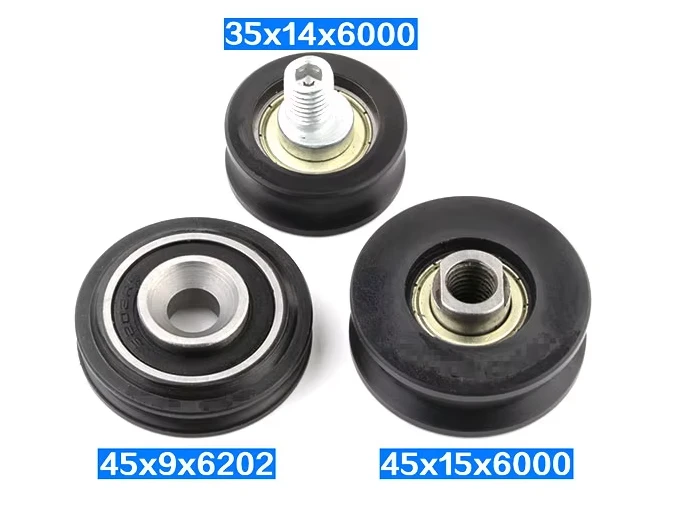

When checking the clearance, take into account the specific operating conditions of the bearing. Refer to the manufacturer's guidelines or technical documentation for the recommended clearances based on the application's speed, load, and temperature.
Importance of Correct Clearance
Maintaining the correct clearance in one - way bearings is crucial for their optimal performance. An improper clearance can lead to several problems.
If the clearance is too small, the bearing may experience excessive heat generation due to increased friction between the rolling elements and raceways. This can cause premature wear, lubricant breakdown, and ultimately, bearing failure. In addition, a tight - clearance bearing may be more prone to seizure under high - load or high - speed conditions.
Conversely, if the clearance is too large, the bearing may have poor rotational accuracy, increased vibration, and reduced load - carrying capacity. This can lead to noise, uneven wear, and damage to other components in the system.
Applications and Related Products
One - way bearings are widely used in various industries and applications. In Bearing Roller Conveyor, one - way bearings can be used to control the movement of rollers, ensuring smooth and efficient material handling. They prevent reverse rotation, which is essential for maintaining the proper flow of goods on the conveyor.
Carbon Steel Bearings are also commonly used in many applications. Carbon steel offers good strength and durability, making it suitable for one - way bearings in various environments. The proper clearance of carbon steel one - way bearings is crucial for their long - term performance and reliability.
In elevator systems, Elevator Roller Door Roller often incorporate one - way bearings. These bearings help in the smooth operation of the elevator doors, allowing them to open and close in a controlled manner. Checking the clearance of these bearings is essential to ensure the safety and proper functioning of the elevator doors.
Conclusion
Checking the clearance of one - way bearings is a critical process that ensures their proper performance and longevity. By using a combination of visual inspection, measuring tools, and considering the operating conditions, you can accurately assess the clearance of one - way bearings.
As a supplier of one - way bearings, I am committed to providing high - quality products and reliable technical support. If you have any questions about one - way bearing clearance or need assistance in selecting the right bearings for your application, please feel free to contact me for a detailed discussion and potential procurement opportunities.
References
- "Bearing Handbook" by SKF Group
- "Mechanical Design Engineering Handbook" by Myer Kutz