


PRODUCTS
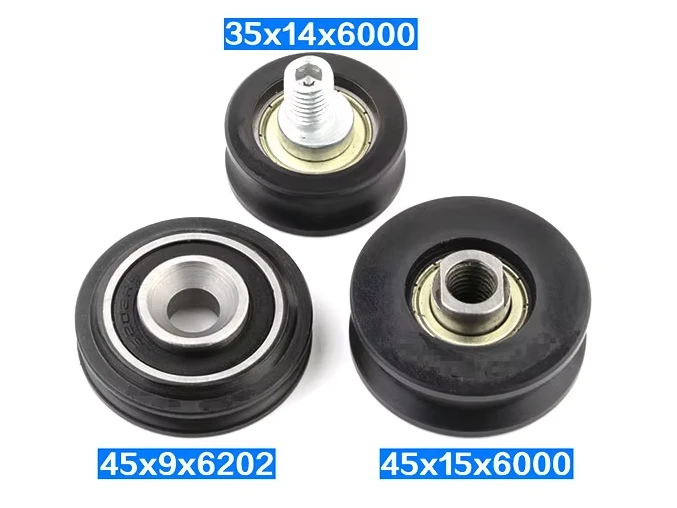
Elevator Roller Door Roller
Application of elevator rollers with ball bearing (guide wheels)--Nylon injection molding

Elevator rollers are mainly used for guiding and supporting the car and counterweight device on the guide rails to ensure smooth vertical movement.
1. Application scenarios
Car guide wheels: installed on both sides of the car frame, rolling along the guide rails, bearing the weight of the car and dynamic loads (such as passengers and cargo).
Counterweight guide wheels: guide wheels of the counterweight device, balancing the weight of the car and reducing the motor load.
Compensation chain guide wheels: used to guide the compensation chain or wire rope to avoid swinging or friction.

2. Design requirements
High load capacity: needs to bear the weight of the elevator when fully loaded (such as thousands of kilograms).
Wear resistance: The surface of the guide rail may be worn due to long-term friction, and wear-resistant materials (such as polyurethane, nylon + fiber reinforcement) are required.
Low noise: High-speed elevators (>2.5m/s) need to use silent rollers to reduce operating vibration and noise.
High temperature resistance: High temperature may be generated during emergency braking, and the material must be heat-resistant.
| Item | 085 |
| OUTER DIA./mm | 56.00 |
| BORE /mm | 13.00 |
| Height 1/ mm | 19.00 |
| Height 2/ mm | 16.00 |
| Height 3/ mm | NA |
3. Common materials
Polyurethane (PU): wear-resistant, highly elastic, and quiet, suitable for medium and low-speed elevators.
Nylon (PA): lightweight, corrosion-resistant, and commonly used for compensating chain guide wheels.
Metal coated roller: metal core + rubber/polyurethane outer layer, taking into account both strength and shock absorption.
Application of elevator door rollers
The door roller is the core component of the elevator door system, responsible for the horizontal sliding of the door panel, which directly affects the speed and stability of opening and closing the door.

1. Application scenarios
Hall door and car door rollers: installed on the top or bottom of the door panel, sliding along the door guide rail to open and close the door.
Safety device linkage roller: cooperate with safety devices such as door locks and light curtains to ensure that the elevator starts when the door is closed.
2. Design requirements
Precise guidance: The door roller needs to be precisely matched with the guide rail to avoid deviation or jamming of the door panel.
Low friction coefficient: reduce the resistance of opening and closing the door and extend the life of the motor (such as using nylon containing self-lubricant).
Impact resistance: Frequent starting and stopping may cause the roller to be subjected to instantaneous force, and the material needs to be tough.
Dirt resistance: Elevator door guide rails are prone to accumulate dust, and the roller needs to be dust-proof (such as sealed bearings).

3. Common materials
Engineering plastics (such as POM, PA): light, self-lubricating, suitable for passenger elevators with high frequency of opening and closing.
Metal roller (stainless steel): high strength, corrosion resistance, mostly used in freight elevators or heavy-duty elevators.
Composite material roller: plastic + metal insert, balance strength and quietness requirements.
| Item | 086 |
| OUTER DIA./mm | 43.00 |
| BORE /mm | M12*1.75 |
| Height 1/ mm | 16.00 |
| Height 2/ mm | 10.58 |
| Height 3/ mm | NA |
4. Key technologies and innovations
Self-lubricating design: Add graphite or molybdenum disulfide to the roller material to reduce external lubrication dependence.
Anti-derailment structure: The roller edge is designed with flanges or grooves to prevent it from detaching from the guide rail.
Modular replacement: The roller adopts a quick-release design for easy maintenance and replacement.
Intelligent monitoring: Detect the wear status of the roller through sensors and warn of faults in advance.

5. Maintenance and troubleshooting
Regular inspection: Check the roller wear, deformation or cracks every month, especially pay attention to the lubrication of the door roller.
Clean the guide rail: Remove oil and dust on the guide rail to avoid roller slippage or jamming.
Replacement standard: The roller diameter must be replaced immediately when it is worn by more than 10% or when abnormal noise occurs.
Fault case:
Door switch jam: Mostly due to roller wear or dirty guide rails, just clean or replace the roller.
Car vibration: The guide wheel is unevenly worn or the bearing is damaged, and needs to be adjusted or replaced.

6. Industry Trends
Lightweight: Carbon fiber reinforced nylon rollers gradually replace metals to reduce the overall weight of elevators.
High weather resistance: Development of roller materials that adapt to extreme environments (such as high humidity and low temperature).
Green and environmentally friendly: Application of recyclable materials (such as bio-based nylon).
| Item | 087 |
| OUTER DIA./mm | 64.00 |
| BORE /mm | 10.00 |
| Height 1/ mm | 13.50 |
| Height 2/ mm | 11.00 |
| Height 3/ mm | 9.00 |
Although elevator rollers and door rollers are small components, they are the core guarantee of elevator safety and user experience. Reasonable selection and regular maintenance can significantly extend the life of the elevator and reduce the failure rate.
Hot Tags: elevator roller door roller, China, elevator roller door roller suppliers, manufacturers, factory, research and development pulley bearings


