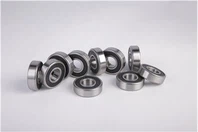
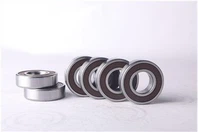
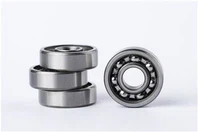
Hey there! As a supplier of Small Bearings, I often get asked about how to check the alignment of these little but crucial components. Small bearings, like Bearing 6001ZZ and Bearing 6200, play a significant role in various machinery. Ensuring their proper alignment is essential for the smooth operation and longevity of the equipment they're part of.
First off, let's understand why alignment matters. When small bearings are misaligned, it can lead to a whole bunch of problems. For starters, there'll be increased friction. This extra friction not only makes the machinery work harder, but it also generates more heat. Over time, this can cause premature wear and tear on the bearings and other related parts. In some cases, it might even lead to complete bearing failure, which can be a real pain in the neck as it usually means costly repairs and downtime.
Now, onto the methods of checking alignment. One of the simplest ways is the visual inspection. Sounds basic, right? But it can actually tell you a lot. Take a good look at the bearing and its surrounding components. Check if the bearing is sitting straight in its housing. Look for any signs of uneven wear on the bearing's outer ring or the shaft it's mounted on. If you notice that one side of the bearing seems to be more worn than the other, it could be a sign of misalignment. You can also use a straightedge. Place it along the shaft or the housing where the bearing is installed. If there are gaps between the straightedge and the surface, it indicates that there might be an alignment issue.
Another method is using a dial indicator. This is a more precise way of checking alignment. You'll need to mount the dial indicator on a stable base near the bearing. Then, place the probe of the dial indicator against the outer ring of the bearing. Rotate the shaft slowly. As you do this, the dial indicator will show any variations in the position of the bearing. If the readings on the dial indicator fluctuate more than the acceptable tolerance, then the bearing is misaligned.
Laser alignment tools are also great for checking the alignment of small bearings. These tools work by emitting a laser beam that can accurately measure the position and orientation of the bearing. They're really handy because they can provide highly accurate measurements in a relatively short amount of time. To use a laser alignment tool, you'll need to set it up according to the manufacturer's instructions. Usually, you'll place one part of the tool on the shaft and the other on the housing. The laser beam will then show if the bearing is properly aligned or not.
When it comes to Small Bearings, it's important to follow the manufacturer's guidelines for alignment. Different types of bearings may have different alignment requirements. For example, some bearings are designed to have a certain amount of preload, which affects the alignment process. Make sure you read the product documentation carefully before you start checking the alignment.
It's also a good idea to keep a record of the alignment checks. This way, you can track any changes over time. If you notice that the alignment is gradually getting worse, you can take proactive measures to correct it before it causes any major problems. You can use a simple spreadsheet to record the date of the check, the method used, and the results.
In addition to regular alignment checks, proper installation is key to ensuring correct alignment from the start. When installing small bearings, make sure the shaft and the housing are clean and free of any debris. Use the right tools for the job. For example, when pressing the bearing onto the shaft, use a press that applies an even force. If you apply too much force on one side, it can cause the bearing to be misaligned right from the get-go.
Also, consider the operating conditions of the machinery. Things like temperature, vibration, and load can all affect the alignment of small bearings. In high-temperature environments, the materials may expand, which can change the alignment. Excessive vibration can also cause the bearing to shift out of position. If your machinery operates in a harsh environment, you may need to check the alignment more frequently.
So, there you have it, a few ways to check the alignment of small bearings. Remember, proper alignment is crucial for the performance and lifespan of your bearings and the machinery they're part of. If you're still not sure about how to check alignment or if you're having trouble with your bearings, don't hesitate to reach out. As a Small Bearings supplier, we're here to help. Whether you need advice on alignment, or you're looking to purchase high-quality bearings like Bearing 6001ZZ and Bearing 6200, we've got you covered. Feel free to contact us to discuss your specific needs and requirements. We're always happy to have a chat and help you find the best solutions for your machinery.


References:
- "Bearing Handbook" by SKF
- "Machinery's Handbook"