Does Bearing 6200 require lubrication?
As a supplier of Bearing 6200, I've been frequently asked whether this particular bearing requires lubrication. In this blog post, I'll delve into this topic to provide a comprehensive answer.

Understanding Bearing 6200
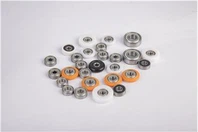
First, let's briefly introduce Bearing 6200. Bearing 6200 belongs to the category of Small Bearings. It is a widely used deep - groove ball bearing with specific dimensions and characteristics that make it suitable for a variety of applications. You can find more detailed information about Bearing 6200 on our website Bearing 6200.
The basic structure of Bearing 6200 consists of an inner ring, an outer ring, a set of balls, and a cage. These components work together to support radial and axial loads while allowing smooth rotation.
The Role of Lubrication in Bearings
Lubrication plays a crucial role in the performance and longevity of bearings. Here are some key functions of lubrication:
-
Reducing friction and wear: When the bearing rotates, there is contact between the balls and the raceways of the inner and outer rings. Without proper lubrication, this contact can lead to high friction, which in turn causes excessive wear. Lubricant forms a thin film between the moving parts, separating them and reducing the direct metal - to - metal contact. This film acts as a cushion, minimizing the wear on the bearing components.
-
Heat dissipation: Friction generates heat. In a bearing operating at high speeds or under heavy loads, the heat generated can be significant. Lubricant helps to dissipate this heat by carrying it away from the contact areas. If the heat is not dissipated effectively, it can cause the bearing materials to expand, change their properties, and ultimately lead to premature failure.
-
Corrosion protection: Bearings are often exposed to various environmental conditions, including moisture and chemicals. Lubricant forms a protective barrier on the surface of the bearing components, preventing corrosion and rust. This is especially important in applications where the bearing is used in a humid or corrosive environment.
-
Sealing and contamination prevention: A good lubricant can also act as a sealant, preventing dirt, dust, and other contaminants from entering the bearing. Contamination can cause abrasive wear and damage to the bearing, so keeping the bearing clean is essential for its proper operation.
Does Bearing 6200 Require Lubrication?
The short answer is yes, Bearing 6200 generally requires lubrication. However, the specific lubrication requirements depend on several factors:
-
Operating conditions:
- Speed: If the Bearing 6200 is operating at high speeds, the lubricant needs to have good viscosity - temperature characteristics to maintain the lubricating film. High - speed operation generates more heat, and the lubricant must be able to withstand the temperature rise without breaking down.
- Load: Heavy loads put more stress on the bearing components. A lubricant with high load - carrying capacity is required to prevent metal - to - metal contact under these conditions. For example, in applications where the bearing is supporting a large radial or axial load, a thicker and more viscous lubricant may be necessary.
- Environment: The environment in which the bearing operates also affects the lubrication requirements. In a clean, dry environment, a standard lubricant may be sufficient. However, in a dusty, dirty, or wet environment, a lubricant with good sealing and anti - corrosion properties is needed. For instance, in a manufacturing plant with a lot of dust, a lubricant that can prevent dust particles from entering the bearing is crucial.
-
Lubrication type:
- Grease lubrication: Grease is a common lubricant for Bearing 6200. It is easy to apply and provides good sealing properties. Grease lubrication is suitable for many general - purpose applications, especially those with moderate speeds and loads. The grease contains a thickener that holds the oil in place, providing continuous lubrication. However, the performance of grease can degrade over time, especially at high temperatures, and it may need to be replenished periodically.
- Oil lubrication: Oil lubrication is often used in high - speed or high - temperature applications. Oil has better heat - dissipation properties than grease and can provide more efficient lubrication at high speeds. It can also be circulated through the bearing to remove contaminants and heat. However, oil lubrication systems are more complex and require proper sealing to prevent oil leakage.
Lubrication Recommendations for Bearing 6200
Based on the above factors, here are some general lubrication recommendations for Bearing 6200:
-
Grease selection:
- For normal operating conditions (moderate speeds and loads, clean environment), a lithium - based grease with a NLGI (National Lubricating Grease Institute) consistency grade of 2 is usually a good choice. This type of grease has good mechanical stability and anti - wear properties.
- If the bearing is operating at high temperatures, a high - temperature grease with a synthetic base oil may be required. These greases can withstand higher temperatures without losing their lubricating properties.
-
Lubrication quantity:

- When using grease, it is important not to over - grease the bearing. Over - greasing can cause excessive heat generation and may lead to premature failure. As a general rule, the grease should fill about one - third to one - half of the bearing's free space.
- For oil lubrication, the oil level should be maintained at the appropriate level to ensure proper lubrication. This may require the use of an oil sight glass or other monitoring devices.
-
Lubrication intervals:
- The lubrication intervals depend on the operating conditions. In general, for bearings operating under normal conditions, the grease should be replaced every 1000 - 2000 hours of operation. However, in more severe conditions, such as high speeds, heavy loads, or dirty environments, the lubrication intervals may need to be shortened.
Case Study: A Real - World Application
Let's take a look at a real - world application of Bearing 6200. Suppose a small electric motor uses Bearing 6200 to support the rotor. The motor operates at a relatively high speed of 3000 RPM and is located in a moderately dusty environment.
Initially, the bearing was lubricated with a standard lithium - based grease. After about 1500 hours of operation, the motor started to make unusual noises. Upon inspection, it was found that the grease had become contaminated with dust particles, and the bearing showed signs of wear.
To solve this problem, the bearing was cleaned, and a new high - performance grease with better sealing and anti - contamination properties was applied. Additionally, a dust cover was installed to further protect the bearing from dust. After these improvements, the bearing continued to operate smoothly for another 2000 hours without any issues.
Another Example: Comparison with 688 ZZ - Ball Bearing 8mm16mm4mm
It's interesting to compare Bearing 6200 with the 688 ZZ - Ball Bearing 8mm16mm4mm. Both are small - size ball bearings, but they may have different lubrication requirements based on their application scenarios.

The 688 ZZ - Ball Bearing is often used in lighter - load and lower - speed applications, such as small fans or precision instruments. In these applications, the lubrication requirements may be less stringent compared to Bearing 6200, which is typically used in more demanding applications with higher loads and speeds. However, regardless of the bearing type, proper lubrication is still essential for optimal performance and longevity.
Conclusion
In conclusion, Bearing 6200 requires lubrication to ensure its proper operation, reduce friction and wear, dissipate heat, protect against corrosion, and prevent contamination. The specific lubrication requirements depend on the operating conditions, including speed, load, and environment. By choosing the right lubricant, applying the correct quantity, and following the appropriate lubrication intervals, you can significantly extend the life of Bearing 6200 and improve its performance.
If you are interested in purchasing Bearing 6200 or have any questions about its lubrication or application, please feel free to contact us for more information and to start a procurement negotiation. We are committed to providing high - quality bearings and professional technical support to meet your needs.
References
- "Rolling Bearing Analysis" by Tedric A. Harris and Michael N. Kotzalas.
- "Lubrication Fundamentals" by John W. Dawson.
- Industry standards and guidelines related to bearing lubrication.