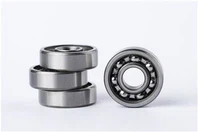
What are the load - carrying capacities of pulley bearings?
As a seasoned supplier of pulley bearings, I've witnessed firsthand the critical role these components play in a wide array of industrial and domestic applications. The load - carrying capacity of pulley bearings is a fundamental aspect that can significantly impact the performance, efficiency, and longevity of the machinery they are a part of.
Understanding Load - Carrying Capacity
Load - carrying capacity refers to the maximum amount of load that a pulley bearing can support without experiencing excessive wear, deformation, or failure. This load can be radial (perpendicular to the shaft), axial (parallel to the shaft), or a combination of both. It is typically measured in terms of static and dynamic load ratings.

The static load rating represents the maximum static load that a bearing can withstand without permanent deformation of the raceways or rolling elements. On the other hand, the dynamic load rating is the load under which a bearing can operate for a specified number of revolutions (usually one million) with a 90% probability of survival.
Factors Affecting Load - Carrying Capacity
Several factors influence the load - carrying capacity of pulley bearings. One of the most significant factors is the bearing design. Different types of bearings, such as ball bearings and roller bearings, have different load - carrying capabilities.
Ball bearings are generally suitable for light to moderate radial and axial loads. They have a point contact between the balls and the raceways, which allows for smooth operation at high speeds. However, their load - carrying capacity is limited compared to roller bearings. Industrial Roller Bearings are a type of roller bearing that can handle much higher radial loads. They have a line contact between the rollers and the raceways, which distributes the load more evenly and reduces stress concentrations.
The material of the bearing also plays a crucial role. High - quality bearing steels are commonly used due to their excellent hardness, toughness, and wear resistance. The heat treatment process of the steel can further enhance its properties, improving the load - carrying capacity of the bearing.

The internal clearance of the bearing is another important factor. Proper internal clearance ensures that the bearing can accommodate thermal expansion and load - induced deformations without binding or excessive play. Incorrect clearance can lead to premature failure and reduced load - carrying capacity.
Applications and Load Requirements
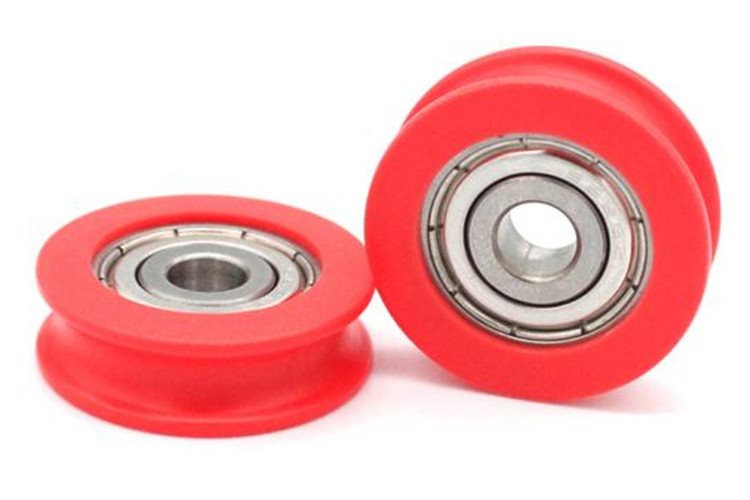
The load - carrying capacity requirements vary depending on the application. For example, in garage door systems, 6200zz Garage Door Rollers are commonly used. These bearings need to support the weight of the garage door and operate smoothly over thousands of cycles. They are typically subjected to relatively light radial loads but require good wear resistance and low friction to ensure long - term performance.
In sliding gate systems, Sliding Gate Roller Bearings are used. These bearings must support the weight of the gate and any additional forces that may occur during opening and closing. The load can be a combination of radial and axial loads, and the bearings need to be able to handle these loads while maintaining smooth operation.
In industrial applications, such as conveyor systems, pulley bearings are often subjected to heavy loads and high - speed operation. The load - carrying capacity requirements are much higher in these cases, and bearings with larger dimensions and higher load ratings are typically used.
Calculating Load - Carrying Capacity
Calculating the load - carrying capacity of a pulley bearing is a complex process that involves considering various factors such as the type of load, the speed of rotation, the operating temperature, and the lubrication conditions. Manufacturers usually provide load rating data for their bearings based on standardized testing methods.
However, in real - world applications, it is often necessary to perform a detailed analysis to determine the actual load - carrying requirements. This may involve using engineering software or consulting with bearing experts. By accurately calculating the load - carrying capacity, it is possible to select the most appropriate bearing for the application, ensuring optimal performance and reliability.
Importance of Selecting the Right Bearing
Selecting the right pulley bearing with the appropriate load - carrying capacity is essential for the overall performance of the machinery. An under - sized bearing may experience premature failure due to excessive loads, leading to costly downtime and repairs. On the other hand, an over - sized bearing may be more expensive and may not provide any significant performance benefits.
Proper bearing selection also contributes to energy efficiency. A bearing with the right load - carrying capacity can operate more smoothly, reducing friction and energy consumption. This is particularly important in applications where energy costs are a significant concern.
Our Role as a Pulley Bearings Supplier
As a pulley bearings supplier, we understand the importance of providing high - quality bearings with the right load - carrying capacity for our customers' applications. We offer a wide range of bearings, including ball bearings, roller bearings, and specialized bearings for specific applications.
Our team of experts is available to assist customers in selecting the most suitable bearing based on their load requirements, operating conditions, and budget. We also provide technical support and advice on bearing installation, maintenance, and lubrication to ensure optimal performance and longevity.
Conclusion
The load - carrying capacity of pulley bearings is a critical factor that determines their performance and suitability for different applications. By understanding the factors that affect load - carrying capacity, accurately calculating the requirements, and selecting the right bearing, it is possible to ensure the efficient and reliable operation of machinery.
If you are in need of high - quality pulley bearings with the appropriate load - carrying capacity for your application, we invite you to contact us. Our experienced team is ready to help you find the perfect solution for your needs. Let's start a conversation about your project and how our pulley bearings can contribute to its success.

References
- Harris, T. A., & Kotzalas, M. N. (2007). Rolling Bearing Analysis. Wiley.
- Jones, A. R., & Harris, T. A. (1992). Ball and Roller Bearing Engineering. CRC Press.