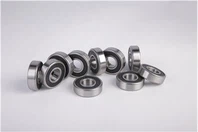
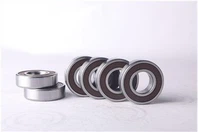
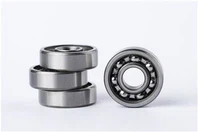
Can small bearings be used in household appliances? This is a question that often comes up in the minds of many consumers and manufacturers. As a supplier of Small Bearings, I am well - versed in the applications of small bearings and can provide some in - depth insights on this topic.
The Role of Bearings in General Machinery
Before delving into the use of small bearings in household appliances, it's essential to understand the basic function of bearings. Bearings are mechanical components that reduce friction between moving parts and support radial and axial loads. They play a crucial role in ensuring the smooth operation of various machines. By minimizing friction, bearings not only improve the efficiency of the machinery but also extend its service life.
In large - scale industrial machinery, bearings are often large and heavy - duty, designed to handle significant loads and high - speed rotations. However, in smaller devices such as household appliances, the requirements change. The space is limited, and the loads are generally much lower compared to industrial applications. This is where small bearings come into play.
Advantages of Using Small Bearings in Household Appliances
Space Efficiency
One of the most significant advantages of small bearings is their compact size. Household appliances are designed to be as small and lightweight as possible to fit into modern living spaces. Small bearings can be easily integrated into these appliances without taking up too much room. For example, in a handheld electric mixer, the small bearings allow the motor shaft to rotate smoothly within a confined space, enabling the mixer to have a sleek and ergonomic design.


Cost - Effectiveness
Small bearings are generally less expensive to produce compared to their larger counterparts. This cost - saving can be passed on to the manufacturers of household appliances, which in turn can offer more affordable products to consumers. Additionally, since household appliances usually do not require the same level of heavy - duty performance as industrial machinery, small bearings can provide adequate functionality at a lower cost.
Low Noise and Vibration
Household appliances need to operate quietly to avoid disturbing the occupants. Small bearings are designed to run with minimal noise and vibration. They are precision - engineered to ensure smooth rotation, which reduces the chances of rattling or buzzing sounds. For instance, in a refrigerator compressor, small bearings help to keep the motor running quietly, making the overall operation of the refrigerator less intrusive.
Specific Applications of Small Bearings in Household Appliances
Fans
Fans are a common household appliance used for ventilation and cooling. Small bearings are used in the motor of the fan to support the rotation of the blades. Bearing 6200 is a popular choice for many fan motors. It has a good balance between load - carrying capacity and size, allowing the fan to operate efficiently at different speeds. The smooth rotation provided by the bearing ensures that the fan blades spin evenly, generating a consistent airflow.
Blenders and Food Processors
Blenders and food processors rely on high - speed motors to blend and chop food. Small bearings are essential in these appliances to support the motor shaft and the rotating blades. Bearing 6001ZZ is often used in these applications. The "ZZ" in its name indicates that it has metal shields on both sides, which helps to keep out dust and debris, ensuring the longevity of the bearing and the overall performance of the appliance.
Washing Machines
In washing machines, small bearings are used in several components. The drum of the washing machine rotates at high speeds during the spin cycle. Small bearings support the drum shaft, allowing it to rotate smoothly and evenly. They also help to reduce the stress on the motor and other mechanical parts, which can improve the reliability and durability of the washing machine.
Considerations When Using Small Bearings in Household Appliances
Load Capacity
Although small bearings are suitable for most household appliance applications, it's important to select the right bearing with an appropriate load - carrying capacity. If the bearing is overloaded, it can lead to premature wear and failure. Manufacturers need to carefully calculate the loads that the bearing will be subjected to based on the specific application and choose a bearing that can handle those loads.
Lubrication
Proper lubrication is crucial for the performance and longevity of small bearings. In household appliances, the lubrication requirements may vary depending on the operating conditions. Some bearings come pre - lubricated, while others may require periodic lubrication. It's important to follow the manufacturer's recommendations regarding lubrication to ensure optimal performance.
Environmental Conditions
Household appliances may be exposed to different environmental conditions, such as humidity, dust, and temperature variations. Small bearings need to be able to withstand these conditions. For example, in a bathroom fan, the bearing needs to be resistant to moisture to prevent corrosion.
Conclusion
In conclusion, small bearings are indeed well - suited for use in household appliances. Their space efficiency, cost - effectiveness, low noise, and vibration characteristics make them an ideal choice for a wide range of applications. From fans and blenders to washing machines, small bearings play a vital role in ensuring the smooth and reliable operation of these appliances.
As a supplier of high - quality Small Bearings, we understand the specific requirements of household appliance manufacturers. We offer a wide range of small bearings, including Bearing 6200 and Bearing 6001ZZ, which are designed to meet the diverse needs of the market.
If you are a manufacturer of household appliances and are interested in exploring the use of small bearings in your products, we invite you to contact us for further discussion. We can provide technical support, product samples, and competitive pricing to help you make the best choice for your application.
References
- "Handbook of Bearing Technology" by T. A. Harris
- "Mechanical Design of Machine Elements and Machines: A Failure - Prevention Perspective" by Robert L. Norton
- Industry reports on household appliance manufacturing and bearing applications