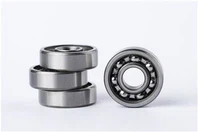
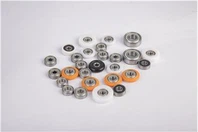
Hey there! I'm a supplier of big ball bearings, and today I want to dig into a question that often pops up: Can big ball bearings be used in wet environments? It's a crucial topic, especially for industries where water or moisture is a constant factor. Let's break it down and see what the deal is.
First off, let's understand the basics of big ball bearings. These bad boys are designed to handle heavy loads and high - speed applications. They consist of an inner ring, an outer ring, a set of balls, and a cage that keeps the balls in place. They're used in all sorts of machinery, from construction equipment to industrial conveyors.
Now, when it comes to wet environments, there are a few things that can go wrong if we're not careful. Water can cause corrosion on the bearing surfaces. Corrosion is like a slow - acting disease for bearings. It starts with small pits on the metal, which can then lead to rough surfaces. As the surfaces get rougher, the friction between the balls and the rings increases. This extra friction not only wears out the bearing faster but also generates heat. Too much heat can damage the lubricant inside the bearing, and without proper lubrication, the bearing is doomed.
Another issue is the effect of water on the lubricant. Most bearings rely on a lubricant to reduce friction and prevent wear. Water can mix with the lubricant, diluting it and reducing its effectiveness. It can also cause the lubricant to emulsify, which means it turns into a milky, unstable mixture. Once the lubricant is in this state, it can't do its job properly, and the bearing's performance takes a nosedive.
But here's the good news: Big ball bearings can be used in wet environments if they're properly designed and maintained. One option is to use bearings made from corrosion - resistant materials. Stainless steel is a popular choice. It has a high chromium content, which forms a protective oxide layer on the surface of the metal. This layer acts as a barrier, preventing water from reaching the underlying metal and causing corrosion.
There are also special coatings that can be applied to the bearings. These coatings can provide an extra layer of protection against water and corrosion. Some coatings are designed to be hydrophobic, which means they repel water. When water hits a hydrophobic - coated bearing, it beads up and rolls off, rather than sticking to the surface.
Proper sealing is another key factor. Seals are used to keep water and contaminants out of the bearing. There are different types of seals available, such as rubber seals and metal shields. Rubber seals are more effective at keeping out water, but they can also add a bit of friction. Metal shields, on the other hand, provide some protection but are not as watertight as rubber seals.
In addition to using the right materials and seals, regular maintenance is essential. This includes checking the lubricant levels and quality, inspecting the bearings for signs of wear and corrosion, and replacing any damaged parts. It's also a good idea to clean the bearings regularly to remove any dirt or debris that might be trapped inside.


Let's take a look at some real - world applications where big ball bearings are used in wet environments. One example is the marine industry. Ships and boats use big ball bearings in various components, such as propeller shafts and steering systems. These bearings are constantly exposed to saltwater, which is extremely corrosive. To deal with this, the bearings are often made from stainless steel and are equipped with high - quality seals.
Another example is the food and beverage industry. In this industry, equipment is often washed down with water to maintain hygiene standards. Big ball bearings used in food processing machinery need to be able to withstand frequent exposure to water. Here, the bearings are usually made from materials that are safe for use in food contact applications and are designed to be easy to clean.
Now, if you're in an industry that requires big ball bearings for wet environments, you might be interested in our Track Bearing Roller. It's a high - quality product that's designed to handle tough conditions. We've used the latest technology and materials to ensure that it can perform well even when exposed to water and moisture.
If you're thinking about making a purchase, or if you have any questions about our big ball bearings, don't hesitate to reach out. We're here to help you find the right solution for your specific needs. Whether you need advice on material selection, sealing options, or maintenance procedures, our team of experts is ready to assist you.
In conclusion, big ball bearings can be used in wet environments, but it requires careful consideration of the materials, seals, and maintenance. With the right approach, you can ensure that your bearings last a long time and perform at their best, even in the toughest conditions. So, if you're in the market for big ball bearings for a wet environment, give us a shout. We're confident that we can provide you with a product that meets your requirements.
References
- "Bearing Handbook" - A comprehensive guide on bearing technology and applications.
- Industry research papers on corrosion - resistant materials for bearings.
- Manufacturer's specifications for big ball bearings and seals.