As a supplier of Bearing 6200, I often encounter inquiries regarding the tolerance class of this popular bearing. In this blog post, I will delve into the concept of tolerance class, specifically focusing on Bearing 6200, to provide a comprehensive understanding for both industry professionals and potential customers.
Understanding Tolerance Classes in Bearings
Tolerance class in bearings refers to the allowable deviation from the ideal or specified dimensions and geometric characteristics of a bearing. These tolerances are crucial as they directly impact the bearing's performance, including its rotational accuracy, noise level, and service life. The International Organization for Standardization (ISO) and the American Bearing Manufacturers Association (ABMA) have established standards for bearing tolerance classes, which are widely recognized and followed in the industry.
The tolerance class of a bearing is typically defined by a set of numerical values that specify the allowable variations in parameters such as bore diameter, outer diameter, width, and roundness. These values are expressed in micrometers (μm) and are used to classify bearings into different tolerance grades. The most common tolerance classes for bearings are P0, P6, P5, P4, and P2, with P0 being the standard class and P2 representing the highest level of precision.
Tolerance Class of Bearing 6200
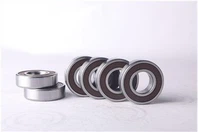
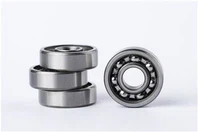
Bearing 6200 is a deep groove ball bearing that belongs to the Small Bearings category. It is widely used in various applications, including electric motors, pumps, and small machinery, due to its high reliability and performance. The standard tolerance class for Bearing 6200 is P0, which means it meets the general requirements for most industrial applications.
However, depending on the specific application requirements, customers may opt for bearings with higher tolerance classes. For example, in applications where high rotational accuracy is required, such as precision machine tools or high-speed electric motors, bearings with tolerance classes P5 or P4 may be preferred. These bearings offer tighter dimensional tolerances and better geometric accuracy, resulting in reduced vibration and noise levels, as well as improved service life.
Impact of Tolerance Class on Bearing Performance
The tolerance class of a bearing has a significant impact on its performance and suitability for different applications. Here are some key aspects to consider:
- Rotational Accuracy: Bearings with higher tolerance classes offer better rotational accuracy, which is crucial in applications where precise positioning and smooth operation are required. For example, in a CNC machine tool, a bearing with a high tolerance class can ensure accurate machining and reduce the risk of errors.
- Noise and Vibration: Tighter tolerances result in better fit and alignment between the bearing components, which helps to reduce noise and vibration levels. This is particularly important in applications where low noise operation is essential, such as in household appliances or office equipment.
- Service Life: Bearings with higher tolerance classes are generally more durable and have a longer service life. This is because they are less prone to wear and tear, as well as fatigue failure, due to their improved dimensional accuracy and geometric characteristics.
Selecting the Right Tolerance Class for Your Application
When selecting a Bearing 6200 or any other bearing, it is important to consider the specific requirements of your application. Here are some factors to keep in mind:


- Application Requirements: Determine the level of precision and performance required for your application. Consider factors such as rotational speed, load capacity, and operating environment.
- Cost Considerations: Bearings with higher tolerance classes are generally more expensive than those with standard tolerance classes. Therefore, it is important to balance the performance requirements with the cost implications.
- Manufacturer's Recommendations: Consult with the bearing manufacturer or supplier to get their recommendations on the appropriate tolerance class for your application. They can provide valuable insights based on their experience and expertise.
Comparison with Other Bearings
To better understand the tolerance class of Bearing 6200, let's compare it with another popular bearing, Bearing 6001ZZ. Both bearings are deep groove ball bearings and are commonly used in similar applications. However, Bearing 6001ZZ has a smaller bore diameter and outer diameter compared to Bearing 6200.
In terms of tolerance class, both bearings are available in the standard P0 class. However, like Bearing 6200, Bearing 6001ZZ can also be ordered with higher tolerance classes, such as P6 or P5, depending on the application requirements.
Conclusion
In conclusion, the tolerance class of Bearing 6200 is an important factor to consider when selecting a bearing for your application. The standard tolerance class for Bearing 6200 is P0, which meets the general requirements for most industrial applications. However, depending on the specific application requirements, customers may opt for bearings with higher tolerance classes to achieve better performance and reliability.
As a supplier of Bearing 6200, we understand the importance of providing high-quality bearings that meet the specific needs of our customers. We offer a wide range of Bearing 6200 products in different tolerance classes, as well as other small bearings, to ensure that you can find the right solution for your application.
If you have any questions or need further information about Bearing 6200 or our other bearing products, please feel free to contact us. Our team of experts is always ready to assist you with your bearing selection and procurement needs.
References
- International Organization for Standardization (ISO). "ISO 492:2014 - Rolling bearings - Tolerances."
- American Bearing Manufacturers Association (ABMA). "ABMA Standard 20 - Dimension and Tolerance Specification for Ball Bearings."