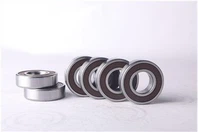
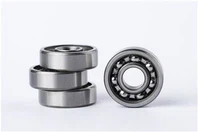
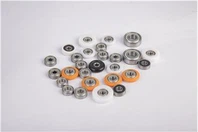
Hey there! As a supplier of 608 Roller Bearings, I've been getting a lot of questions lately about the temperature distribution inside these bearings during operation. So, I thought I'd take a deep dive into this topic and share what I've learned.
First off, let's talk about why understanding the temperature distribution in a 608 roller bearing is so important. Temperature can have a huge impact on the performance and lifespan of a bearing. If the temperature gets too high, it can lead to premature wear, reduced lubrication effectiveness, and even bearing failure. On the other hand, if the temperature is too low, it can cause issues with the lubricant's viscosity and the bearing's overall efficiency.
So, what factors influence the temperature distribution inside a 608 roller bearing during operation? Well, there are several key factors to consider.
Load and Speed
One of the most significant factors is the load and speed at which the bearing is operating. When a bearing is under a heavy load or spinning at high speeds, it generates more friction. This friction, in turn, produces heat. The higher the load and speed, the more heat is generated, and this can cause the temperature inside the bearing to rise.
For example, if you're using a 608 roller bearing in a high - speed application like a small electric motor, the bearing will experience a lot of friction due to the rapid rotation. This can lead to a significant increase in temperature, especially if the load on the bearing is also substantial.
Lubrication
Lubrication plays a crucial role in controlling the temperature of a bearing. A good lubricant reduces friction between the rolling elements and the raceways of the bearing. This not only helps the bearing operate more smoothly but also dissipates heat.
There are different types of lubricants available for 608 roller bearings, such as grease and oil. Grease is a popular choice because it's easy to apply and can provide long - term lubrication. However, it has a limited heat - dissipation capacity compared to oil. Oil, on the other hand, can carry away heat more effectively, but it requires a more complex lubrication system.


If the lubricant is not sufficient or has degraded over time, the friction inside the bearing will increase, and the temperature will rise. That's why it's essential to regularly check and replace the lubricant in your 608 roller bearings.
Bearing Design and Material
The design and material of the bearing also affect the temperature distribution. A well - designed bearing with proper internal clearances and optimized geometries can reduce friction and heat generation. For instance, some 608 roller bearings are designed with special features like cage designs that improve the distribution of the lubricant and reduce the contact area between the rolling elements and the cage, thus reducing heat.
The material of the bearing components also matters. High - quality materials with good thermal conductivity can help transfer heat away from the bearing more efficiently. For example, bearings made from certain grades of steel can handle heat better than others.
Environmental Conditions
The environment in which the bearing operates can have a significant impact on its temperature. If the bearing is in a hot environment, such as an industrial furnace area or a sunny outdoor location, the ambient temperature will add to the heat generated by the bearing itself.
Similarly, if the bearing is in a dusty or dirty environment, the contaminants can get into the bearing and increase friction, leading to higher temperatures. In some cases, the presence of moisture can also cause corrosion, which can further affect the bearing's performance and temperature.
Now, let's talk about how the temperature is distributed inside a 608 roller bearing. Generally, the temperature is not evenly distributed. The highest temperatures are usually found at the contact points between the rolling elements and the raceways. This is because this is where the most friction occurs.
The inner race of the bearing often runs hotter than the outer race. This is because the inner race rotates with the shaft, and it experiences more stress and friction compared to the outer race, which is usually stationary or has a slower rotational speed.
The cage of the bearing also experiences some heat, but usually not as much as the rolling elements and the raceways. However, if the cage is not designed properly or is made from a material with poor heat - dissipation properties, it can contribute to the overall temperature rise in the bearing.
To measure the temperature distribution inside a 608 roller bearing, there are several methods available. One common method is to use thermocouples. Thermocouples can be placed at different locations inside the bearing, such as on the inner and outer races, to measure the temperature accurately.
Another option is to use infrared thermography. This non - contact method allows you to get a visual representation of the temperature distribution across the surface of the bearing. It's a quick and easy way to detect any hot spots inside the bearing.
If you're in the market for high - quality 608 roller bearings, you've come to the right place. We offer a wide range of 608 Roller Bearings that are designed to perform under various conditions. Our bearings are made from top - grade materials and are carefully tested to ensure optimal performance and temperature control.
We also have a selection of Micro Roller Bearings and Mini Roller Bearings that might suit your specific needs.
If you have any questions about the temperature distribution in our bearings or want to discuss your application requirements, don't hesitate to reach out. We're here to help you find the perfect bearing solution for your project. Whether you're a small - scale manufacturer or a large industrial company, we can provide you with the bearings you need at a competitive price.
So, if you're ready to take your project to the next level with reliable and high - performance 608 roller bearings, let's start the conversation. We look forward to working with you!
References
- Harris, T. A., & Kotzalas, M. N. (2007). Rolling Bearing Analysis. Wiley.
- Zaretsky, E. V. (2010). Ball and Roller Bearing Engineering. CRC Press.