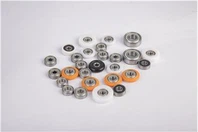
Hey there! As a supplier of Mini Roller Bearings, I often get asked about the speed limit of these nifty little components. So, I thought I'd sit down and share what I know about it.
First off, let's talk a bit about Mini Roller Bearings. These are super-small bearings that pack a big punch. They're used in all sorts of applications, from small motors in electronics to precision instruments. Their compact size makes them ideal for situations where space is limited, but performance is still crucial. If you want to learn more about them, you can check out our Mini Roller Bearings page.
Now, the speed limit of Mini Roller Bearings isn't a one - size - fits - all number. There are several factors that come into play when determining how fast these bearings can spin.
Factors Affecting the Speed Limit
1. Bearing Design
The design of the Mini Roller Bearing has a huge impact on its speed capabilities. For example, the type of cage used in the bearing is crucial. A high - quality, well - designed cage can keep the rollers in place and reduce friction, allowing the bearing to spin faster. Some bearings have a solid cage, which is more robust and can handle higher speeds. Others might have a stamped cage, which is lighter but may not be as suitable for extremely high - speed applications.
2. Lubrication
Lubrication is like the lifeblood of a bearing. It reduces friction between the moving parts, dissipates heat, and protects against wear and corrosion. Different types of lubricants have different temperature ranges and viscosity levels, which affect the speed limit of the bearing. For high - speed applications, a low - viscosity lubricant is often preferred as it can flow more easily and reduce drag. But it also needs to have good film - forming properties to protect the bearing surfaces. If the lubrication isn't right, the bearing can overheat quickly, leading to premature failure.
3. Load
The load that the Mini Roller Bearing has to carry is another important factor. Higher loads generally mean lower speed limits. When a bearing is under a heavy load, the contact stress between the rollers and the raceways increases. This can cause more friction and heat generation, which limits how fast the bearing can spin without getting damaged. So, if you're using a Mini Roller Bearing in an application with a high load, you'll need to be more conservative with the speed.
4. Material
The materials used to make the bearing also play a role. High - quality bearing steels are commonly used because they have good hardness, toughness, and wear resistance. Some advanced materials, like ceramic, can offer even better performance in high - speed applications. Ceramic rollers are lighter and have lower thermal expansion coefficients than steel rollers, which means they can handle higher speeds with less heat generation.
Typical Speed Limits
So, what are the typical speed limits for Mini Roller Bearings? Well, it really depends on the specific bearing and its application. In general, Mini Roller Bearings can have speed limits ranging from a few thousand RPM (revolutions per minute) to tens of thousands of RPM.
For example, our Micro Roller Bearings, which are even smaller than regular Mini Roller Bearings, are often used in very high - speed, low - load applications. They can sometimes reach speeds of up to 50,000 RPM or more, depending on the design and lubrication.
On the other hand, a 608 Roller Bearing, which is a popular size of Mini Roller Bearing, might have a speed limit in the range of 10,000 - 20,000 RPM under normal operating conditions. But again, this can vary based on the factors we discussed earlier.
Testing and Certification
At our company, we take the speed limit of our Mini Roller Bearings very seriously. We conduct extensive testing to ensure that our bearings can perform safely and reliably at the specified speed limits. Our testing procedures involve running the bearings at different speeds and loads, monitoring factors like temperature, vibration, and noise.
We also follow industry standards and regulations to ensure the quality and performance of our bearings. This includes getting certifications from relevant organizations, which gives our customers peace of mind knowing that they're getting a high - quality product.
Applications and Speed Requirements
Mini Roller Bearings are used in a wide variety of applications, each with its own speed requirements.
1. Electric Motors
In small electric motors, Mini Roller Bearings are often used to support the rotating shaft. These motors can have different speed requirements depending on their application. For example, a motor in a computer fan might need to spin at a relatively high speed, perhaps 5,000 - 10,000 RPM, to provide adequate cooling. On the other hand, a motor in a small power tool might have a lower speed requirement, around 2,000 - 5,000 RPM.
2. Precision Instruments
Precision instruments, such as medical devices or optical equipment, often require Mini Roller Bearings that can operate at high speeds with very low vibration and noise. These applications might need bearings that can reach speeds of 15,000 - 30,000 RPM while maintaining high precision and reliability.
3. Robotics
In robotics, Mini Roller Bearings are used in joints and other moving parts. The speed requirements in robotics can vary widely depending on the type of robot and its function. Some robots might need bearings that can handle high - speed movements, while others might require more torque and lower speeds.
Choosing the Right Mini Roller Bearing for Your Application
When it comes to choosing the right Mini Roller Bearing for your application, it's important to consider all the factors we've discussed. Here are some steps you can take:
1. Determine Your Requirements
First, figure out what your speed, load, and other requirements are. Consider the operating environment, temperature range, and any special conditions that the bearing will be exposed to.
2. Consult with an Expert
If you're not sure which bearing is right for you, don't hesitate to consult with an expert. We're here to help you choose the best Mini Roller Bearing for your specific needs. We can provide you with detailed information about the speed limits, load capacities, and other features of our bearings.
3. Consider the Cost - Benefit Ratio
While it's important to get a bearing that meets your performance requirements, you also need to consider the cost. Sometimes, a more expensive bearing with a higher speed limit might be worth the investment if it can improve the performance and reliability of your application. But in other cases, a more affordable bearing might be sufficient.
Contact Us for Your Mini Roller Bearing Needs
If you're in the market for Mini Roller Bearings, we'd love to hear from you. Whether you need help choosing the right bearing for your application or have questions about the speed limits, our team of experts is here to assist you. We offer a wide range of Mini Roller Bearings with different specifications and performance capabilities.
Don't hesitate to reach out to us for a quote or to discuss your requirements in more detail. We're committed to providing our customers with high - quality products and excellent customer service. Let's work together to find the perfect Mini Roller Bearing solution for you.


References
- "Bearing Handbook" by SKF
- "Rolling Bearing Analysis" by Tedric A. Harris