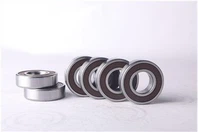
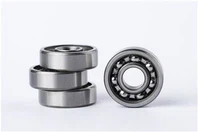
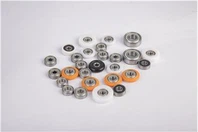
Hey there! As a supplier of 608 Roller Bearings, I often get asked about what these little guys are made of. So, I thought I'd take a few minutes to break it down for you.
First off, let's talk about what a 608 Roller Bearing is. It's a type of miniature bearing that's super common in all sorts of applications. You can find them in things like skateboards, electric motors, and even some small appliances. The "608" is a standard bearing size code, which basically tells you the dimensions of the bearing. These bearings are known for their high precision and smooth operation, making them a go - to choice for many manufacturers. If you want to learn more about them, check out 608 Roller Bearing.
Now, onto the main topic: the materials. There are a few key materials that are commonly used in the production of 608 Roller Bearings, and each has its own unique properties.


Steel
The most common material for 608 Roller Bearings is steel. There are different types of steel that can be used, but the two main ones are chrome steel and stainless steel.
Chrome Steel
Chrome steel, specifically AISI 52100, is a popular choice. It's got high carbon content, which gives it excellent hardness and wear resistance. This means that bearings made from chrome steel can handle a lot of stress and last a long time. They're also relatively inexpensive to produce, which makes them a cost - effective option for many applications. The heat - treating process for chrome steel is well - established, allowing manufacturers to achieve the right balance of hardness and toughness.
However, chrome steel isn't the best when it comes to corrosion resistance. If the bearing is going to be used in a wet or corrosive environment, it might not be the ideal choice. But in most normal operating conditions, chrome steel 608 Roller Bearings work just fine.
Stainless Steel
Stainless steel, like AISI 440C, is another option. The big advantage of stainless steel is its corrosion resistance. It contains chromium, which forms a thin, protective oxide layer on the surface of the steel. This layer prevents rust and corrosion, making stainless steel bearings suitable for use in harsh environments, such as marine applications or food processing equipment.
Stainless steel bearings are also non - magnetic, which can be important in some applications where magnetic interference is a concern. However, they're generally a bit more expensive than chrome steel bearings, and they may not be as hard as chrome steel, so they might not be the best choice for high - stress applications.
Ceramic
Ceramic materials are becoming more and more popular in the bearing industry, and 608 Roller Bearings are no exception. The most common ceramic used is silicon nitride (Si₃N₄).
Ceramic bearings have several advantages. First of all, they're extremely hard, even harder than steel. This means they have excellent wear resistance and can handle high - speed applications better than steel bearings. They also have a lower density than steel, which reduces the weight of the bearing. This can be beneficial in applications where weight is a critical factor, such as aerospace or high - performance automotive applications.
Another advantage of ceramic bearings is their electrical insulation properties. They don't conduct electricity, which can prevent electrical corrosion and damage to the bearing. However, ceramic bearings are more expensive to produce than steel bearings, and they can be more brittle, so they need to be handled with care during installation and operation. If you're interested in exploring more about small - sized bearings like these, you can take a look at Micro Roller Bearings.
Plastic
Plastic bearings are a relatively new option in the market. They're typically made from materials like polyamide (PA), polyethylene (PE), or polytetrafluoroethylene (PTFE).
Plastic bearings have some unique properties. They're lightweight, which can be a big advantage in applications where weight reduction is important. They're also self - lubricating, which means they don't require external lubrication in many cases. This can simplify the design and maintenance of the equipment.
Plastic bearings are resistant to corrosion and chemicals, making them suitable for use in harsh environments. However, they have lower load - carrying capacity compared to steel or ceramic bearings, so they're usually used in low - load applications. If you're looking for smaller - sized plastic bearings, Mini Roller Bearings might be worth checking out.
Choosing the Right Material
So, how do you choose the right material for your 608 Roller Bearing? Well, it depends on several factors.
Application Requirements
The first thing you need to consider is the application. If it's a high - speed, high - stress application, like a motor or a machine tool, chrome steel or ceramic might be the best choice. If the application is in a corrosive environment, stainless steel or plastic could be more suitable.
Cost
Cost is also an important factor. Steel bearings are generally the most cost - effective option, while ceramic bearings are the most expensive. You need to balance the performance requirements of your application with your budget.
Maintenance
Think about the maintenance requirements. For example, if you don't want to deal with regular lubrication, a self - lubricating plastic bearing might be a good option.
As a 608 Roller Bearing supplier, I can help you make the right choice. Whether you need a high - performance ceramic bearing for a special application or a cost - effective chrome steel bearing for a standard project, I've got you covered.
If you're interested in purchasing 608 Roller Bearings or have any questions about the materials or applications, don't hesitate to reach out. We can have a detailed discussion about your specific needs and find the best solution for you.
References
- "Bearing Design in Machinery: Engineering Tribology and Lubrication" by A. A. Khonsari and E. R. Booser
- "Handbook of Bearing Design and Application" by C. A. Johnson