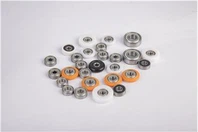
Hey there! As a supplier of 20mm Roller Bearings, I often get asked about the low - temperature performance of these little but crucial components. So, let's dive right in and have a chat about it.
First off, what exactly is a 20mm roller bearing? Well, it's a type of bearing with a 20mm dimension, which is used in a wide range of applications. You can check out more about it on our 20mm Roller Bearing page. These bearings are designed to reduce friction between moving parts and support radial and axial loads. They're found in all sorts of machinery, from small household appliances to industrial equipment.
Now, let's talk about low - temperature performance. When the temperature drops, a lot of things can happen to a 20mm roller bearing. One of the most significant factors is the change in the lubricant. Lubricants are essential for the smooth operation of bearings. They reduce friction, prevent wear and tear, and dissipate heat. But at low temperatures, the viscosity of the lubricant can increase. That means it becomes thicker and doesn't flow as easily.


Imagine trying to pour honey on a cold winter day. It's thick and sticky, right? The same thing happens to the lubricant in a bearing. When it gets too thick, it can't reach all the parts of the bearing that need it. This can lead to increased friction, which in turn generates more heat. And if the heat isn't dissipated properly, it can cause the bearing to fail prematurely.
Another aspect to consider is the material of the bearing itself. Most 20mm roller bearings are made of steel. Steel has its own set of properties that are affected by low temperatures. At extremely low temperatures, steel can become more brittle. Brittle materials are more likely to crack or break under stress. So, if a bearing is operating in a low - temperature environment and is subjected to heavy loads or sudden impacts, there's a higher risk of damage.
The design of the bearing also plays a role in its low - temperature performance. Some bearings are designed with special features to handle cold conditions better. For example, they might have a larger internal clearance. This allows for some expansion and contraction of the bearing components as the temperature changes. A bearing with too little clearance can get jammed when it contracts in the cold, while one with too much clearance might not provide the necessary support and stability.
Now, you might be wondering how we test the low - temperature performance of our 20mm roller bearings. We use a variety of methods. One common test is to place the bearing in a temperature - controlled chamber. We can set the temperature to different levels and monitor the bearing's performance. We measure things like torque, which is a measure of the force required to turn the bearing. If the torque increases significantly at low temperatures, it could be a sign of problems with the lubricant or the bearing itself.
We also look at the wear and tear on the bearing after the test. By examining the surfaces of the rollers and the races, we can see if there's any excessive damage. This helps us to determine if the bearing is suitable for low - temperature applications.
If you're in the market for small - sized bearings, you might also be interested in our Small Rollers with Bearings. These are great for applications where space is limited. And for those who need a specific type of bearing, our Bearing 6203llu is a popular choice.
So, how can you ensure that your 20mm roller bearings perform well in low - temperature conditions? Here are some tips:
- Choose the right lubricant: Make sure to select a lubricant that's designed for low - temperature use. There are special lubricants available that have a lower viscosity at cold temperatures.
- Check the bearing material: If you're operating in extremely cold environments, consider using a bearing made of a material that's more resistant to brittleness at low temperatures.
- Monitor the operating conditions: Keep an eye on the temperature and the load on the bearing. If the conditions change, you might need to adjust the lubrication or take other preventive measures.
In conclusion, the low - temperature performance of a 20mm roller bearing is a complex topic. It involves factors like the lubricant, the material of the bearing, and its design. As a supplier, we're committed to providing high - quality bearings that can handle a wide range of conditions. If you have any questions about our 20mm roller bearings or need help selecting the right one for your application, don't hesitate to reach out. We're here to assist you with all your bearing needs and are eager to discuss potential procurement opportunities.
References:
- Machinery's Handbook, 31st Edition
- Tribology Handbook, Second Edition