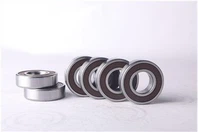
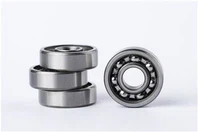
What is the load capacity of miniature bearings? That's a question I get asked a lot as a supplier of Miniature Bearings. In this blog post, I'm gonna break down what load capacity means for these tiny but mighty components, and why it's super important when you're choosing the right bearings for your project.
Let's start with the basics. Load capacity refers to the maximum amount of weight or force a bearing can handle without failing or wearing out prematurely. For miniature bearings, which are used in a wide range of applications from small motors to precision instruments, understanding load capacity is crucial. There are two main types of loads that bearings need to deal with: radial loads and axial loads.
Radial loads are forces that act perpendicular to the shaft, pushing the bearing inwards or outwards. Think of a small fan motor, where the weight of the fan blades creates a radial load on the bearings. Axial loads, on the other hand, act parallel to the shaft. An example of this would be in a linear actuator, where the force of the movement along the shaft creates an axial load on the bearings.
Now, when it comes to miniature bearings, their load capacity is affected by several factors. One of the most important is the size of the bearing. Generally speaking, the larger the bearing, the higher its load capacity. But in the world of miniature bearings, we're working with very small sizes, so we have to get creative. The material the bearing is made from also plays a big role. High - quality materials like chrome steel or ceramic can withstand higher loads and offer better durability.
The design of the bearing is another key factor. For example, deep - groove ball bearings are great for handling both radial and axial loads, making them a popular choice for many applications. They have a simple design that allows the balls to roll smoothly within the raceways, distributing the load evenly. You can check out our Very Small Ball Bearings to see some of these in action.
Let's take a closer look at a specific example, the 688 ZZ - Ball Bearing 8mm16mm4mm. This bearing is a single - row deep - groove ball bearing with metal shields on both sides (the "ZZ" in the name). It's designed to handle moderate radial loads and some axial loads. Its small size makes it ideal for use in things like small power tools or precision measuring equipment.
The load capacity of the 688 ZZ - Ball Bearing is carefully calculated based on its dimensions, the material it's made from, and its internal design. The manufacturer uses complex engineering formulas and testing to determine the maximum load it can handle safely. When you're choosing a bearing for your project, it's important to know the actual loads that will be applied to the bearing and compare them to the rated load capacity of the bearing.
Another type of miniature bearing is the roller bearing. Roller bearings are great for applications where higher loads need to be handled. They use cylindrical or tapered rollers instead of balls, which can distribute the load over a larger surface area. Our Roller Bearings for Drawers are a good example of this. Drawers often need to support a fair amount of weight, and roller bearings can handle the radial loads created by the weight of the items in the drawer and the axial loads from opening and closing the drawer.
It's also important to consider the operating conditions when thinking about load capacity. Factors like temperature, speed, and lubrication can all affect how well a bearing can handle a load. High temperatures can cause the bearing material to expand and change its properties, reducing its load capacity. Similarly, high speeds can generate more heat and increase wear on the bearing. Proper lubrication is essential to reduce friction and heat, and to help the bearing handle the load more effectively.
In some cases, you might need to use multiple bearings to handle a high load. By distributing the load across several bearings, you can increase the overall load - handling capacity of the system. This is often done in industrial applications where large forces are involved.
So, how do you know if a miniature bearing has the right load capacity for your project? The first step is to accurately calculate the loads that will be applied to the bearing. This might involve some engineering calculations or measurements. Once you know the loads, you can look at the technical specifications of different bearings to find one that can handle those loads. It's always a good idea to leave some margin of safety. That means choosing a bearing with a load capacity that's higher than the actual loads you expect, to account for any unexpected forces or variations in operating conditions.
As a supplier of Miniature Bearings, I'm here to help you make the right choice. Whether you're working on a small DIY project or a large - scale industrial application, we have a wide range of bearings to choose from. Our team of experts can also provide you with advice and guidance on load capacity and other technical aspects of bearing selection.
If you're interested in learning more about our Miniature Bearings or need help choosing the right bearing for your project, don't hesitate to reach out. We're always happy to have a chat and discuss your specific requirements. Whether it's a question about load capacity, installation, or maintenance, we're here to support you.

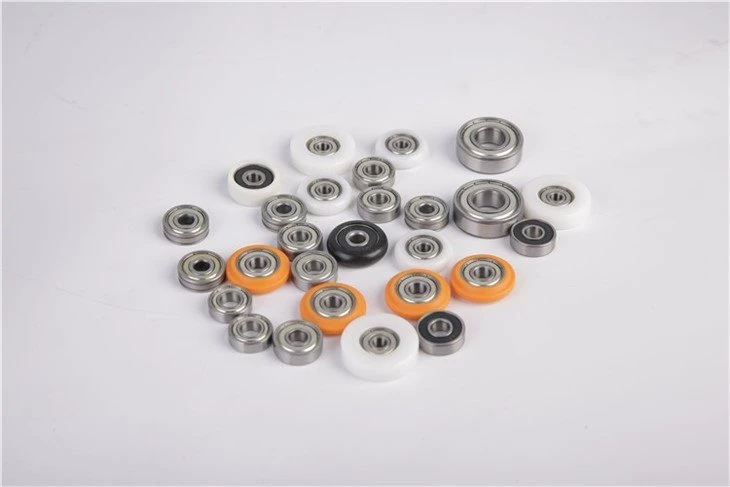
In conclusion, understanding the load capacity of miniature bearings is essential for the success of any project that uses these components. By considering factors like size, material, design, and operating conditions, you can choose the right bearing that will provide reliable performance and long - term durability.
References:
- "Bearing Engineering Handbook"
- Technical literature from bearing manufacturers