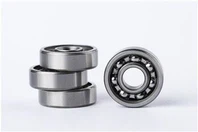
Hey there! As a supplier of 608 Roller Bearings, I often get asked about the hardness of the raceway in a 608 roller bearing. In this blog post, I'm gonna break down what this hardness means, why it's so important, and how it impacts the performance of these nifty little bearings.
What is the Raceway in a 608 Roller Bearing?
First off, let's quickly go over what the raceway is. The raceway is like the track where the rollers in the bearing roll. Think of it as a super - smooth highway for these tiny rollers to zoom around on. In a 608 roller bearing, the raceway is a circular groove on both the inner and outer rings of the bearing. The rollers move along this groove, allowing the bearing to rotate smoothly and support loads.
Now, the hardness of the raceway is measured using a scale. One of the most common scales used in the bearing industry is the Rockwell hardness scale. It's a way to quantify how resistant the material of the raceway is to indentation. For 608 roller bearings, the typical hardness of the raceway is around 60 - 64 HRC (Rockwell hardness, C scale).
Why is Hardness So Critical?
There are a few reasons why the hardness of the raceway is a big deal.
Wear Resistance
The main function of a bearing is to reduce friction and wear between moving parts. A harder raceway surface means it can withstand more pressure and friction without getting worn down easily. Suppose you're using a 608 roller bearing in a high - speed machine. The rollers are constantly moving along the raceway, and if the raceway isn't hard enough, it'll start to show signs of wear like scoring or pitting. Over time, this wear can lead to the bearing failing prematurely.
Load - Carrying Capacity
608 roller bearings are used in a wide range of applications, from small electric motors to precision instruments. They need to be able to handle different loads. A hard raceway can distribute the load more evenly across the surface. When the load is applied, the hard material of the raceway doesn't deform easily. This allows the bearing to support heavier loads without suffering from excessive stress or damage.
Fatigue Resistance
Bearing materials are subjected to repeated loading and unloading cycles during operation. This can cause fatigue, which is basically the weakening of the material over time. A hard raceway has better fatigue resistance. It can endure these cyclic loads without cracking or failing. This is especially important in applications where the bearing is in continuous operation, like in conveyor systems or industrial machinery.
Factors Affecting Raceway Hardness
The hardness of the raceway in a 608 roller bearing isn't just a fixed number. There are several factors that can influence it.
Material Selection
The type of steel used to make the bearing is a major factor. Most 608 roller bearings are made from high - carbon chromium steel, like GCr15. This type of steel has excellent properties for bearing applications, including high hardenability and good wear resistance. The chemical composition of the steel, such as the amount of carbon, chromium, and other alloying elements, can affect how hard the raceway can get after heat treatment.
Heat Treatment
Heat treatment is a crucial process in making bearings. It involves heating the steel to a specific temperature and then cooling it at a controlled rate. This process changes the microstructure of the steel, making it harder. For 608 roller bearings, the heat treatment usually includes processes like quenching and tempering. The quenching process rapidly cools the heated steel, which forms a hard martensitic structure. The tempering process then relieves the internal stresses in the steel and improves its toughness.
Manufacturing Processes
The way the bearing is manufactured can also impact the raceway hardness. For example, the machining processes used to create the raceway, like grinding and lapping, can affect the surface integrity of the raceway. If the machining is done poorly, it can introduce residual stresses or surface damage, which can reduce the effective hardness of the raceway.
How to Ensure the Right Hardness
As a 608 Roller Bearing supplier, we take several steps to ensure that the raceway hardness is just right.
Quality Control in Material Sourcing
We carefully select the steel suppliers. We make sure that the steel we use meets the strict quality standards. We test the incoming steel for its chemical composition and mechanical properties to ensure that it's suitable for making high - quality bearings.
Precise Heat Treatment
Our heat treatment processes are closely monitored. We use advanced heat treatment equipment and follow precise temperature and time schedules. After heat treatment, we conduct hardness testing on the bearings to make sure they fall within the desired hardness range.
Advanced Manufacturing Techniques
We invest in state - of - the - art manufacturing equipment and techniques. Our machining processes are optimized to minimize surface damage and ensure a smooth and hard raceway surface. We also perform comprehensive inspections during the manufacturing process to catch any potential issues early on.
Impact of Hardness on Different Applications
The hardness of the raceway can have different impacts depending on the application of the 608 roller bearing.
High - Speed Applications
In high - speed applications, like small fans or dental drills, a harder raceway is essential. The high rotational speed generates a lot of heat and friction. A hard raceway can resist the wear caused by this high - speed operation and maintain the smooth rotation of the bearing.
High - Load Applications
For applications where the bearing needs to support heavy loads, such as in some industrial automation equipment, a hard raceway is crucial for load - carrying capacity. It allows the bearing to distribute the load evenly and prevent premature failure due to excessive stress.
Precision Applications
In precision instruments, like optical devices or measuring equipment, the hardness of the raceway affects the accuracy of the bearing. A hard and smooth raceway ensures that the rollers move precisely, which in turn helps maintain the precision of the entire system.
Comparing with Other Miniature Bearings
When it comes to Mini Roller Bearings and Micro Roller Bearings, the 608 roller bearing has a similar requirement for raceway hardness. However, the specific hardness values might vary slightly depending on the size and the specific application of these bearings.
Smaller bearings like micro roller bearings might have slightly different hardness requirements because they are often used in more delicate and precision - oriented applications. But in general, a high level of hardness is still necessary to ensure good performance and durability.
Conclusion
So, to sum it up, the hardness of the raceway in a 608 roller bearing is a key factor that affects its performance, wear resistance, load - carrying capacity, and fatigue resistance. As a supplier, we go to great lengths to ensure that the raceway hardness meets the highest standards.


If you're in the market for high - quality 608 Roller Bearings or other Mini Roller Bearings, don't hesitate to reach out for a purchase discussion. We're here to help you find the perfect bearings for your specific needs.
References
- "Bearing Technology Handbook"
- "Materials Science and Engineering: An Introduction" by William D. Callister Jr. and David G. Rethwisch
- Industry standards for miniature roller bearings