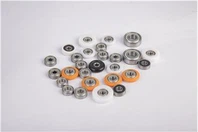
When it comes to the world of bearings, the hardness of a bearing is a crucial factor that significantly impacts its performance and longevity. As a trusted supplier of Bearing 6200, I am often asked about the hardness of this particular bearing. In this blog post, I will delve into the concept of hardness in bearings, specifically focusing on Bearing 6200, and explain why it matters in various applications.
Understanding Hardness in Bearings
Hardness is a measure of a material's resistance to permanent deformation, indentation, or scratching. In the context of bearings, hardness plays a vital role in determining the bearing's ability to withstand the loads, stresses, and wear it encounters during operation. A bearing with the appropriate hardness can maintain its shape, reduce friction, and prevent premature failure, ensuring smooth and efficient performance over an extended period.
The hardness of a bearing is typically measured using standardized testing methods, such as the Rockwell hardness test or the Brinell hardness test. These tests involve applying a specific load to the bearing material using a hardened indenter and measuring the resulting indentation size. The hardness value is then expressed in a scale, such as Rockwell C (HRC) or Brinell hardness number (BHN).
Hardness of Bearing 6200
Bearing 6200 is a popular single-row deep groove ball bearing known for its versatility and wide range of applications. It is commonly used in electric motors, household appliances, power tools, and various industrial machinery. The hardness of Bearing 6200 is carefully engineered to meet the specific requirements of these applications, ensuring optimal performance and durability.
The outer ring, inner ring, and balls of Bearing 6200 are typically made of high-quality bearing steel, such as AISI 52100. This steel is known for its excellent hardness, wear resistance, and fatigue strength, making it an ideal material for bearing components. After the manufacturing process, the bearing components are heat-treated to achieve the desired hardness.
The typical hardness range for the outer ring and inner ring of Bearing 6200 is between 58 and 64 HRC. This hardness level provides sufficient strength and wear resistance to withstand the radial and axial loads exerted on the bearing during operation. The balls, on the other hand, usually have a slightly higher hardness, ranging from 61 to 66 HRC. The higher hardness of the balls helps to reduce friction and wear, ensuring smooth rotation and extended service life.
Importance of Appropriate Hardness
The appropriate hardness of Bearing 6200 is essential for several reasons. Firstly, it ensures the bearing's ability to withstand the loads and stresses it encounters during operation. A bearing with insufficient hardness may deform or wear out quickly, leading to premature failure and reduced performance. On the other hand, a bearing with excessive hardness may become brittle and prone to cracking, also resulting in premature failure.
Secondly, the appropriate hardness helps to reduce friction and wear between the bearing components. This not only improves the bearing's efficiency but also extends its service life. By minimizing friction, the bearing can operate more smoothly, reducing energy consumption and noise levels. Additionally, reduced wear means that the bearing can maintain its performance over a longer period, reducing the need for frequent replacements and maintenance.
Finally, the appropriate hardness of Bearing 6200 is crucial for maintaining the bearing's dimensional stability. During operation, the bearing is subjected to various forces and temperatures, which can cause it to expand or contract. A bearing with the appropriate hardness can better resist these dimensional changes, ensuring that it remains in proper alignment and operates smoothly.
Comparison with Other Bearings
To better understand the hardness of Bearing 6200, it is helpful to compare it with other similar bearings. For example, Bearing 6001ZZ is another popular single-row deep groove ball bearing. Like Bearing 6200, it is also made of high-quality bearing steel and heat-treated to achieve the desired hardness. However, due to its smaller size and different application requirements, the hardness range of Bearing 6001ZZ may be slightly different.
In general, smaller bearings like Bearing 6001ZZ may have a slightly higher hardness to compensate for their smaller contact area and higher stress concentration. The outer ring and inner ring of Bearing 6001ZZ typically have a hardness range of 59 to 65 HRC, while the balls have a hardness range of 62 to 67 HRC.
Applications and Considerations
The hardness of Bearing 6200 makes it suitable for a wide range of applications. In electric motors, for example, the bearing needs to withstand high-speed rotation and radial loads. The appropriate hardness of Bearing 6200 ensures that it can operate smoothly and efficiently, reducing energy consumption and extending the motor's service life.
In household appliances, such as washing machines and refrigerators, Bearing 6200 is used to support the rotating components. The hardness of the bearing helps to reduce noise and vibration, providing a quiet and comfortable operating environment.
In power tools, Bearing 6200 is subjected to high-impact loads and rapid changes in speed. The appropriate hardness of the bearing allows it to withstand these harsh conditions and maintain its performance over time.
However, it is important to note that the hardness of Bearing 6200 may need to be adjusted depending on the specific application requirements. For example, in applications where the bearing is exposed to high temperatures or corrosive environments, special materials or surface treatments may be required to enhance the bearing's hardness and corrosion resistance.


Conclusion
In conclusion, the hardness of Bearing 6200 is a critical factor that determines its performance and durability. The carefully engineered hardness of the outer ring, inner ring, and balls ensures that the bearing can withstand the loads, stresses, and wear it encounters during operation, providing smooth and efficient performance over an extended period.
As a supplier of Bearing 6200, I am committed to providing high-quality bearings that meet the specific requirements of our customers. Whether you are looking for bearings for electric motors, household appliances, power tools, or other industrial applications, we have the expertise and experience to help you find the right solution.
If you are interested in purchasing Bearing 6200 or have any questions about its hardness or other technical specifications, please feel free to contact us. We look forward to discussing your needs and providing you with the best possible solutions.
References
- ASM Handbook Volume 1: Properties and Selection: Irons, Steels, and High-Performance Alloys
- Machinery's Handbook, 31st Edition
- Bearing Engineering Handbook, SKF