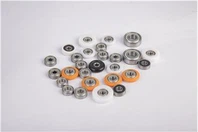
Hey there! I'm a supplier of Big Ball Bearings, and today I wanna talk about something super important in the world of bearings: the dynamic stiffness of Big Ball Bearings.
First off, let's get a basic understanding of what dynamic stiffness is. In simple terms, dynamic stiffness is how well a bearing can handle changing loads and forces while it's in motion. It's like how well a car's suspension can deal with bumps on the road when you're driving at different speeds. When a bearing has good dynamic stiffness, it can maintain its performance and accuracy even when there are all sorts of forces acting on it.
Now, why is dynamic stiffness so crucial for Big Ball Bearings? Well, Big Ball Bearings are often used in heavy - duty applications. Think about large industrial machinery, construction equipment, and even some types of transportation systems. These applications involve high - speed rotation, heavy loads, and sometimes sudden shocks or vibrations.
For example, in a large conveyor system in a mining operation, the Big Ball Bearings have to support the weight of tons of materials being transported. At the same time, the conveyor might speed up or slow down, causing changes in the forces acting on the bearings. If the bearings don't have good dynamic stiffness, they could start to deform, wear out quickly, or even fail completely. This could lead to costly downtime for the mining operation, not to mention the safety risks involved.
Another application is in wind turbines. Big Ball Bearings are used in the gearbox and the main shaft of the turbine. The wind is constantly changing in speed and direction, which means the bearings are subjected to variable loads and vibrations. A bearing with poor dynamic stiffness might not be able to handle these changes, leading to premature failure and reduced efficiency of the wind turbine.
So, how is the dynamic stiffness of Big Ball Bearings determined? There are several factors that come into play.
The material of the bearing is a huge factor. High - quality steel alloys are often used for Big Ball Bearings because they have good strength and durability. The heat treatment process also plays a role. Proper heat treatment can improve the hardness and toughness of the bearing material, which in turn can enhance its dynamic stiffness. For instance, through processes like quenching and tempering, the internal structure of the steel can be optimized to better withstand dynamic loads.
The design of the bearing also matters a great deal. The number, size, and arrangement of the balls in the bearing can affect its dynamic stiffness. More balls can distribute the load more evenly, reducing the stress on each individual ball and improving the overall stiffness of the bearing. The shape of the raceways, where the balls roll, is also important. A well - designed raceway can ensure smooth rolling of the balls and better load transfer, which is essential for good dynamic stiffness.
The pre - load of the bearing is another key factor. Pre - loading is when a force is applied to the bearing to eliminate internal clearances. By applying the right amount of pre - load, the bearing can be made stiffer and more resistant to vibrations. However, too much pre - load can cause excessive friction and heat, which can damage the bearing. So, finding the optimal pre - load is a delicate balance.
Now, I wanna mention one of our great products, the Track Bearing Roller. This is a type of Big Ball Bearing that's specifically designed for applications where high - load capacity and good dynamic stiffness are required. It has a unique design that allows it to handle heavy radial and axial loads, and its construction ensures excellent dynamic performance even under challenging conditions.
If you're in the market for Big Ball Bearings, you need to pay close attention to the dynamic stiffness. A bearing with good dynamic stiffness can save you a lot of money in the long run by reducing maintenance costs and downtime. It can also improve the overall performance and reliability of your equipment.
When you're choosing Big Ball Bearings, don't just look at the price. Look at the technical specifications, including the dynamic stiffness. You can also ask for test reports or case studies from the supplier to see how the bearings perform in real - world applications.
As a supplier, we have a team of experts who can help you select the right Big Ball Bearings for your specific needs. We understand that every application is different, and we're committed to providing you with the best solutions. Whether you're in the manufacturing, construction, or energy sector, we can offer you bearings that meet your requirements in terms of dynamic stiffness and other important factors.
If you're interested in learning more about our Big Ball Bearings or want to discuss your specific needs, don't hesitate to reach out. We're here to have a chat with you, answer your questions, and help you make the right decision for your business. We believe that by working together, we can ensure the smooth operation of your equipment and the success of your projects.
So, if you're ready to take your equipment's performance to the next level with high - quality Big Ball Bearings, let's start the conversation. We're looking forward to hearing from you and helping you find the perfect bearings for your applications.


References:
- Machinery's Handbook, 31st Edition
- Tribology Handbook, 2nd Edition