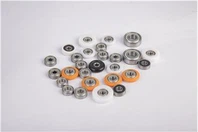
As a supplier of Big Ball Bearings, I've encountered numerous inquiries from customers about the differences between shielded and sealed Big Ball Bearings. In this blog, I'll delve into the details of these two types of bearings, highlighting their unique features, applications, and the key factors that set them apart.
Understanding Big Ball Bearings
Before we dive into the differences between shielded and sealed Big Ball Bearings, it's essential to understand what Big Ball Bearings are. Big Ball Bearings, also known as large-size ball bearings, are designed to handle heavy loads and high speeds. They are commonly used in various industrial applications, including construction equipment, mining machinery, and wind turbines. These bearings are critical components that ensure the smooth operation of machinery by reducing friction between moving parts.
Shielded Big Ball Bearings
Shielded Big Ball Bearings are equipped with metal shields on one or both sides of the bearing. These shields are typically made of steel and are designed to prevent the ingress of large particles, such as dust and debris, into the bearing. The shields are not in contact with the inner ring of the bearing, which means they do not create additional friction. This allows the bearing to operate at high speeds with minimal energy loss.


One of the primary advantages of shielded Big Ball Bearings is their ability to provide good protection against contamination while maintaining low friction. This makes them suitable for applications where the operating environment is relatively clean, but there is still a risk of dust and debris entering the bearing. For example, shielded Big Ball Bearings are commonly used in electric motors, where they help to keep the internal components clean and free from contaminants.
Another advantage of shielded Big Ball Bearings is their ease of maintenance. Since the shields are not in contact with the inner ring, they can be easily removed for inspection and cleaning. This allows for quick and efficient maintenance, which can help to extend the service life of the bearing.
However, shielded Big Ball Bearings do have some limitations. The shields are not completely sealed, which means they do not provide protection against moisture and other liquids. In applications where the bearing is exposed to water or other fluids, shielded Big Ball Bearings may not be the best choice.
Sealed Big Ball Bearings
Sealed Big Ball Bearings, on the other hand, are equipped with rubber or synthetic seals on one or both sides of the bearing. These seals are in contact with the inner ring of the bearing, which creates a tight seal that prevents the ingress of both solid particles and liquids. Sealed Big Ball Bearings are designed to provide maximum protection against contamination and lubricant leakage.
One of the primary advantages of sealed Big Ball Bearings is their superior protection against contamination. The seals create a barrier that prevents dust, dirt, water, and other contaminants from entering the bearing, which helps to extend the service life of the bearing. This makes them suitable for applications where the operating environment is harsh or dirty, such as in construction equipment and mining machinery.
Another advantage of sealed Big Ball Bearings is their ability to retain lubricant. The seals help to keep the lubricant inside the bearing, which reduces the need for frequent lubrication. This can help to reduce maintenance costs and improve the reliability of the machinery.
However, sealed Big Ball Bearings also have some limitations. The seals create additional friction, which can reduce the efficiency of the bearing. This means that sealed Big Ball Bearings may not be suitable for applications where high speeds are required. Additionally, the seals can wear out over time, which may require replacement.
Key Differences between Shielded and Sealed Big Ball Bearings
Now that we've discussed the features and advantages of shielded and sealed Big Ball Bearings, let's summarize the key differences between the two:
- Contamination Protection: Sealed Big Ball Bearings provide superior protection against both solid particles and liquids, while shielded Big Ball Bearings only provide protection against large particles.
- Friction: Shielded Big Ball Bearings have lower friction than sealed Big Ball Bearings, which makes them more suitable for high-speed applications.
- Maintenance: Shielded Big Ball Bearings are easier to maintain than sealed Big Ball Bearings, as the shields can be easily removed for inspection and cleaning.
- Lubricant Retention: Sealed Big Ball Bearings are better at retaining lubricant than shielded Big Ball Bearings, which reduces the need for frequent lubrication.
Applications of Shielded and Sealed Big Ball Bearings
The choice between shielded and sealed Big Ball Bearings depends on the specific application requirements. Here are some common applications for each type of bearing:
- Shielded Big Ball Bearings:
- Electric motors
- Machine tools
- Fans and blowers
- Agricultural equipment
- Sealed Big Ball Bearings:
- Construction equipment
- Mining machinery
- Wind turbines
- Marine applications
Conclusion
In conclusion, shielded and sealed Big Ball Bearings have different features and advantages, and the choice between the two depends on the specific application requirements. Shielded Big Ball Bearings are suitable for applications where the operating environment is relatively clean and high speeds are required, while sealed Big Ball Bearings are suitable for applications where the operating environment is harsh and protection against contamination and lubricant leakage is essential.
As a supplier of Big Ball Bearings, we offer a wide range of shielded and sealed Big Ball Bearings to meet the needs of our customers. If you're looking for high-quality Big Ball Bearings for your application, Track Bearing Roller is a great option. Our team of experts can help you select the right bearing for your specific requirements and provide you with the support and service you need to ensure the success of your project.
If you have any questions or would like to discuss your bearing requirements, please don't hesitate to contact us. We look forward to working with you.
References
- "Ball Bearings: Design, Engineering, and Performance" by John A. Harris
- "Handbook of Bearing Technology" by T.A. Harris and M.N. Kotzalas