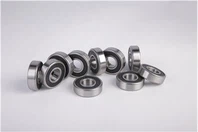
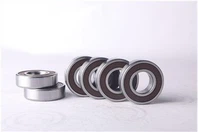
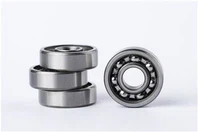
Hey there! I'm a supplier of Bearing 6311, and I often get asked, "What is the clearance of Bearing 6311?" Well, let's dive right into it and break it all down.
First off, let's talk a bit about Bearing 6311 itself. Bearing 6311 is a pretty common type of ball bearing. It's used in a wide range of applications, from industrial machinery to automotive parts. This bearing is known for its durability and reliability, which is why it's so popular in the market.
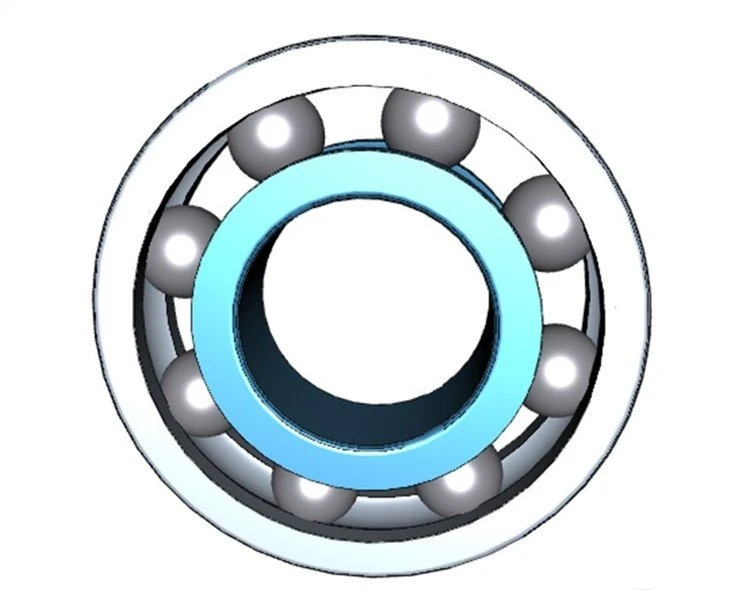
Now, let's get to the main question: clearance. Bearing clearance is basically the amount of internal space within the bearing. It's the difference between the size of the bearing's inner ring, outer ring, and the rolling elements (in this case, the balls). There are a few different types of clearance we need to consider.
The most common ones are radial clearance and axial clearance. Radial clearance is the amount of movement that the inner ring can have relative to the outer ring in a radial direction (that's perpendicular to the bearing's axis). Axial clearance, on the other hand, is the movement in the axial direction (parallel to the bearing's axis).
For Bearing 6311, the standard radial clearance is typically defined by international standards. The most widely recognized standard is from the ISO (International Organization for Standardization). According to ISO, the standard radial clearance for Bearing 6311 falls within a certain range. This range is carefully determined to ensure that the bearing operates smoothly under normal conditions.
But here's the thing, the actual clearance you need for your specific application might not be the standard one. There are a bunch of factors that can influence the ideal clearance. One of the biggest factors is the operating temperature. You see, as the temperature goes up, the materials in the bearing expand. If the clearance is too small, the expansion can cause the bearing to seize up. On the other hand, if it's too large, the bearing might not perform as efficiently and could lead to excessive noise and vibration.
Another important factor is the load. If the bearing is going to be under a heavy load, you might need a different clearance compared to a light - load application. Heavy loads can cause the bearing components to deform slightly, and the right clearance can help accommodate this deformation without causing damage.
The speed of operation also matters. High - speed applications require a different clearance setting. At high speeds, the centrifugal force acting on the balls can change the internal forces within the bearing. So, we need to adjust the clearance to make sure the bearing can handle these forces without any issues.
As a supplier of Bearing 6311, I've seen all sorts of situations. Sometimes, customers come to me with a problem where their bearings are failing prematurely. A lot of the time, it turns out that the clearance wasn't set correctly for their specific application. That's why it's so important to have a good understanding of what clearance means and how it affects the bearing's performance.
Now, how do we measure the clearance? Well, there are a few methods. One common way is to use a feeler gauge. You can insert the feeler gauge between the inner and outer rings of the bearing to measure the radial clearance. Another more precise method is to use a dial indicator. This tool can give you a very accurate measurement of both radial and axial clearance.
If you're in the process of choosing a Bearing 6311 for your application, here's what I recommend. First, sit down and think about all the factors I mentioned above - temperature, load, and speed. Then, based on these factors, you can calculate the ideal clearance. If you're not sure how to do that, don't worry! I'm here to help. I've got a team of experts who can analyze your specific situation and recommend the right clearance for your Bearing 6311.
And if you're still not convinced that getting the right clearance is crucial, let me give you an example. I had a customer who was using Bearing 6311 in a conveyor system. They were using the standard clearance, but the conveyor was operating in a high - temperature environment. The bearings started to fail after just a few months. When we analyzed the situation, we found that the clearance was too small for the high - temperature conditions. Once we adjusted the clearance to a more suitable value, the bearings lasted for years.
So, as you can see, getting the clearance of Bearing 6311 right is super important. It can save you a lot of money in the long run by preventing premature bearing failure and reducing maintenance costs.
If you're in the market for Bearing 6311 and want to make sure you're getting the right clearance for your application, I'd love to talk to you. Whether you're an industrial manufacturer, an automotive repair shop, or just someone working on a DIY project, I can provide you with high - quality Bearing 6311 and the expertise to help you choose the perfect clearance. So, don't hesitate to reach out and start a conversation about your bearing needs.
References:

- ISO standards related to bearing clearances
- Technical literature on ball bearing design and application