What is the Bending Strength of a U Type Groove Pulley?
As a supplier of U Type Groove Pulleys, I've encountered numerous inquiries regarding the bending strength of these essential components. Bending strength is a critical parameter that determines the pulley's ability to withstand external forces without undergoing permanent deformation or failure. In this blog post, I'll delve into the concept of bending strength, its significance in U Type Groove Pulleys, and the factors that influence it.

Understanding Bending Strength
Bending strength, also known as flexural strength, refers to the maximum stress a material can withstand when subjected to bending forces. When a U Type Groove Pulley is in operation, it experiences various forces, including tension from the belt or rope running in the groove, as well as radial and axial loads. These forces can cause the pulley to bend or deflect, and if the stress exceeds the bending strength of the material, the pulley may crack or break.
The bending strength of a U Type Groove Pulley is typically measured in units of pressure, such as megapascals (MPa) or pounds per square inch (psi). It is determined through standardized testing procedures, where a sample of the pulley material is subjected to a three - point or four - point bending test. During the test, a load is applied at specific points on the sample until it fails, and the maximum stress at the point of failure is recorded as the bending strength.
Significance of Bending Strength in U Type Groove Pulleys
The bending strength of a U Type Groove Pulley is of utmost importance for several reasons. Firstly, it ensures the structural integrity of the pulley during operation. A pulley with sufficient bending strength can withstand the forces exerted on it without deforming, which is crucial for maintaining proper alignment of the belt or rope and preventing premature wear and tear.
Secondly, high bending strength contributes to the overall reliability and durability of the pulley. In industrial applications where U Type Groove Pulleys are used in heavy - duty machinery, such as conveyor systems or power transmission equipment, a pulley with low bending strength is more likely to fail, leading to costly downtime and repairs. By choosing a pulley with adequate bending strength, operators can minimize the risk of unexpected failures and ensure smooth and efficient operation of their equipment.
Factors Influencing the Bending Strength of U Type Groove Pulleys
Several factors can influence the bending strength of a U Type Groove Pulley. The most significant factor is the material from which the pulley is made. Common materials used for U Type Groove Pulleys include cast iron, steel, aluminum, and plastic. Each material has its own unique mechanical properties, including bending strength.
- Cast Iron: Cast iron is a popular choice for U Type Groove Pulleys due to its high strength, wear resistance, and low cost. It typically has a relatively high bending strength, making it suitable for applications where the pulley is subjected to heavy loads. However, cast iron is also brittle, which means it may crack under sudden or excessive loads.
- Steel: Steel pulleys offer excellent strength and toughness. They can withstand high bending forces and are less prone to cracking compared to cast iron. Steel pulleys are often used in high - performance applications where reliability and durability are critical, such as in automotive engines or industrial machinery.
- Aluminum: Aluminum pulleys are lightweight and corrosion - resistant. While they have a lower bending strength compared to cast iron and steel, they are still suitable for many applications where the loads are relatively light. Aluminum pulleys are commonly used in applications such as HVAC systems and small - scale machinery.
- Plastic: Plastic pulleys are inexpensive, lightweight, and offer good chemical resistance. However, their bending strength is generally lower than that of metal pulleys. They are typically used in applications where the loads are minimal, such as in household appliances or small - scale automation equipment.
The design of the U Type Groove Pulley also plays a role in its bending strength. Factors such as the pulley's diameter, width, and the shape of the groove can affect how the forces are distributed within the pulley. A pulley with a larger diameter and wider width generally has a higher bending strength, as it can distribute the loads over a larger area. Additionally, a well - designed groove shape can help to reduce stress concentrations and improve the overall bending performance of the pulley.
The manufacturing process used to produce the U Type Groove Pulley can also impact its bending strength. Precision manufacturing techniques, such as machining or forging, can ensure a more uniform material structure and better dimensional accuracy, which can result in higher bending strength. On the other hand, poor manufacturing processes, such as casting with defects or improper heat treatment, can weaken the pulley and reduce its bending strength.
Applications and the Need for Appropriate Bending Strength
Different applications require U Type Groove Pulleys with different levels of bending strength. For example, in a simple garage door system, the 6200zz Garage Door Rollers are subjected to relatively light loads. These pulleys do not need extremely high bending strength, but they still need to be able to withstand the repeated opening and closing of the garage door without failing.
In contrast, in a large - scale industrial conveyor system, the U Type Groove Pulleys are responsible for moving heavy loads over long distances. These pulleys need to have a very high bending strength to ensure that they can handle the significant tension forces from the conveyor belt and the weight of the materials being transported.
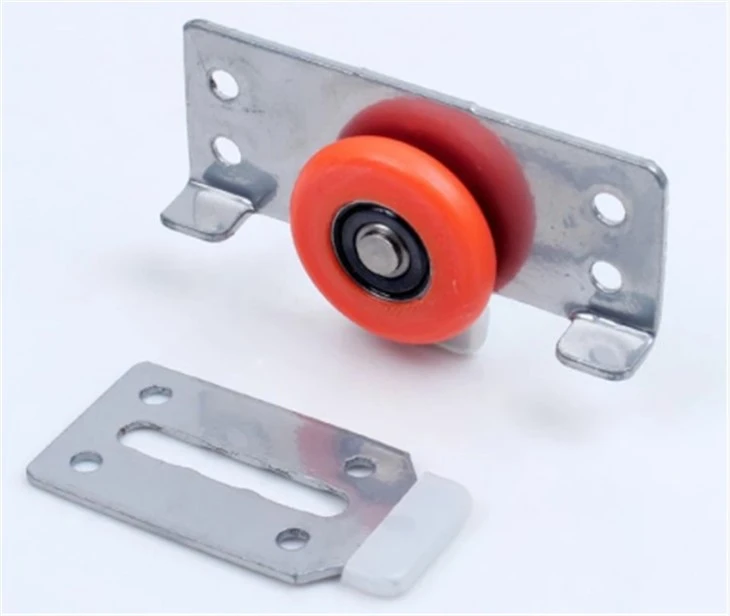
Similarly, Door Bearing Wheels used in sliding doors, whether in residential or commercial buildings, need to have sufficient bending strength to support the weight of the door and allow for smooth sliding. And Sliding Gate Roller Bearings are crucial for the proper functioning of sliding gates, and their bending strength is essential to ensure long - term reliability and smooth operation.
Selecting the Right U Type Groove Pulley Based on Bending Strength
When selecting a U Type Groove Pulley, it is essential to consider the specific requirements of the application, including the expected loads, operating conditions, and environmental factors. Here are some guidelines to help you choose a pulley with the appropriate bending strength:
- Determine the Load Requirements: Calculate the maximum loads that the pulley will be subjected to during operation. This includes the tension from the belt or rope, as well as any additional radial and axial loads. Consider both static and dynamic loads, as dynamic loads can be significantly higher due to factors such as acceleration and vibration.
- Evaluate the Operating Conditions: Consider the operating environment, such as temperature, humidity, and the presence of corrosive substances. Some materials may be more suitable for certain environments than others. For example, in a corrosive environment, a stainless - steel or plastic pulley may be a better choice than a cast - iron pulley.
- Consult with a Supplier: As a U Type Groove Pulley supplier, I have extensive knowledge and experience in selecting the right pulley for different applications. I can provide you with technical advice and recommend the most suitable pulley based on your specific requirements. I can also provide you with information on the bending strength and other mechanical properties of the pulleys I offer.
Conclusion
The bending strength of a U Type Groove Pulley is a critical factor that determines its performance, reliability, and durability. By understanding the concept of bending strength, its significance, and the factors that influence it, you can make an informed decision when selecting a pulley for your application. Whether you need a pulley for a simple household application or a heavy - duty industrial machine, choosing a pulley with the appropriate bending strength is essential for ensuring smooth and efficient operation.
If you are in the market for U Type Groove Pulleys and need assistance in selecting the right product for your needs, please feel free to contact me. I am committed to providing high - quality pulleys and excellent customer service. Let's work together to find the perfect solution for your application.
References
- Callister, W. D., & Rethwisch, D. G. (2011). Materials Science and Engineering: An Introduction. Wiley.
- Shigley, J. E., Mischke, C. R., & Budynas, R. G. (2004). Mechanical Engineering Design. McGraw - Hill.
- ASME Standards for Mechanical Components. American Society of Mechanical Engineers.